


Where do you begin?
Africa - start here!
We know what it takes to plan a big trip across the continent. After writing countless guides to help backpackers in the community plan, we wanted to put things in order for all of us.
Below we gathered the important tools and pages published on the site by backpackers in the community.
So if -
You have a rough timeframe, based on your own constraints.
You have browsed the country pages and marked where you want to go.
You have a general route on the map. Remember - everything stays fluid along the way!
You are off to a great start. Keep going:


Check the seasons page and make sure your plan roughly matches the weather.
You will also find local holidays, music festivals, seasonal wildlife, and everything else you need for timing the trip.
Use the packing list to sort the big backpack that will be your home for the trip.
Visas and paperwork for each country are on their own page.
Join the community Facebook group - thousands of backpackers who have crossed the continent will help with any question.
And follow us on Facebook and Instagram for updates from the continent, extra Africa reading, and great giveaways!

Join the community WhatsApp groups - backpackers on the road will help with any question in real time.
Pick the group for the country you are traveling in, ask, share tips, and meet others on the ground.
Download the community tip maps to your phone.
Thousands of pinned tips help you get oriented and know what is around you, while planning and once you are already in Africa.
Visas and bureaucracy for each country live on the visas page.
The notes update when community members send word from the road.
Worried about malaria? Not sure which vaccines you need? Personal safety on the continent? The safety & health page will sort it out.
Find guides and other local services on the community tip maps.
Thousands of pins - including people who already helped backpackers before you.

Before any attraction or car rental on the continent, check the community coupons!
Dive courses, extreme activities, tours - special rates for community backpackers.
Thinking of volunteering during the trip? The volunteering page is a must-read.
We gathered stories from people who volunteered in Africa. Even with good intentions, volunteering can cause harm - that page is packed with what you need to know.

And finally - keep the African wheel of help rolling!
The Mzungu backpacker community is a mutual-aid project, powered by each of us. Up-to-date content, help in the groups, and even the discount coupons are gifts from backpackers who came before you. Pay it forward and help others by collecting and adding new tips to the maps - here. Share your experiences and your journey - here. And get in touch with any other idea.
To understand why we do what we do, read About the project.
Now that everything is ready…
Next: buy a flight
At this stage we recommend the fare comparison site Skyscanner, mainly because it helps you find cheap flights if you are flexible on destination or date.
When you find a fare on Skyscanner or any other comparison site, always check the same dates on the airline’s own site. That often saves money.
After the ticket, do not forget proper backpacker travel insurance.
How to handle money
Two common ways to travel with money - and a little on the trade-offs.
Dollars and exchange
The first method is to travel with a solid amount of dollars withdrawn at home, then change them to local cash as you go, or pay dollars for attractions that are priced in dollars anyway.
If you travel this way, keep the cash on your body and split it across a few places.
ATM withdrawals
The second option is to withdraw from ATMs. You will find them in most medium towns and up, and they are not hard to locate. Some places you will stay a while have no ATM - bring enough cash for the whole stay (Lushoto in Tanzania, Bunyonyi in Uganda, and others). Visa works almost everywhere; Mastercard in about 95%.
Carry a spare card, in a different bag or on the body. The downside: high ATM fees in some countries.

In short - you can find ATMs or dollar-exchange almost everywhere. Travel in the way that feels right.
Travel as a guest
“Travel as a guest” is our name for a style where the traveler supports the local community, strengthens it, and is careful not to harm it. It is easy to skip this thought - and it will shape the whole trip.
Eat, ride and sleep like a local
Local restaurants, public transport and lodging are big costs. Choosing the local option - usually also the cheapest - sends money to the hands that need it, and saves you some too.
Beyond that, meeting people on a bus, in a local kitchen, in a village, is the stuff real stories are made of.
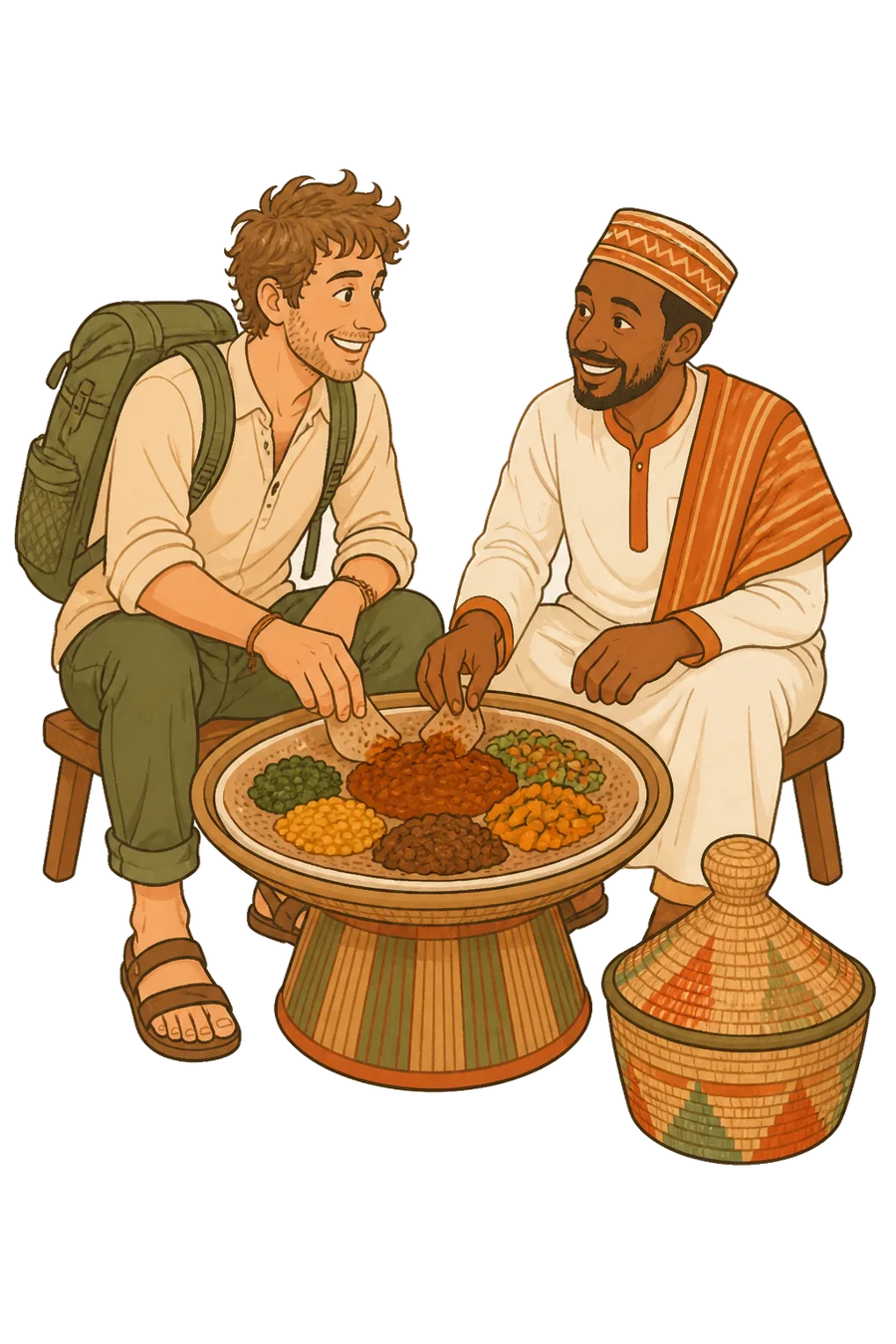
Listen, learn, be curious
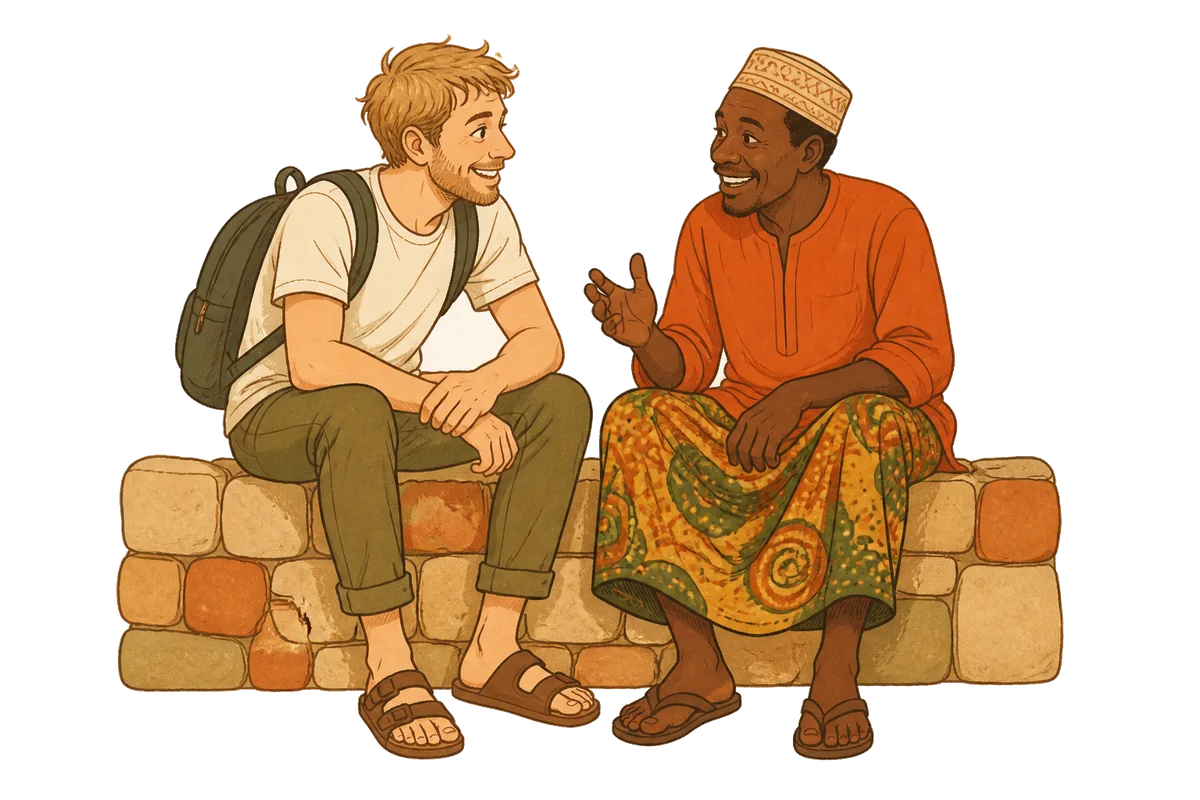
The greatest experience on the continent is the people. It is easy to keep a distance. Anyone who chooses to connect is rewarded, every time.
- Tell them about yourselves and ask about them - the differences and the similarities are wonderful.
- Talk politics - it is interesting, and they will have something to say.
- Tell them about Israel - in much of the continent people follow what happens there.
- Ask what to do nearby and where to sleep - that is how you reach the best places.
- It does not matter what you talk about. Any real exchange leads to smiles and great days.
Respect the cultures you meet
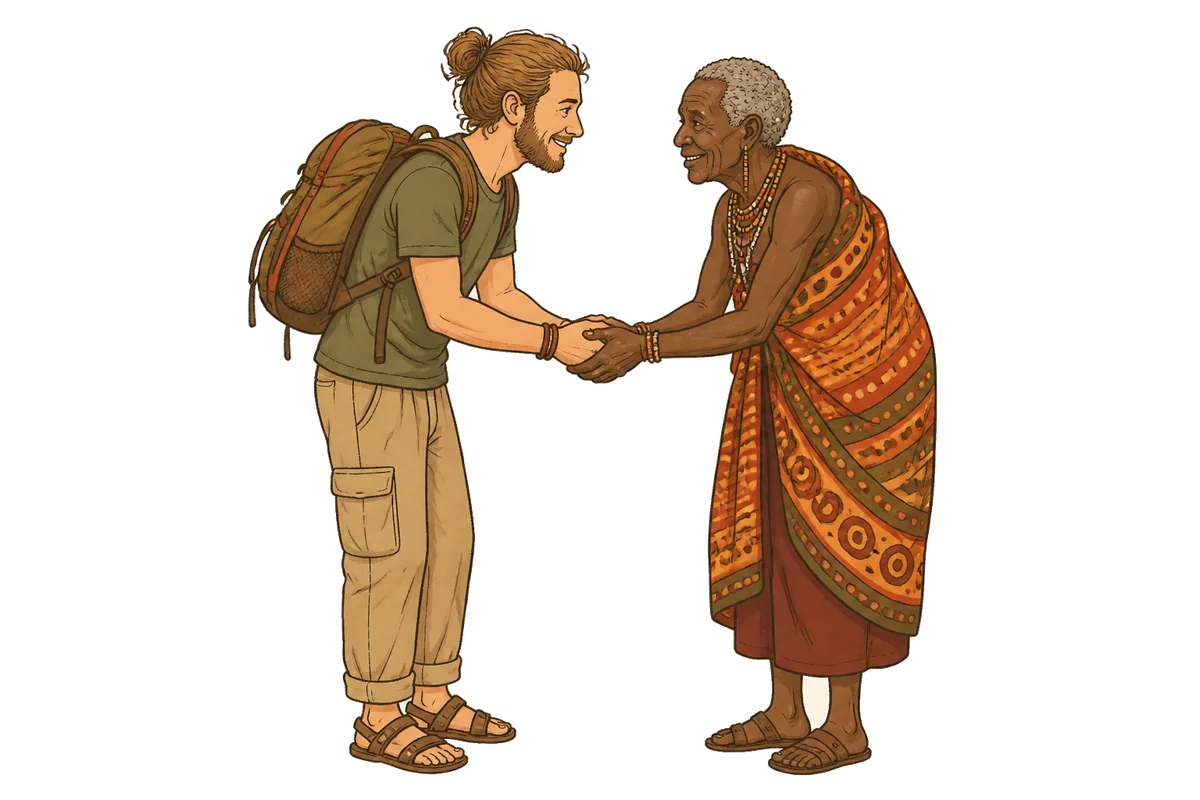
Africa has 54 countries, and dozens of cultures in each. Learn where you are going, what is done, and what is not - so you can respect the people and their culture.
Curiosity about local custom makes the trip deeper.
Get a little lost
Do not only visit the famous places. Wander into new ones - that is where some of the best days happen. We promise.
Leave room in the plan for change, and jump on chances that appear on the road.
Are there phones in Africa?
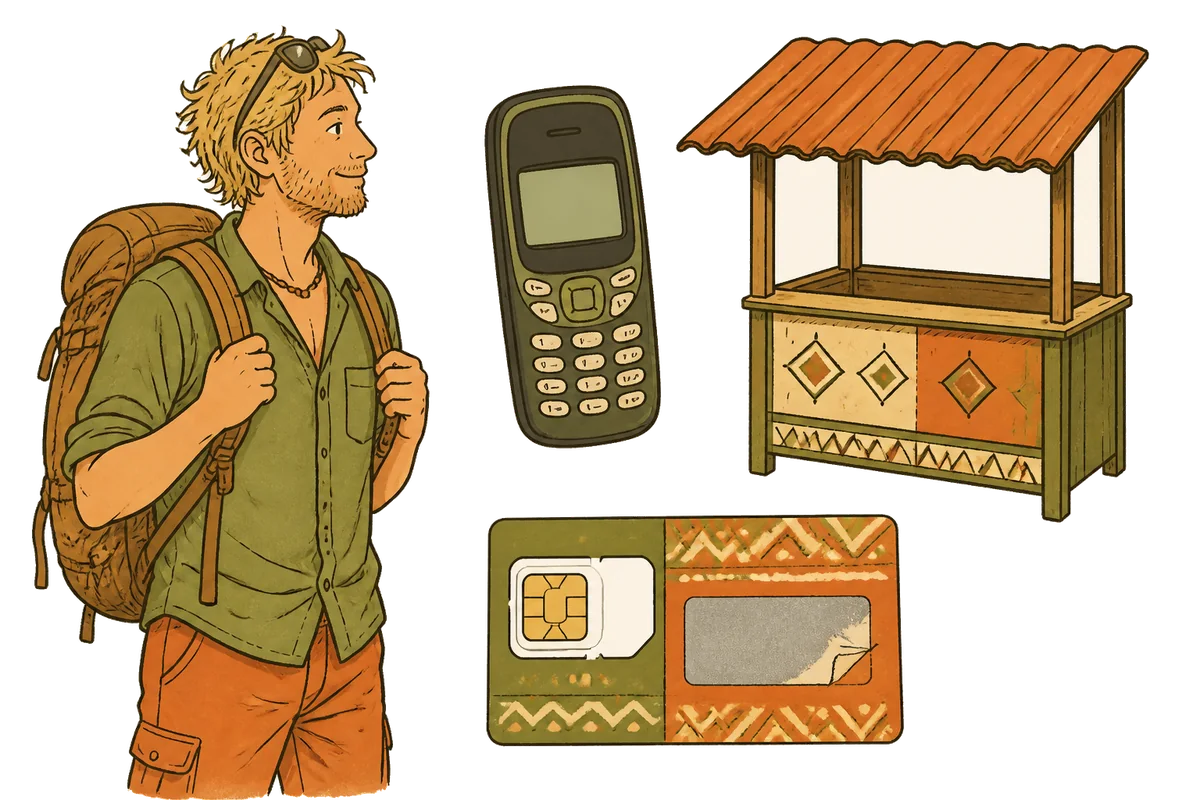
Every country has several mobile networks, and almost all work the same way: a local SIM costs a few shekels. You top it up with scratch cards, then dial a short code. Anyone at a kiosk can show you - it is quick.
After credit is on the phone you can usually call, or buy call and data bundles. Mobile data is enough for WhatsApp in most places. Do not expect video calls home without Wi‑Fi.
To pick a network, ask a few locals. The things that matter: coverage and price.
Flights inside the continent
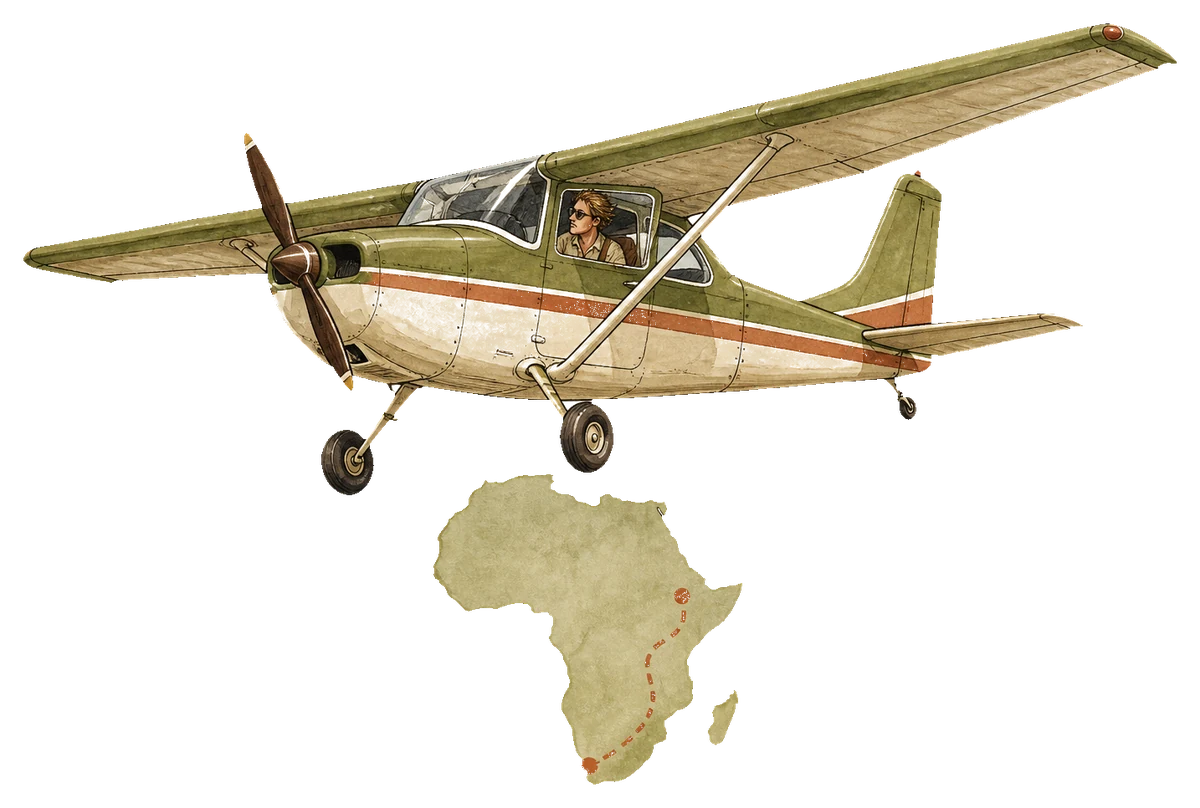
Long public-transport rides are often the most meaningful days of the trip. When you want to shorten one, there are flights inside Africa.
FastJet is a low-cost airline that sometimes has very low fares. At times a Dar es Salaam-Zanzibar flight costs less than the ferry. They do not cover the whole continent, and not every route flies every day.
We have heard of long FastJet delays that made people miss a connection. Do not use it as the first flight in a connection, especially on separate tickets. The tip is for anyone who wants to save and is not in a rush.
Kulula Air is the southern low-cost - from Victoria Falls south. Good fares in South Africa, and decent ones to Namibia, Victoria Falls and Zimbabwe. They even fly to Mauritius.
Bargaining
We did not invent bargaining in Africa. In East Africa, from Ethiopia to Malawi, it is part of local culture, because some goods have no fixed price. Bargaining between locals often comes from tightness. That is not the same as bargaining just to pay less everywhere.
In a bargaining culture you can push a deal the seller later regrets. We should not create that. It does not mean you never bargain.
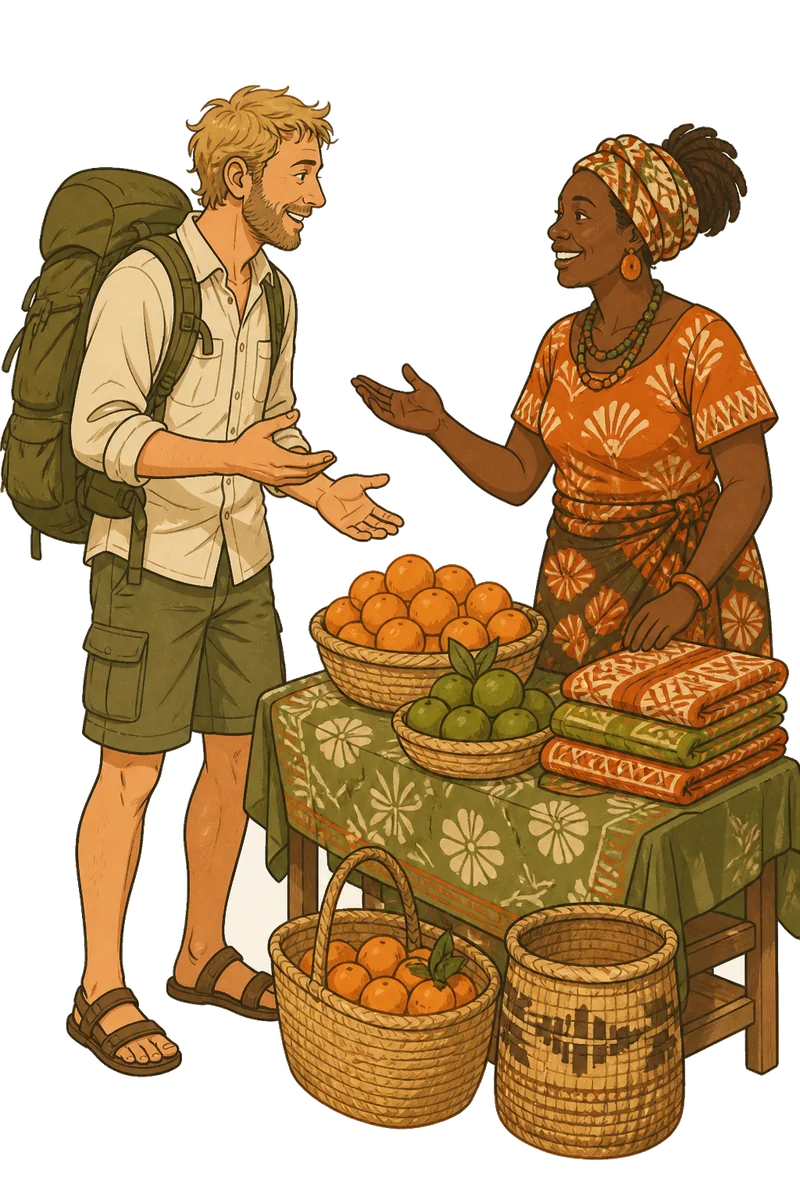
Some places will try a “mzungu price” - a tourist price far above the real one. Bargain, do not feed that habit, and do not get angry. Smile, say you know what it should cost, and it usually ends there. If they still push an inflated price - their loss. Walk to someone else.
Arriving somewhere new, it is easy to feel “they are taking me for a ride.” Many - maybe most - service people work with dignity. We have judged someone too fast and later lost a wonderful person.
In short: it is fine to check you are paying a local price. Do not leave a bitter taste. Keep it in a smile and a good mood.