


Southern Ethiopia and the Tribes
Ethiopia is a country diverse in landscape, tribes, and culture, located in the Horn of Africa. The country is home to hundreds of different nationalities, and over 80 languages are spoken here! We set out on an independent trip through the country, including its south, in the tribal region
- Independent / backpacking
Southern Ethiopia: "Africa of Fantasies" – inspiring, surprising, and toughening
Ethiopia is a scenery-, tribe-, and culture-wise diverse country located in the Horn of Africa. The country has hundreds of different nationalities and over 80 languages are spoken! We set out on an independent trip to the country, traveling by public transport even in its south, in the tribal region (Omo Valley). This is not an easy country to travel in, and certainly not by public transport. But it is definitely an experience. It is also important to say that while locals were welcoming, it wasn't always the case, and so we encountered lies, theft attempts, and extremely inflated prices compared to what locals pay. This is true for parts of Africa, so come prepared, but in Ethiopia it is particularly common.
Traveling in the south of the country is challenging both physically, due to the lack of proper infrastructure, and mentally, given the complex sights you will encounter. Independent travel in the south of the country suits travelers who have already been to third-world countries and are not deterred by it, and especially those who know how to peel back the layers to reach the amazing depth these countries have to offer.
In addition, traveling in the Omo Valley by public transport is suitable for those who have time, or who are not afraid to hitchhike with locals. There are places where a minivan passes once every two days, so you either stay at a homestay or arm yourself with patience and wait for a ride. For less experienced travelers, I would recommend traveling in the south of the country with the help of a driver-guide who will take care of everything a Western traveler needs. The daily cost for a driver-guide including the vehicle in the southern region ranges between $130 and $220 per day. If you reach Arba Minch in the south or the town of Jinka in the Omo Valley by public transport, you can reduce costs by about $40 a day.
Arriving in Ethiopia: We flew on a direct flight to Addis Ababa with Ethiopian Airlines. The ticket price was $420. When booking through the company's website, you can select kosher food. Tip: Each passenger is allowed 2 checked bags of 23 kg each, or one bag weighing 32 kg, in addition to a carry-on bag.
Money: The exchange rate during the trip was 23 Ethiopian Birr per dollar. Dollars can be exchanged at any bank branch. On the black market you can get 26-27 Ethiopian Birr per dollar – ask the locals and they will lead you to the local money changer. The exchange rate at the airport is identical to the bank rate. Pay attention! It is not possible to convert Birr back to dollars at the airport.
Visa: Israeli passport holders require a visa upon entry to the country. A visa can be issued at the Ethiopian Embassy in Israel or upon arrival at the airport in Addis Ababa. Visa price – $50 for a stay up to 30 days. $70 for a stay up to 90 days. For stays up to 90 days, you can request a multiple-entry visa – at no extra cost. Passport photos are not needed for visa issuance.
Getting to the city center in Addis Ababa: Upon leaving the airport, it is recommended not to take yellow taxis, as they are more expensive compared to blue taxis. The taxi price to the city center (Piazza) is 150 Birr. Price to the Bole area (the new and modern business center of the city) is 120 Birr.
Internet in Ethiopia: Following minority unrest in the south and north of the country during 2016, the government in Addis Ababa decided to block websites and apps like Google, Facebook, or WhatsApp. To browse these sites in Ethiopia, you need to download an app that changes the IP address of your device. We used an app called Psiphon which worked great almost always. After connecting to the internet, the app runs in the background enabling free browsing. A SIM card can be bought at any national mobile company booth. The card can be recharged anywhere, including from shoe shiners selling mobile recharge cards. Tip: If you start your trip at the Chabad House – ask if any traveler left a SIM card. The Chabad House in Ethiopia has a SIM bank that many travelers use.
On the first night we stayed in the Piazza area at the Taitu Hotel. We took a mid-range room (430 Birr). Don't make our mistake. The hotel was dirty, had no hot water, and was particularly disgusting. But we arrived in the evening, were exhausted, and didn't have the strength to look for another place. There are much cheaper and far nicer options – at excellent prices.
Other guesthouses we stayed at in Addis Ababa were in a similar price range and offered great value for money:
In the Bole area: Cheers Bed & Breakfast – an excellent guesthouse! A 7-minute walk from Edna Mall and just one kilometer from Addis Ababa airport. The rooms are new and at a very high standard, and the owner will drop you off at the airport for free if he is around. The price includes breakfast (600 Birr per night). Excellent value for money!
Global Hotel: A guesthouse particularly popular with Israelis recently. Upon advance booking, a driver from the hotel will pick you up from Addis airport when you land – at no extra cost. Price includes breakfast. (Room prices from 350 Birr to 550). La source Guesthouse Addis Ababa (rooms can be booked in advance by sending an email to: lasourceguesthouse@gmail.com)
Bajaj: The way you will likely get around in towns outside Addis Ababa. The Bajaj is essentially a tuk-tuk or rickshaw known from the East (manufactured by an Indian company). The price for a local ride usually ranges between 5 and 40 Birr. Bajaj drivers tend to inflate prices, sometimes up to 10 times for "Faranji" (foreigners). Do not hesitate to haggle!
Falafel Ilan: For every visitor to Addis Ababa – Ilan is an Israeli living in Ethiopia who prepares falafel, hummus, tahini, and recently also shawarma (not kosher). The falafel spot is located about a 12-minute walk from Bole in the courtyard of Awraris Hotel, opposite Gabriel Hospital. Prices are cheap.
Awasa
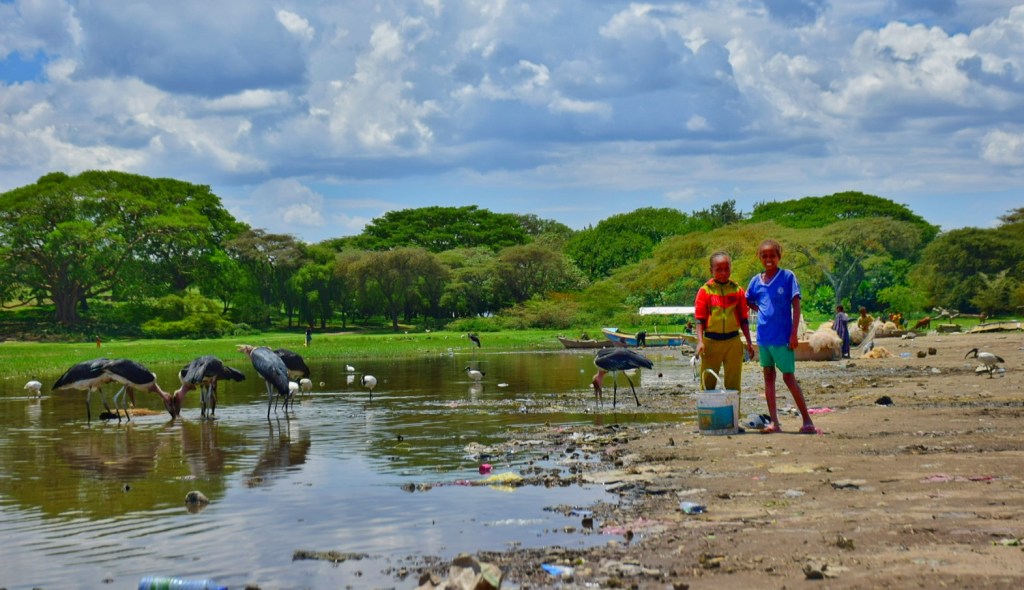
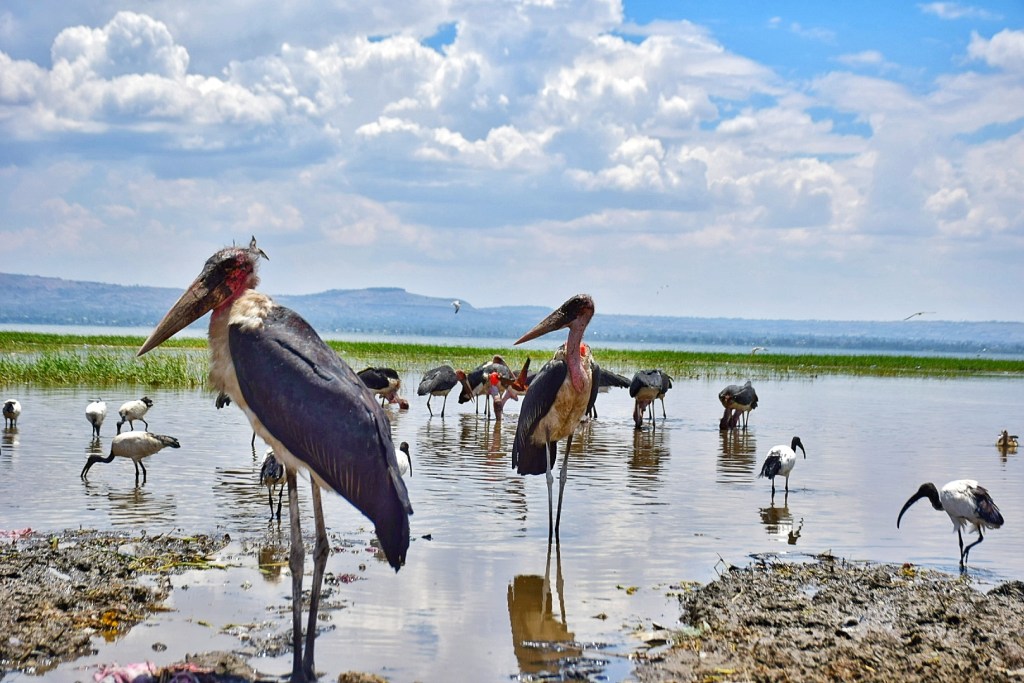
Awasa is a very pleasant city, sitting beside a lake of the same name, and is a charming stop on the way to the Omo Valley tribes. In the city you can see huge, strange birds alongside colorful birds in every corner. Next to our room window was a treetop with dozens of Marabou storks, nicknamed "the world's ugliest birds." In addition, every corner has dozens of birds of prey of various sizes.
Getting to Awasa: A tourist bus to Awasa departs from Meskel Square in Addis Ababa at 6:00 AM and 1:00 PM (all times international) for 1,700 Birr, via Ethio-Bus. It is recommended to buy tickets in advance; travel time is about 4 hours. Minivans to the city leave throughout the day from Kality station, along with other companies operating routes to the city.
The Fish Market: Awasa's number 1 tourist spot. In the morning, fishermen return with a rich catch and hundreds of birds arrive to feed on the innards discarded by the fishermen. You can also visit the market during the day. The birds will still be there, but fishermen will be busy mending nets, preparing boats for the next day, etc.
A small reserve adjacent to the fish market in Awasa: On the right side before entering the market there is a small reserve where many grivet monkeys and mantle guereza colobus monkeys live. Entrance fee per person is 200 Birr. Walk along the winding path until you reach a tree with wide roots. After that, you'll start seeing the monkeys. Locals will guide you and offer to be your guide – no need, it's a very small reserve. If you decide to take a guide anyway, one is more than enough. Be aware that anyone who sticks with you will ask for money at the end of the tour. Important, as in all of Ethiopia, agree on a price with the guide in advance – otherwise the price will skyrocket. You can take a boat trip from the reserve on Lake Awasa to try and spot hippos. The price for half an hour is about 200 Birr.
In Awasa there is a nice market where you can buy everything. In the evening, the streets fill with vendors selling street food. Additionally, you can continue to Wendo Genet and Shashamane (effectively heading back about half an hour). Many Israelis visit Shashamane because it is a key center for the Rastafari community in southern Ethiopia, with relatively free use of cannabis and its products (smoking is illegal in Ethiopia!). Wendo Genet is a great site to spend a Saturday (hot springs, plenty of nature) which unfortunately we did not have enough time to explore.
Arba Minch:
A direct trip from Awasa to Arba Minch runs twice daily, at 6 AM and 1 PM. The fare is 102 Birr. Sometimes they ask for an extra 10 Birr for luggage. This is a fee tried on "Faranjis", the nickname for white people in Ethiopia, which you will hear everywhere. Pay only if you don't feel like arguing right after waking up (:.
Arba Minch has become a fairly large city in recent years (around 240,000 residents) connected by highway to Addis Ababa. You can find everything in the city, and residents are especially proud of the local universities. Everywhere you will see construction and development.
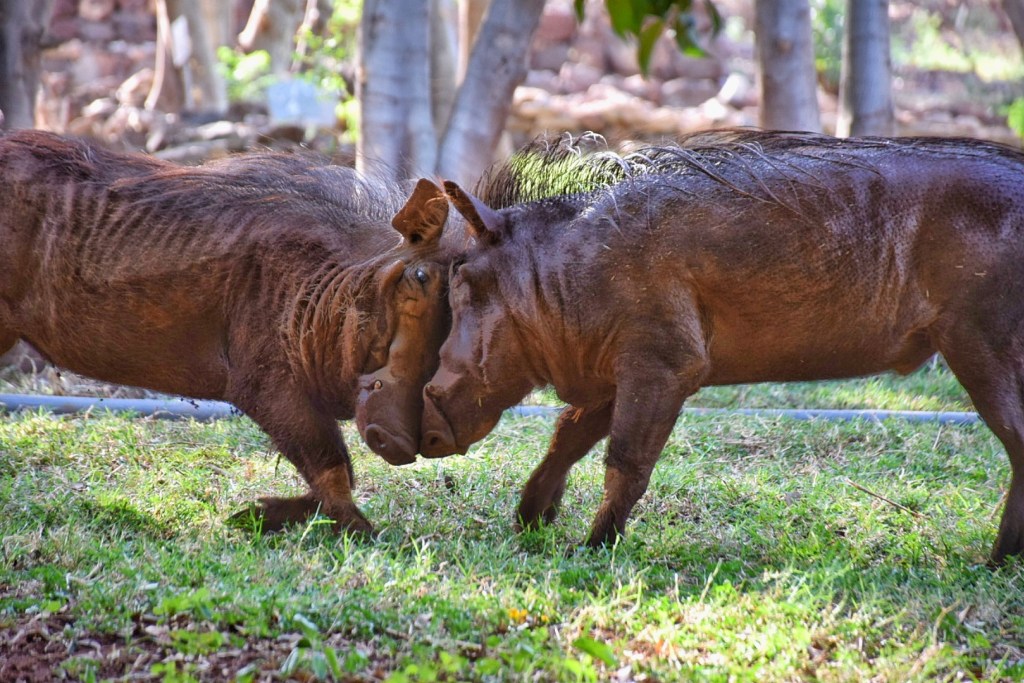
Arba Minch overlooks two magnificent lakes: Lake Chamo and Lake Abaya. Not far from the city is Nechisar National Park, where you can spot zebras, baboons, many birds, and if you're lucky – maybe a leopard (probably not =)).
You can also take a boat trip on Lake Chamo to view crocodiles and hippos. We didn't go based on feedback from other travelers. The local price is relatively steep (about 900 Birr for a 1-hour trip) and it's recommended to watch hippos elsewhere in Ethiopia.
In Arba Minch we stayed at Paradise Lodge Hotel – $57 per room per night. A high-standard hotel where you can find a luxurious pool, gym, shuttle services, free laundry service, babysitting, and more. Breakfast is slightly disappointing, but you'll forget you are in Ethiopia.
A guesthouse in Arba Minch we stayed at on the way back from the Omo Valley that offers great value for money is Forty Spring Hotel. It has a lovely garden visited by many birds.
Both places are located in the upper town, which is more pleasant at night.
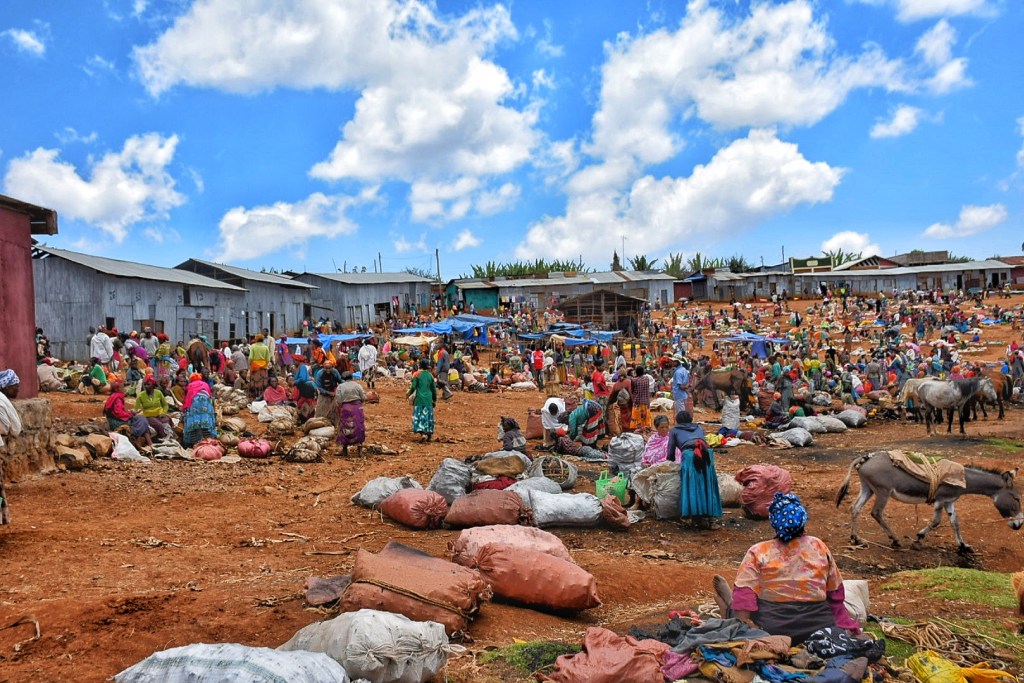
Arba Minch has a local market flocked to by villagers from the surrounding area. The market is divided into sections: fruits and vegetables, plastics, livestock, etc. A few tribal people come to this market to sell their goods, giving a foretaste of what awaits you in the Omo Valley. Generally, market days in southern Ethiopia are the best time to meet locals and better understand this amazing place – which seems frozen a few hundred years in the past.
Village market days are: Monday: Arbore. Turmi (Hamar tribe). Konso (Konso tribe). Tuesday: Yabelo. Key Afar (Banna tribe). Dimeka – Hamar, Karo, and Banna tribes. A small Mursi tribe market also takes place in Jinka. Thursday: Chencha (Dorze tribe). Key Afar (Banna tribe). Dimeka – Hamar, Karo, and Banna tribes. Yabelo (mixed). Konso (Konso tribe). Saturday: Jinka (Mursi tribe). Chencha (Dorze tribe). Dimeka – Hamar and Banna tribes. Soddo (not in the Omo Valley) – local market, local tribes.
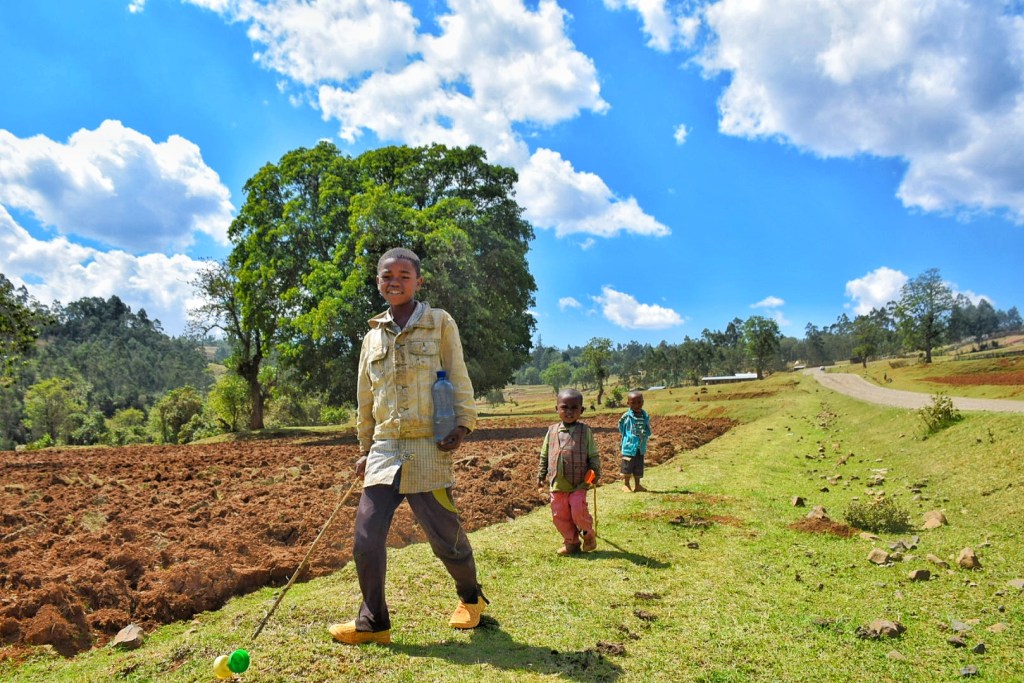
Dorze Tribe: You can reach the Dorze tribe, known for the tall structures built by its people (resembling an elephant trunk or beehives), by a bus departing every hour from the central bus station in Arba Minch to Chencha. The bus fare is 20 Birr. In Chencha, on market days, there is a very vibrant and colorful trade by the Dorze people. A photographer's paradise!
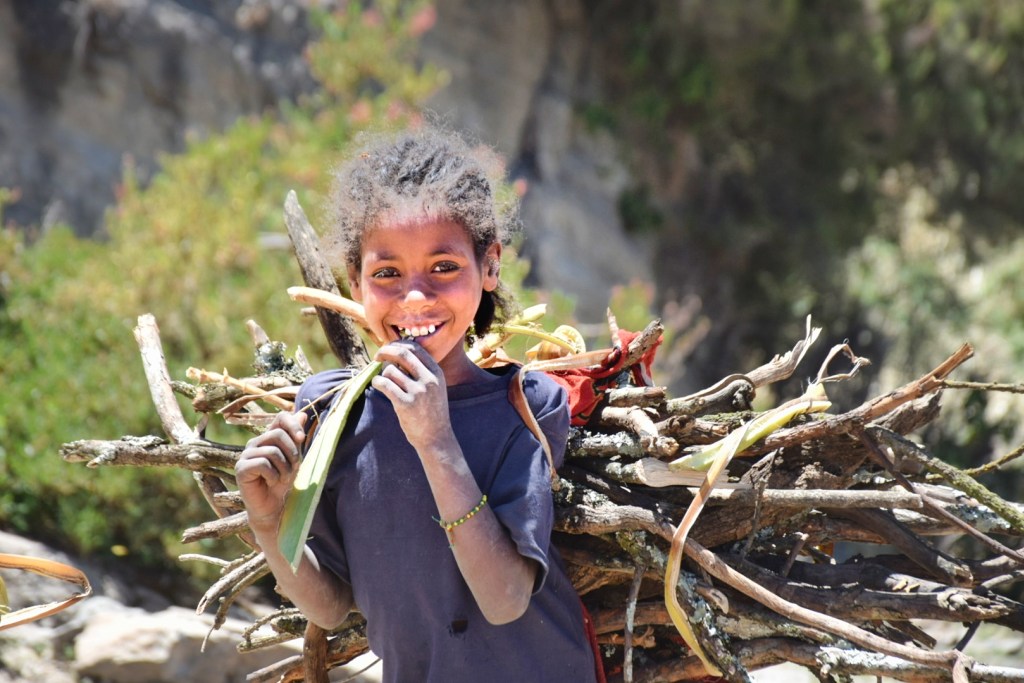
From Chencha you can walk back towards Dorze, about a 1-hour walk. About 200 minutes' walk from Chencha there is a beautiful waterfall named Dorso. The route to the waterfall goes through stunning scenery, fields, and plenty of water. Ask a local child to guide you there.
In Dorze you can visit tourist traps like traditional fabric weaving workshops or enter a local commercialized house for a fee. The traditional tall houses of the tribe command awe given their strength and the meager resources used to build them. The houses can be seen everywhere in the village, though in recent years the Dorze have begun building houses from mud and tin roofs. If you wish to visit a local house, simply smile and ask to see it – usually, locals will happily open their home to you. The Dorze people are known as excellent weavers and survive on a special banana-like plant (False Banana) called Enset. The tribe members prepare bread with a unique taste from the starch extracted from the stem, and build their unique houses from the tree branches.
Konso:
From Arba Minch to Konso – 50 Birr. Two and a half hours. Buses depart several times a day from the town's main station.
Konso – the phallic-symbol tribe (if you look closely, you'll see why). An agricultural tribe that builds mountain terraces in a tough farming region. We visited a village named Gamfala. The roofs of the tribe's structures are built in a special shape, and in the center of the village stands a structure replaced once every 70 years which Omo Valley tribal researchers believe also resembles male genitalia. Special significance is attributed to Moringa trees, used for medicine, food, and wedding gifts. Married women wear dresses somewhat resembling the roof shapes, and in the village center there are totem poles built by locals to honor ancestors. Community structures are torn down and rebuilt roughly every 70 years and serve as a first home for newlyweds.
In addition, the village has an anthropological museum, and you can take a local guide to areas where Konso people bury their ancestors. In these areas there are still many statues that have not been stolen by greedy Western tourists – totem statues carved by Konso people to remember their forefathers. In central Konso, local alcohol is prepared from a mixture of sorghum and other local grains. The smell resembles beer, the taste spoiled wine, and the feeling is like lukewarm tea – a must-try!
Jinka:
From Konso to Jinka: 70 Birr. Three and a half hours.
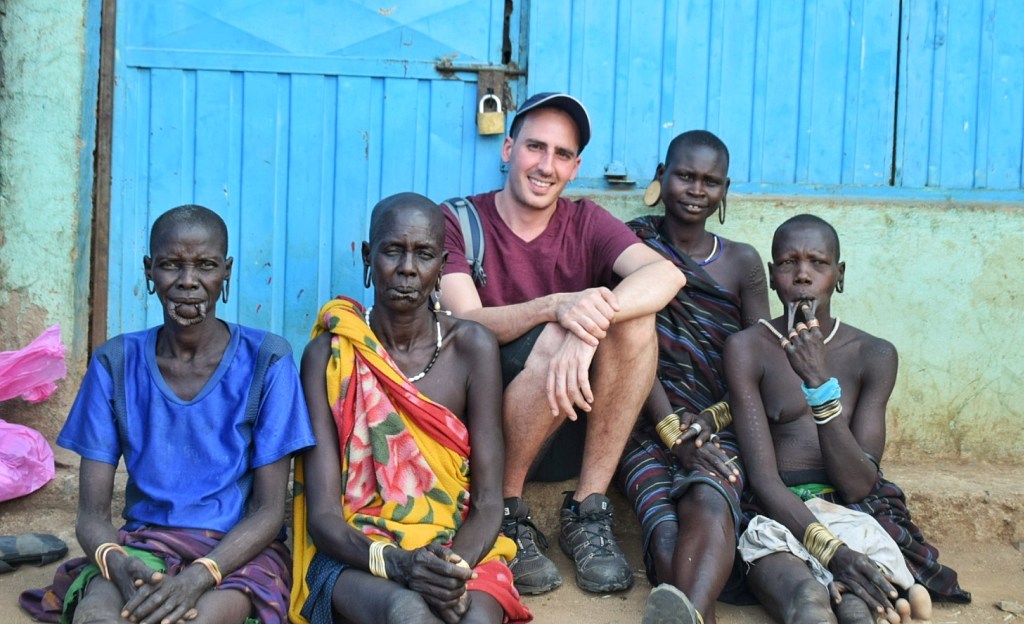
Jinka is a small town with several hotels and serves as a great hub for hiring a 4x4 jeep to places without public transport and taking day trips to the Omo Valley tribes. The town is very small, and on market days you can meet the Mursi people (those with lip plates). There are several hotels in town (don't expect too much; conditions are very basic) at inflated prices. From Jinka to Mago National Park, to the Mursi tribe, a minivan runs twice a week on Mondays and Wednesdays (about 70 km).
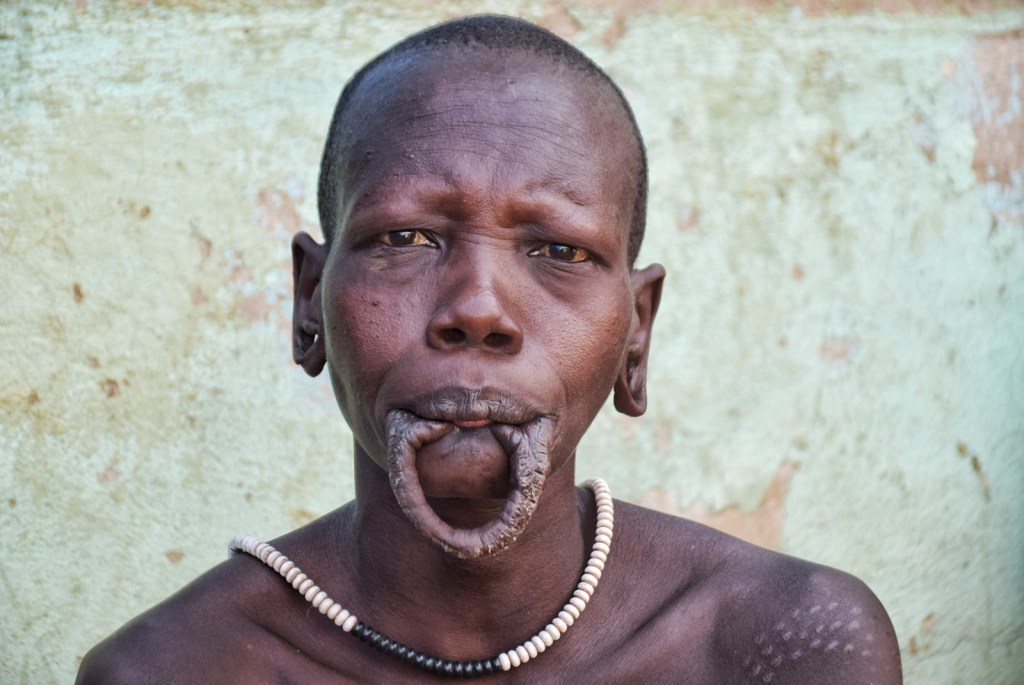
The Mursi tribe is one of the most fascinating tribes in Ethiopia. Tribe members were discovered by Westerners only in the 1970s. Mursi women insert clay plates into their lower lip, expanding them over time, with some even inserting wooden discs into their ears. The plates are a symbol of beauty and today are used mainly to attract tourists who pay a few Birr for photos. According to tribe accounts, in the past plates were meant to disfigure women so slave traders would find them less desirable.
Mursi men are known as fearless warriors who fight with sticks in short duals lasting a few minutes. Battles sometimes result in severe injuries, but continue to take place as a means to solidify social status among men in the tribe.
Turmi:
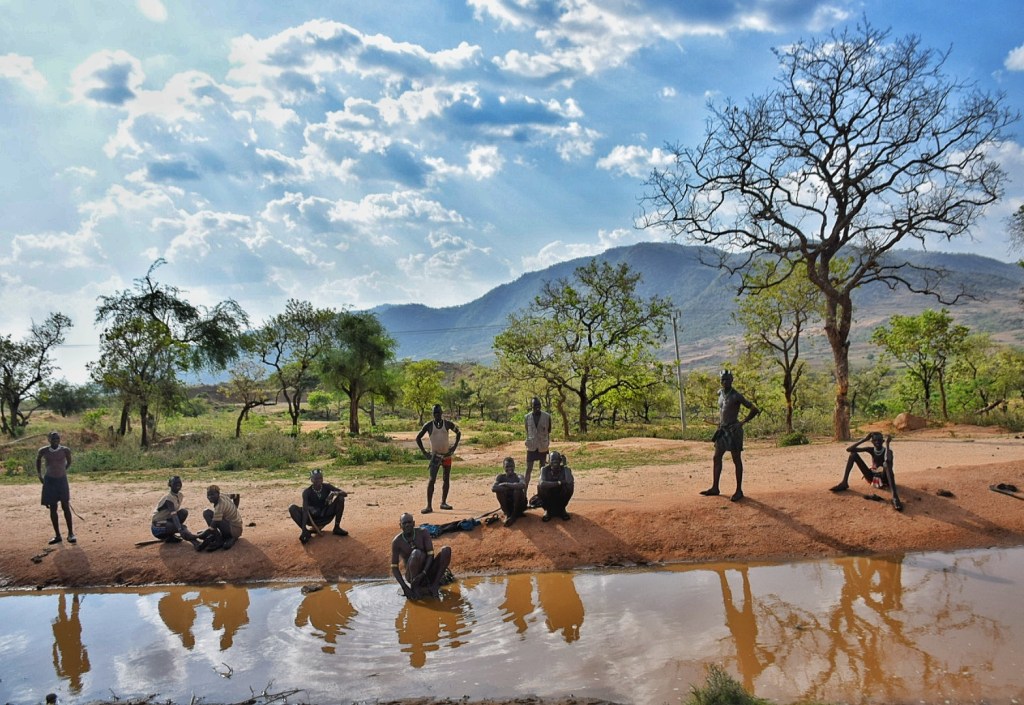
A bus from Jinka to Turmi runs 3 times a week. Additionally, there is a daily bus to Dimeka, from where continuing to Turmi is possible via local trucks and vehicles. Arm yourself with patience. Transport cost to Turmi: Jinka to Dimeka – 70 Birr. Dimeka to Turmi – 20 Birr. Minivans depart only once full.
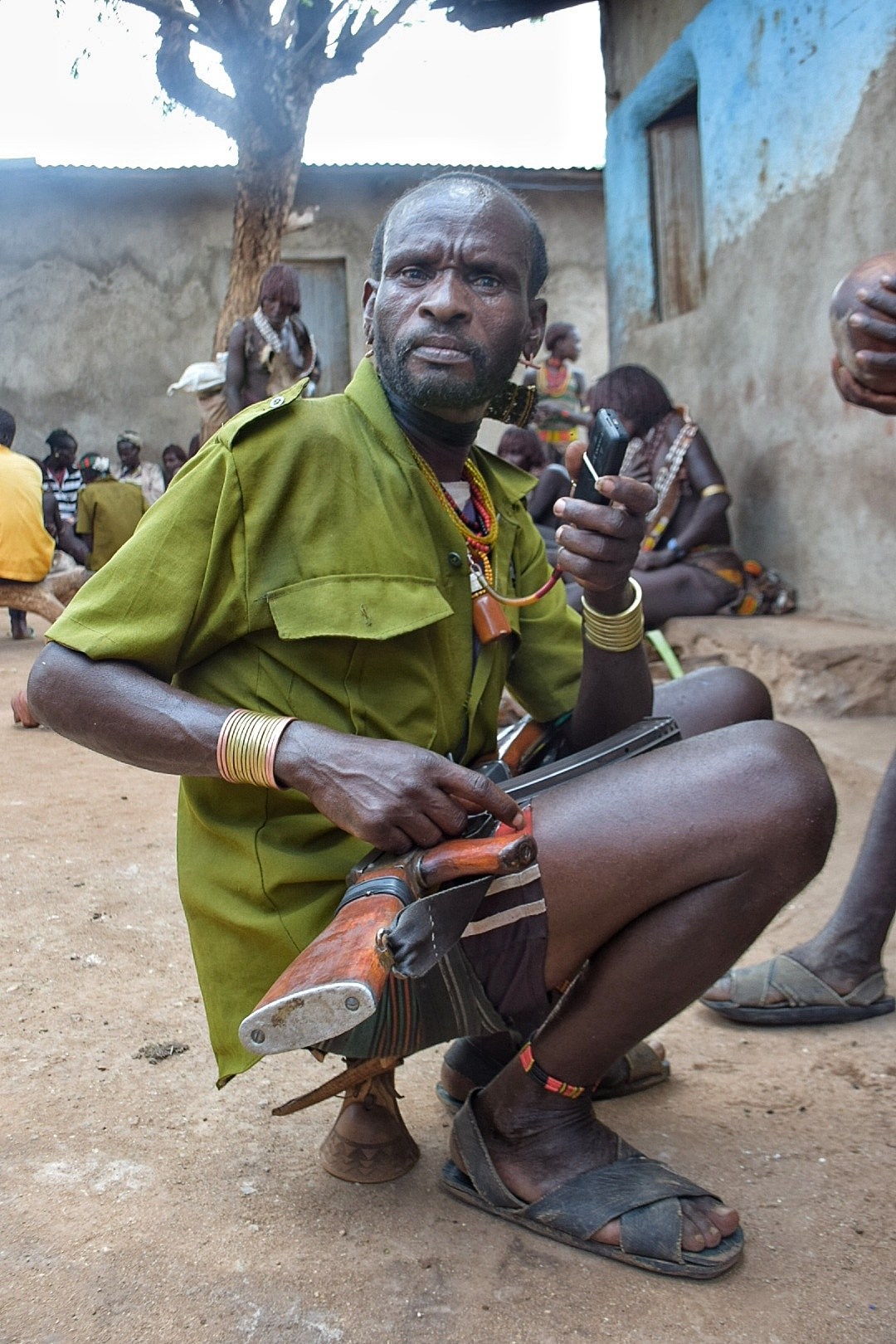
In Turmi there is a Hamar tribe market; members of this tribe are among the friendliest of all tribes in the Omo Valley. From Turmi you can continue to a Hamar village and even stay overnight in a tent hosted by tribe members (they are exceptionally welcoming!). Tents can be rented locally.
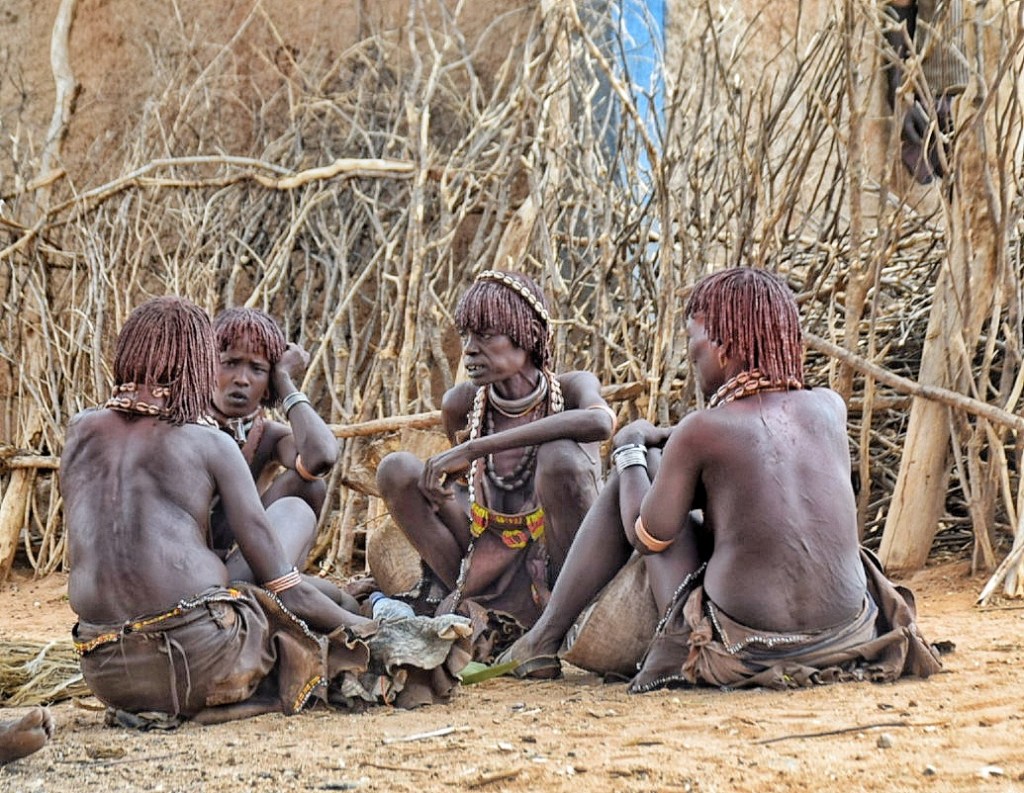
The Hamar tribe is the largest in the Omo Valley. Hamar women walk topless and sport a distinctive helmet-like hairstyle made of animal fat and red pigment derived from local stone. Women also wear small leather skirts decorated with shells and beads. Men showcase unique hairstyles made of colored mud and carry a small wooden stool everywhere for sitting. The Hamar tribe is known for a unique initiation ceremony (Ukuli / bull jumping). Young men coming of age must leap over about ten lined-up bulls without falling – completely naked. Only after successfully jumping over the bulls does the youth enter adulthood.
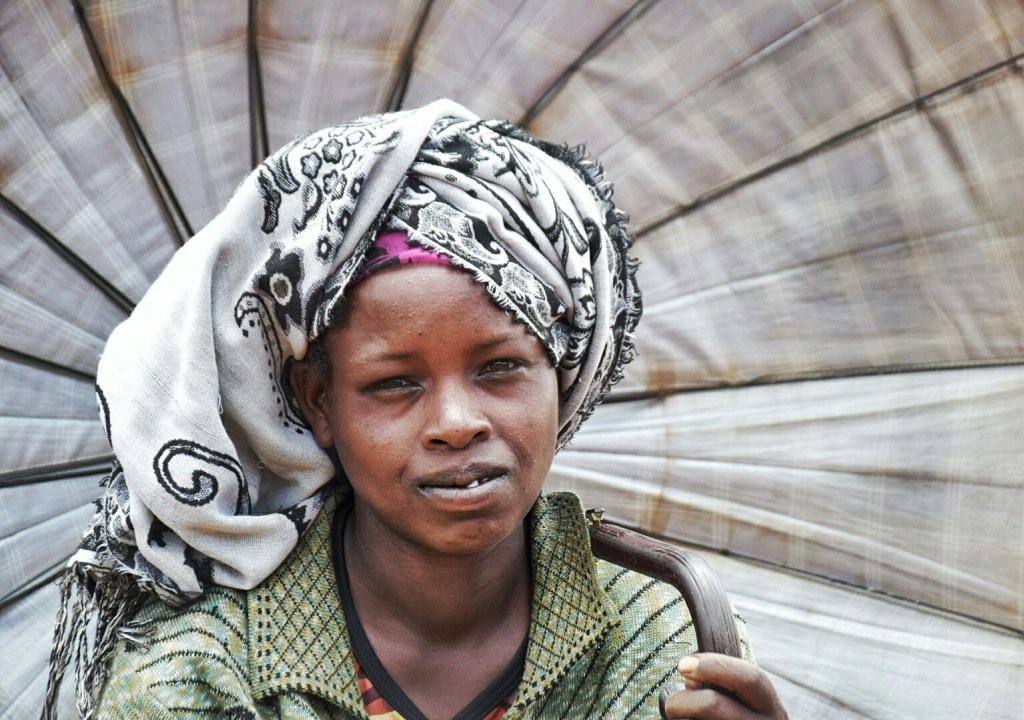
During the initiation ceremony, women dance and sing around unmarried men who previously passed the ritual, begging them to whip their backs with a special whip. As a result of the lashes, cuts open on the women's bodies, which become infected to form large scars. Scars are considered attractive and beautiful in Hamar culture, and women spend considerable time caring for their scars.
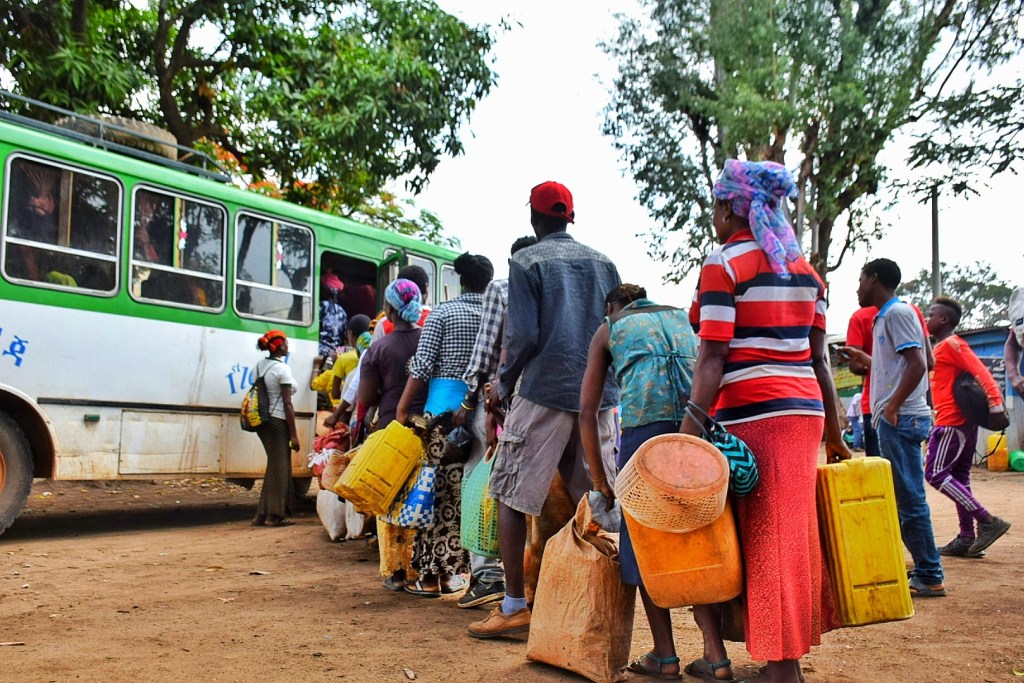
Note: All kinds of people will present themselves as guides and request an entrance fee to the Hamar tribe. Simply brush them off. This recurs almost everywhere. If you need to be firm, tell them firmly to leave you alone. These "guides" will disappear quickly. It is customary to pay about 400 Birr to watch and freely photograph the bull jumping ceremony.
Departing Turmi by public transport is possible 3 times a week to Jinka. The rest of the time you can catch rides with locals for a nominal fee. Usually this will be towards Key Afar or Dimeka, but there are also many rides towards Arba Minch. There will always be locals helping you out who request payment at the end. If that's fine with you – let them arrange a ride for you.
Omorate:
Due to time constraints, we didn't visit the Geleb and Dasenech tribes. However, from Turmi you can hitch rides to Omorate to visit the Dasenech tribe. Currently there is no public transport at all, but the road is in great condition and trucks and vehicles travel the route (not very frequently).
Returning to Addis Ababa:
From Arba Minch to Addis Ababa you can take a long ride on local buses or a comfortable trip with Salam Bus company. The company's office is located right next to the central station in Arba Minch. 7-hour journey, 280 Birr.
In the next part: Addis Ababa and areas near the Ethiopian capital. • All photos in this post were taken by David Meir Cohen, author of the article and blog - Travelers.