


Malawi 2014
Malawi
- Independent / backpacking
Malawi
Looking back, I can say that during the trip itself I didn't rest much because I wanted to accomplish more. So much to see, a desire to cover a lot, and the planning from home was a bit pretentious. I managed to experience a lot, see endless landscapes, meet countless people, and visit 6 countries in total. There were all kinds of places I felt I didn't want to leave, and the plan changed accordingly, but only in Malawi did every single place feel like that. Right in the middle of the trip, when I arrived in Malawi, I knew it would be my favorite even at the end. The warmth of the local people, the landscapes, the vast open spaces, and the atmosphere, which for me was different from everything I had known on the continent until then, was an atmosphere that remained unique throughout the rest of the trip.
I stayed there for 30 days, during which I managed to see the country from its southern tip to the north. I continued my journey northward, and even today I remember how at the border crossing my heart pinched a bit and I started feeling nostalgic. My trip started from the south of the continent heading north. I arrived in Malawi and its capital, Lilongwe, from Zambia.
In the capital of Zambia, Lusaka, I bought a ticket with the KOBS bus company which cost me 200 Zambian Kwacha. For long-distance and international travel, I always recommend buying a ticket the day before. The ticket I bought was for the next day's bus scheduled to leave at 14:00, and I was told – no delays, we will leave without you.
For some reason, even after two and a half months on the continent, I believed him, got stressed, and even arrived 15 minutes early, but Africa has its own time. After a small argument where they demanded I pay for luggage, unlike the other passengers who boarded with luggage for free, and after waiting for the bus to fill to capacity (and the term doesn't even begin to describe the amount packed inside), we set off at 16:00. On the face of it, I could have arrived the same day and bought a ticket, but again I recommend buying a ticket a day in advance for long journeys. The road to Malawi is long and winding. We arrived at the border crossing between Zambia and Malawi around 2:00 AM, where I exchanged Zambian Kwacha for Malawian money. The money changers there don't come in large groups and you can rely on a fair exchange rate.
We arrived in Lilongwe at 04:30 AM. Some of the passengers who noticed I was the only tourist took care of me and insisted I wait for the sun to rise, and that they would accompany me to a taxi stand where they would get me to my destination for a fair price, which is what happened. A pair of men escorted me to a taxi outside the central station where we dropped off, and I took a taxi to MABOYA CAMP for 2000 Malawian Kwacha. The city of Lilongwe is built by areas numbered like divisions into different plots (for example, my hostel was in Area 3, as I discovered after the ride). Neither the taxi driver nor I knew this, and we ended up driving around the city a lot.
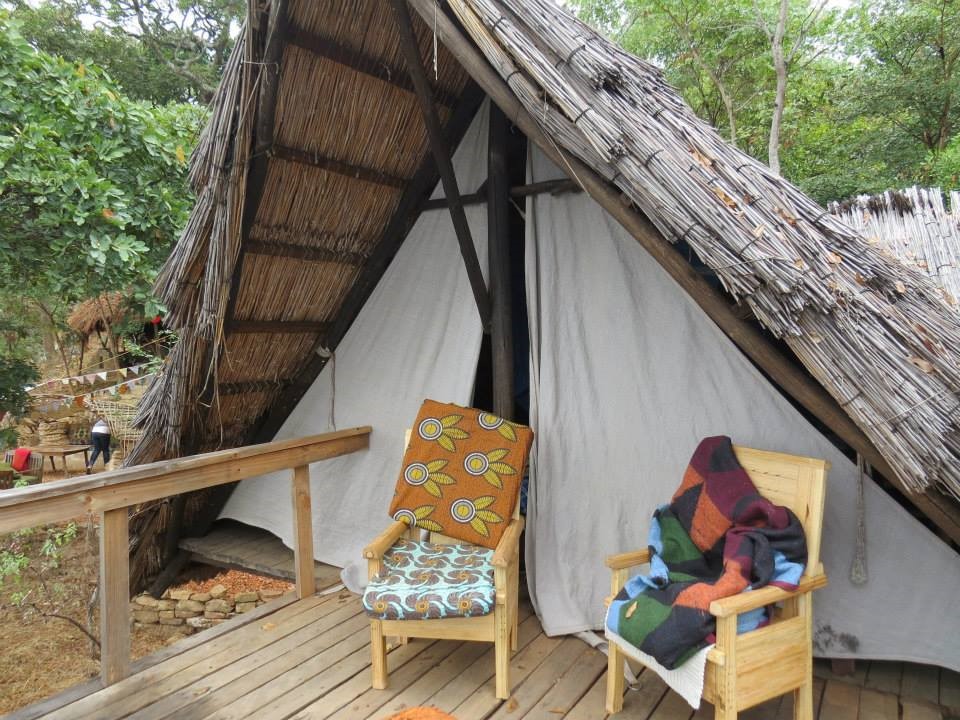
The hostel offers accommodation in mixed dorms, beds in existing tents, or lawns to set up private tents. There is a restaurant that prepares meals all day at a fair price. It's a 20-minute walk from the city center or a ride on the many bicycle taxis waiting outside the hostel. There is available electricity, clean toilets, and the internet is Wi-Fi via scratch cards bought in packages.
Generally, in Malawi there is no decent internet infrastructure, and internet is paid Wi-Fi based on browsing packages. Basically, everywhere I was in the country except Mushroom Farm in the north (which we will get to later), I paid for internet access.
The currency in Malawi was very weak when I was there in 2014, and a 1000 Kwacha bill was worth about 9 NIS. ATMs run out of money on weekends, and to remind you, the weekend starts on Friday and ends on Monday morning, so I recommend withdrawing the maximum possible from the ATM, or even 3x. ATMs are not available everywhere, not all accept all credit cards, and the possibility of getting stuck without cash is real (a couple I was with in the north of the country who wanted to stay a few more days at the hostel drove specially to another city to withdraw money).
Mulanje – the mountain trek located in the south of the country, reached in stages. From Lilongwe, I took a bus south to Blantyre to a backpackers called DOOGLES. The place offers dorm and private room accommodation and includes a very varied and cheap kitchen/restaurant. Personally, I met a Tibetan backpacker there who had already booked the trek with a guide for the next day, and I joined him. From Blantyre we took a taxi to LIMBE and from there another taxi to chitakali. We met our guide Peter, bought groceries, and took a motorbike taxi to the start of the trail. In the Mulanje Mountains there are many huts for sleeping and you can create several routes in coordination with the guide. The route we did was from one end to the other, including the summit. A day cost $25 for the guide including tip.
The waterfall halfway through on the first day
The trek involves a lot of climbing, so I recommend preparing in advance food for 4 days and 3 nights including cooking options. We cooked rice on a stove, ate a lot of tuna and energy bars. You can also take porters and cooks; personally, we managed with just a guide. For those who don't have trekking poles—which I generally recommend using on every trek—there are plenty of kids selling custom wooden sticks at the entrance to the trail, and it makes a great souvenir—speaking from experience.
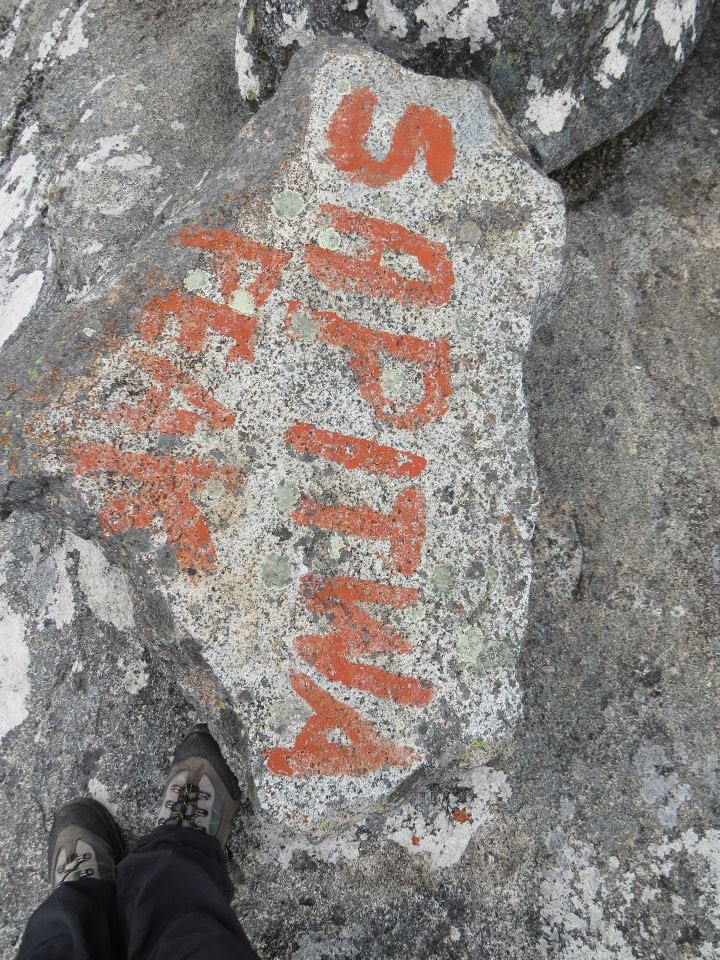
My route in the Mulanje Mountains – the first day included a 6.5-hour walk to the CHAMBE hut. On the way we stopped at waterfalls, and after swimming and refreshing ourselves we reached the hut. At every hut hot water awaits to wash your face, drinking water (collected from the stream), a lit fireplace, and if you arrive before the other hikers, you might also get a mattress for the night. Nights are chilly and require warm gear and a decent sleeping bag. The next day we continued walking to the CHISEPO hut, which was about a 3.5-hour walk. We left our big bags at the hut and climbed to the summit of Mount SAPITWA, located at an altitude of 3050 meters. After about 3 hours of climbing and 2 hours of descent, we returned to the hut. The following day we walked 6 hours to the SOMNANI hut and spent the night. The next day we woke up early and after a 2.5-hour descent reached the entrance. From there, the way back was to Chitakali, Limbe, and Blantyre.
At the summit - Sapitwa
A few weeks later I met other backpackers who did the trek. Some did it without a guide, some paid half of what I paid. Everyone's main recommendation was to get to Chitakali, find a guide, and set off on the trail the next day. Peter the guide knew a lot of things, was supportive and helpful, and this is his number as of the time I did the trip – 0888700567.
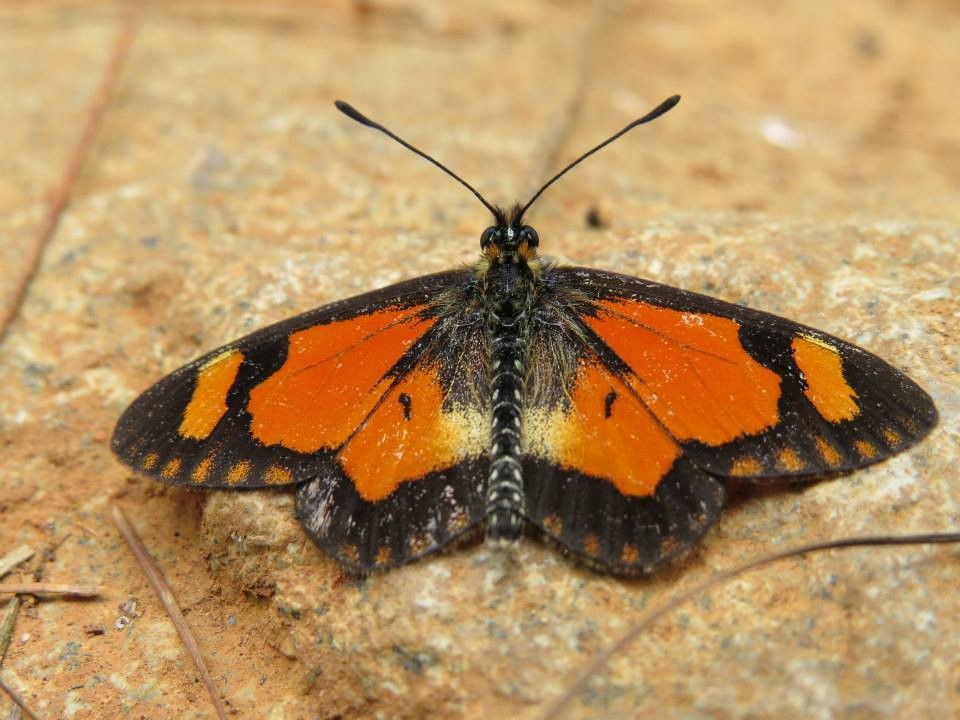
From Blantyre I traveled to Zomba to hike the Zomba plateau and stayed at ZOOMBA BP, which offers large lawns for tents, shared dorms, private rooms, and generally has affordable kitchen food to order. The backpackers is located in the middle of town within walking distance of a supermarket and local market. Going up to the Zomba plateau itself is better by taxi because it's a long climb. I got there in the morning by taxi, and despite the guards' insistence that it was dangerous, I did the route on the plateau without a guide, using the map from reception to navigate on my own to waterfalls, a viewpoint over the town, and reserves full of butterflies and birds that create colorful carpets. I made the descent back to the backpackers on a motorbike taxi.
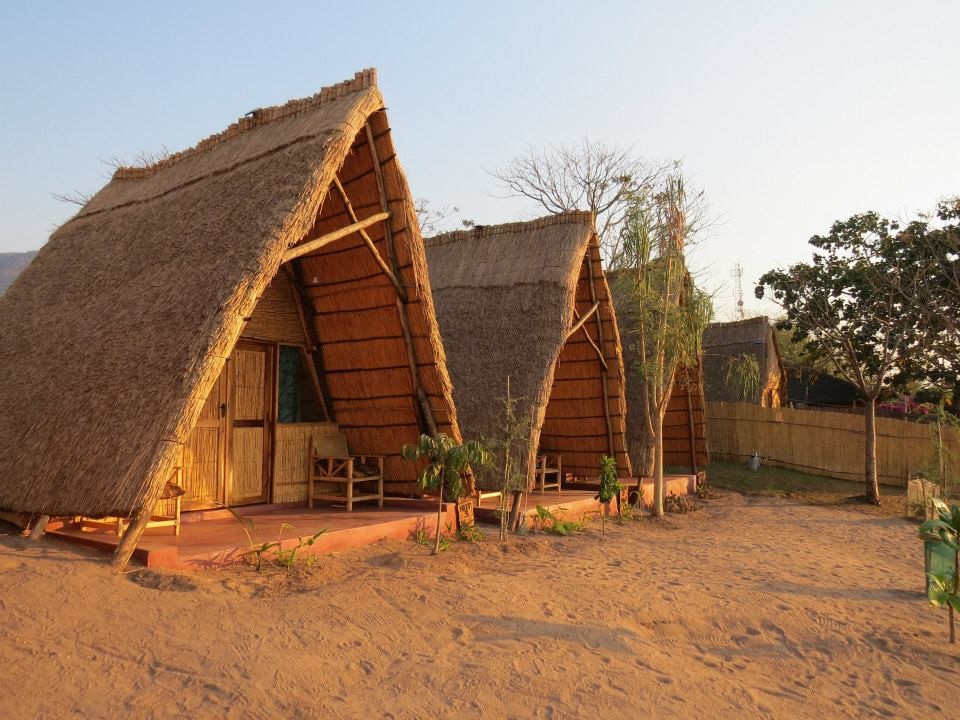
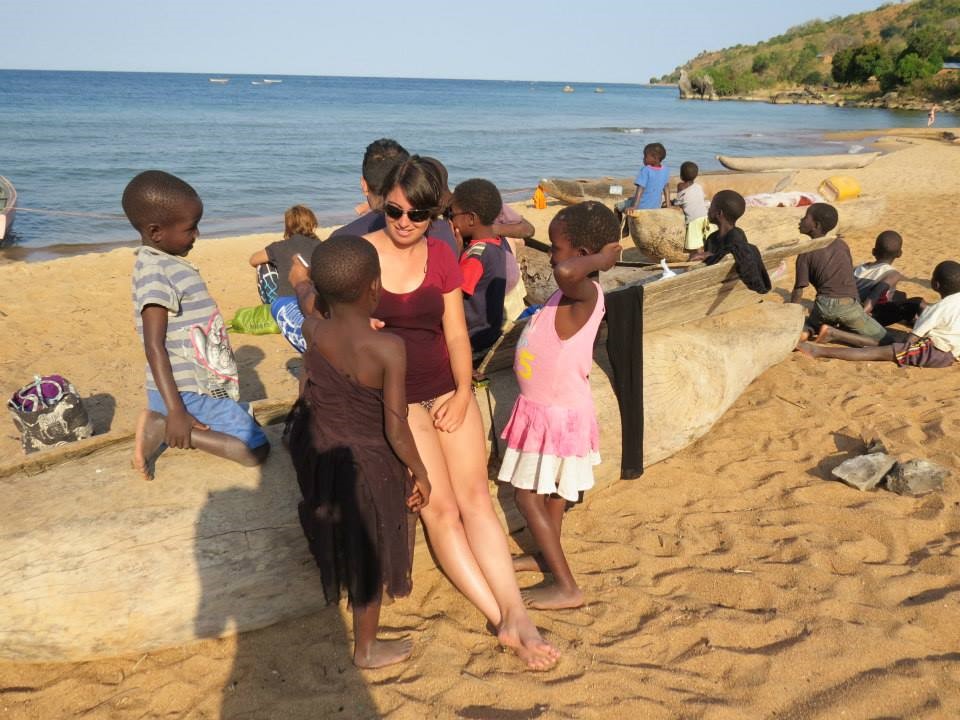
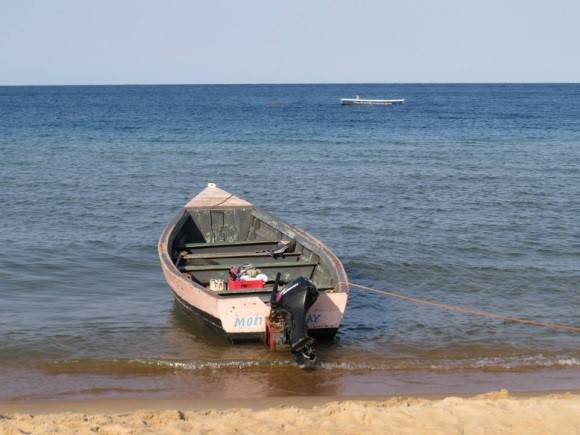
From the town of Zomba I traveled to MONKEY BAY in a 300 Kwacha taxi. I took a motorbike taxi for 1000 Kwacha to CAPE MACLEAR. A lot has been said about Lake Malawi and the risk of entering it. I agree with all the dangers and bilharzia, yet despite it all, I found myself going into the water for a long swim in the lake. I stayed there at a place called MGOZA BP for 3000 Kwacha in wooden huts where each bed even had its own mosquito net. The place has clean toilets and showers and a cheap local kitchen. There is also a local food market in the town itself. The beach area offers many more backpackers at various prices including lawn options for tents.
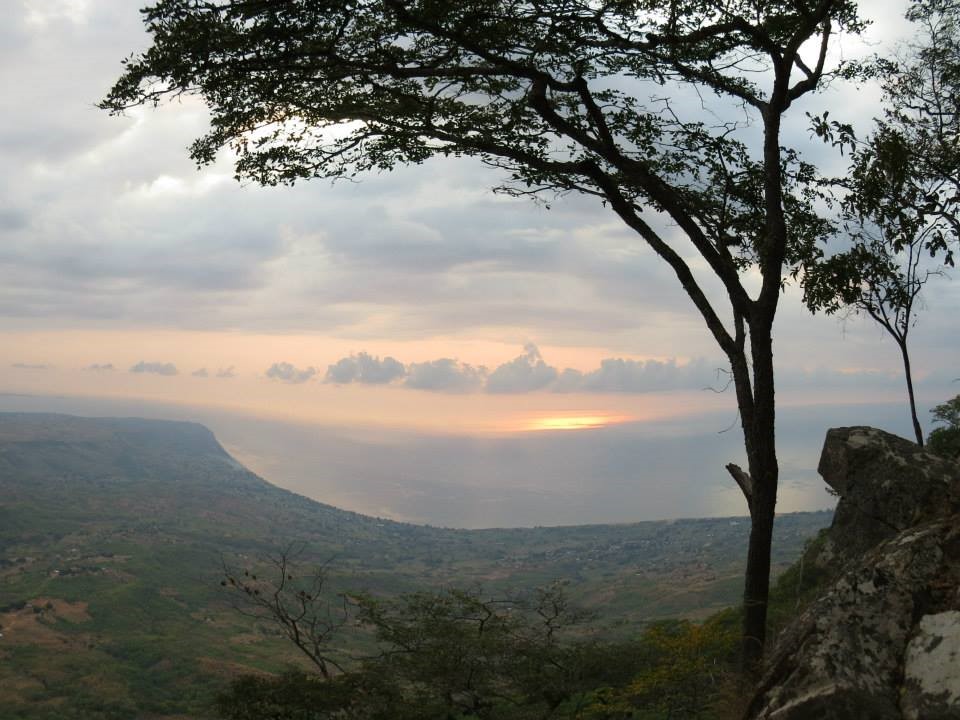
*The cover photo is of the sunset from Cape Maclear
Huts on the beach at Cape Maclear
After two days on the beach and after scheduling a motorbike taxi very early in the morning to take me back from Cape Maclear, I took a bus back to Malawi's capital and Maboya Camp for another night. I met a few Israelis heading south; one girl wanted to return to a place she had already been to before returning to Israel, called NKHATA BAY. The next day we left around 12, a trip that was supposed to take 5 hours. Again, Africa being Africa, we only left around 16:00. I highly recommend leaving as early as possible to avoid my situation, where the taxi reached its final destination around 20:00, an hour and a half away from its (and our) original destination. Due to the deep darkness, they decided they would only continue there tomorrow. It took us over 5 more hours and 2 paid hitches to reach the destination in Nkhata Bay – MAYOKA BP, which offers cabin accommodation, access to the water, a weekly boat trip and water activities, and a cheap, varied, and tasty kitchen. Adjacent to Mayoka is BUTTERFLY BP, which is cheaper, so I moved there. All the guys in the area at the time always hung out at Mayoka's lounge and ate there; the owner is aware of this and very friendly, and beyond that – a fan of Israelis who even dedicated songs by Arik Einstein and Friday afternoon songs from Galgalatz to me and the Israeli girl who was with me.
Nkhata Bay is amazing; there's a small town with delicious, cheap local food, and even parties in the area. Mayoka organizes a boat trip to a nearby beach across the lake including volleyball games and cliff jumping into the water for free for guests. Even though a few guys and I offered to pay, the owner agreed to let us join for free.
The next destination was Mushroom Farm, an eco-backpackers run by two brothers from the US, located just below the town of Livingstonia in the north of the country on a mountain slope. There are two ways to get there – hitchhike to the bottom of the mountain and climb it on foot, or email them and they connect you with someone leaving from the city of Mzuzu (for a fee, of course). I left Nkhata Bay and traveled to Mzuzu for 800 Kwacha on a ride that took about an hour and a half. The scheduled ride was only leaving in the afternoon, so I left my things at Joy Place backpackers in Mzuzu and went shopping. Mushroom Farm is isolated and serves relatively expensive vegetarian/vegan meals. I recommend stocking up on food and drinks before arriving there. This backpackers is built on a mountain slope and is eco-friendly – minimal electricity, Wi-Fi once an hour in the evening (not always), and open toilets/showers with a connection to nature that really works. For the first few days I slept in a tent on a small cliff overlooking the lake, and next to me was a hammock where I spent most of the day reading a book.
One of the attractions in the area is to walk / catch a ride to the town of Livingstonia. It's about a 1.5-hour walk, and it features the town museum (500 Kwacha) and a famous university in the country. There are two waterfalls in the area along a short, nice trail you can walk around (500 Kwacha). There's no need for a guide, even though they will try to convince you. It's about a 15-minute walk round trip.
Mushroom Farm was a relaxing and wonderful experience, and after 5 peaceful, great days I decided to move on to the next country – Tanzania. I arranged the way down to the bottom of the mountain and to the nearest town with the same guy who drove me up, and we were supposed to leave around 5:30 AM. When 6:15 came and he still hadn't arrived, I started walking down on foot... it was challenging, but eventually I reached Chitimba, and from there took a taxi to the border for 200 Kwacha. Walking across the Tanzanian border is fairly simple, across a bridge. Pay attention – like many people who did this, I also fell victim to money changers. At every border I had been to, I exchanged money with changers and everything went smoothly, except the Malawi-Tanzania border. They are professional, fast, come in large groups, and confuse you. The trick is to offer a higher exchange rate than expected. They ask to count your money and in return hand you a large stack of Tanzanian bills. While you count the Tanzanian money, they pass your bills to a friend behind them, and after a few seconds yell that the police are coming, return your stack of bills, and take theirs. Afterward, you discover half is missing. There are a few official government exchange places there with fair exchange rates, and it's better to go directly there.
From here – the trip in Tanzania began!
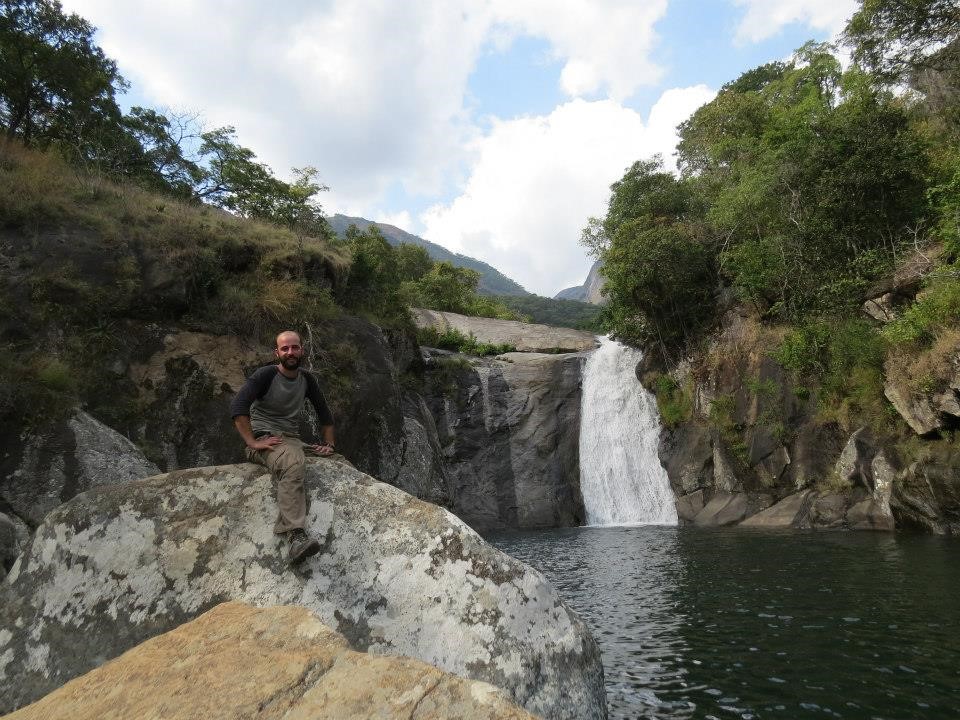
Three weeks after my military discharge, here I am on a plane to Cape Town, South Africa. Apparently, five years in the army take their toll, and I didn't need much time to think. My sister, about 5 years before, had traveled for 3 months on the continent and returned with stories and photos I just had to see and experience for myself. During the six months of the trip, I managed to see a bit of every country and was left wanting more from South Africa, Namibia, Zambia, Malawi, Tanzania, and Kenya. The trip took place from April to October 2014. To the question "Where was it most fun?" the answer is clear - Malawi! There wasn't a place I didn't enjoy, every experience led to another, and without a doubt, I was left wanting more. Looking back, I can testify that I was a budget backpacker, with a tent and sleeping bag in my backpack, looking to discover new things. Experience teaches that quality is sometimes better than quantity, and it's good to change plans along the way. I hope you enjoy the experience I gathered, and I'm always here for more questions. Amit.