


West Africa
Guinea-Bissau
- Independent / backpacking
- Overland / vehicle
My name is Cheli Atia, 28 years old. The first time I traveled to Africa was after the army. I traveled alone for 4 months, visiting Tanzania, Malawi, Zambia, Namibia, South Africa, and Swaziland. I returned from that trip very hardened and eager to continue traveling and seeing more parts of the continent. So 4 years later I went on trip number 2, again alone. This time I traveled for a year, spending 10 months in the western part of the continent (Senegal, Gambia, Guinea-Bissau, Guinea, Sierra Leone, Liberia, Ivory Coast, Burkina Faso, Benin, Togo, and Ghana), and for dessert I continued for two months in the southern part of the continent (Mozambique, Zimbabwe, South Africa, and Lesotho).
Guinea-Bissau
How I Learned to Stop Planning
In September 2013, I set off on a one-year journey in Africa. I spent 10 months in West Africa, where I visited the countries: Senegal, Gambia, Guinea-Bissau, Guinea, Sierra Leone, Liberia, Ivory Coast, Burkina Faso, Benin, Togo, and Ghana. People always ask me—which country did you like the most? It's hard for me to answer a question like that because every country is so different from another, and every impression I got from a country depended on completely random encounters and experiences (even though sometimes it really feels like the "hand of fate"). I can say where I encountered the most difficulties—Guinea-Bissau. This country presented so many challenges that turned into countless unforgettable experiences. However—and this is the greatness of the country—I would go back there right now without any hesitation. Some general information: Guinea-Bissau is located in West Africa and its capital is Bissau. It borders Senegal, Guinea, and the Atlantic Ocean. In fact, about 7% of the country's territory is spread over 88 islands called the "Bijagós Islands", about 20 of which are inhabited. The official language in Guinea-Bissau is Portuguese, while in practice, the most widely spoken language is Creole.
The visa for Guinea-Bissau must be obtained at Guinea-Bissau embassies/consulates in advance. I arrived from Senegal, so I issued it in the city of Ziguinchor—about half an hour before crossing the border. The advantage is that this is a consulate, the visa price is lower than at the embassy in Dakar, and I assume it took much less time (about 10 minutes including a short chat with the official :)). A few hours later—I arrived in Bissau, at a guesthouse called "Pensao Creola", a lovely place with a great location and friendly, knowledgeable owners. The place is not very cheap relatively speaking, but fair and safe. Bissau turned out to be a city with a lot of rhythm and colorful houses, with a light and fun vibe. From Bissau, I continued to the town of Quebo, which is located near the beautiful Saltinho waterfalls.
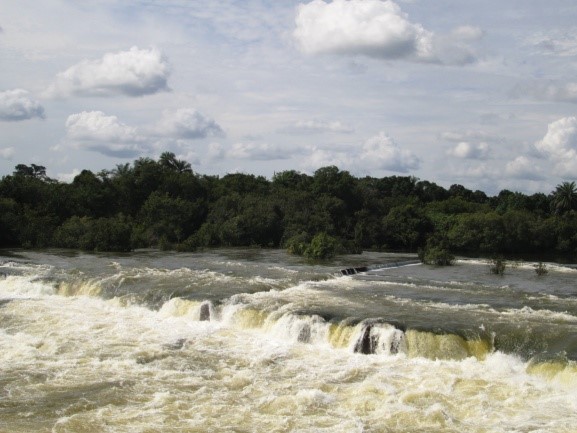
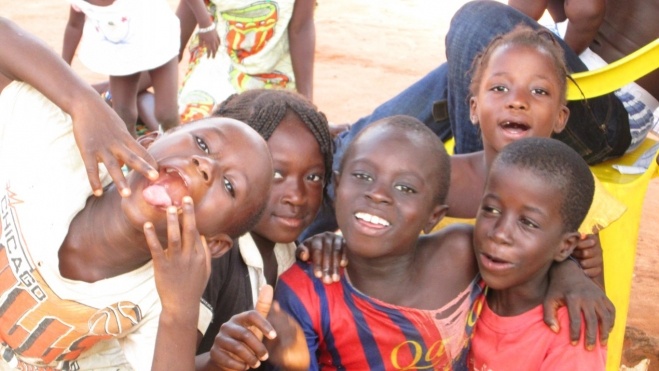
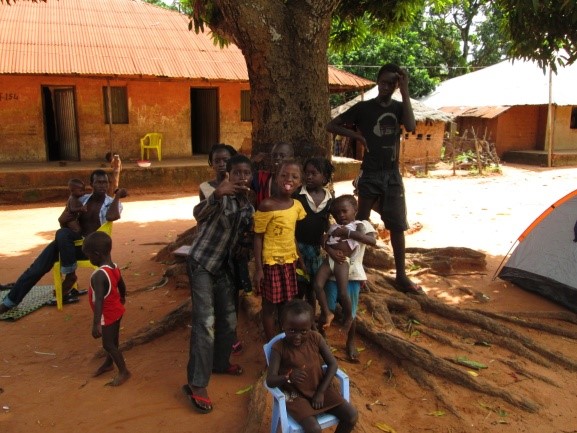
In the town there are no accommodations for travelers, so I stayed with a local family who hosted me impeccably, and after a few days, I continued to a town called Buba. The town is located on the sea, with a bay that in the past was used for trade but is no longer active today. In this town there were actually places to stay for travelers, but almost all of them were quite exorbitantly priced. I ran into language barrier difficulties there in all their glory, but in the end, I found a small hostel with conditions matching the price I paid.. After an evening of Portuguese telenovelas in the hostel yard, and (failed) attempts to find information about traveling to São João, I woke up in the morning and found a minibus going to Fulacunda—on the way to São João. The road was muddy (dirt road), full of potholes, and in all honesty, I was surprised that we actually arrived. I was even more surprised when I was told there was no vehicle going from Fulacunda to São João. I changed strategy—where can I pitch a tent? After about an hour of struggling to communicate, I was invited to pitch a tent in the compound of one of the families, who turned out to be the wealthiest family in the village, the only one with a TV and a generator. So towards the evening, the whole village came to the yard to watch TV :)
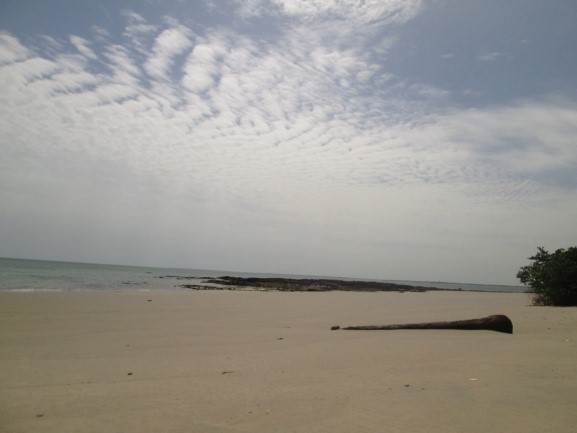
In the morning I got on a truck to the village of Nova Sintra—the last point reached by any transport. From there I had 14 km left to walk to São João. After about 4 hours (with all my gear on me) which also included an ambush by army ants, I reached the village and from there I got on a boat to Bolama Island! On the boat I met a couple living in Bolama who insisted I stay with them, taking care of all my needs, like family. Bolama turned out to be a charming island, with lots of old, romantic Portuguese buildings and an amazing beach.
From there I continued to the main island of the Bijagós—Bubaque. On the ferry—surprisingly, I met more travelers! We all slept at Casa Julio—a charming guesthouse, the guy is wonderful, caring and helpful as much as he can, and makes especially great breakfasts. Bubaque island itself is charming. It's really worth renting a scooter and driving to "bruce praya"—an amazing beach at the other end of the island, completely empty of people, white sands.. perfect. The other villages on the island are also striking, full of culture and colorful life.
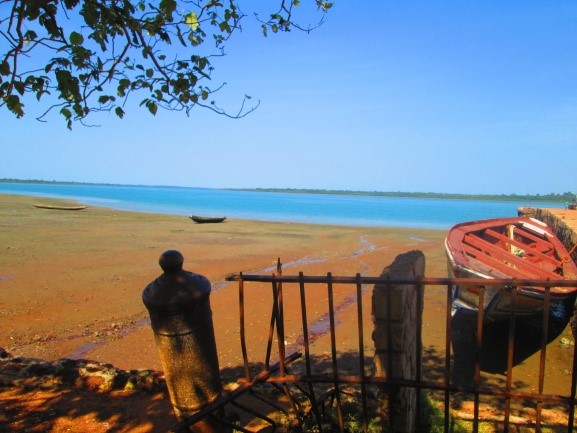
The islands are full of attractions—spectacular beaches, hippos living in the ocean waters, and sea turtles in all their glory. The main problem is transportation between them. We tried to find a fishing boat heading towards Orango Island (with the hippos), and indeed, a boat was found, and after a little bargaining we set off. In short—it turned out we didn't have enough fuel to get back. We were forced to buy fuel on Orango Island. We didn't see hippos. The engine broke down on the way back. Darkness. Lightning and thunder. Phone calls to resorts on the islands—a request for a rescue boat. A lot of money. The fisherman directs them to the wrong place over the phone. 23:30—they find us. The fisherman ties the two boats together and won't let us go until he gets money. Robbery in the middle of the sea in the middle of the night. After we gave money and a fuel tank, they let us continue. I drink (for the first time!) a whole bottle of beer from start to finish. After a compensatory and pampering time on Rubane Island, I returned to Bissau. From Bissau I traveled to Bafatá—a small town in the east of the country. There too I stayed with a lovely family—Fatima and her children, and from there I traveled to Gabú, a dusty border town. I slept in a nice hostel in the town center, and as I sat on the second-floor balcony, my eyes caught several white people on the opposite balcony. I rubbed my eyes, they rubbed their eyes and called their friends. They were five biologists from the Netherlands and Belgium. They work in the Boé region—south of Gabú, studying chimpanzees, plants, and helping with community development. They invited me to join them, and I, having already stopped planning, happily accepted. After a long ride on a moto-taxi (motorcycle taxi), I arrived at a magical, pastoral village.
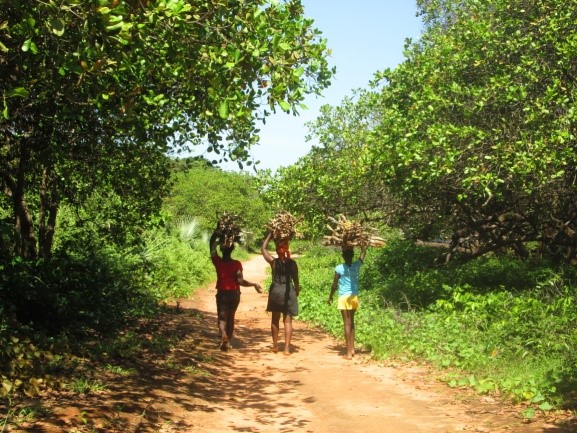
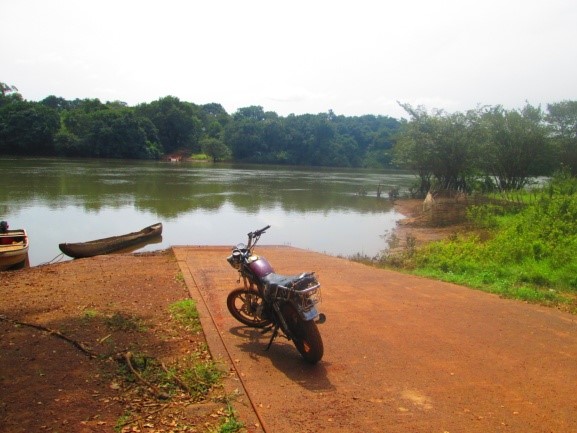
I pitched my tent in the yard of my new friends and helped them for a few days with their chores—measuring captured mice (which were immediately released), helping at the school, and sewing shirts for the village children. After several days of searching for transport to Guinea, I got on the motorcycle again, and after a long and somewhat intense ride, I arrived in Guinea. Just like that. Without a border post or anything. And from there—new adventures :)