


Namibia - Crazy Road Trip!
Great Namibia for Backpackers
- Overland / vehicle
- Independent / backpacking
My name is Gal, 24 years old, from central Israel. Over the past ten months, I traveled along Africa, from Ethiopia in the north to Cape Town—the southernmost point of the continent. I passed through Ethiopia, Uganda, Kenya, Tanzania, Zanzibar, Malawi, Zambia, Namibia, and a bit of South Africa.
During the trip, I took part in an animal volunteering project, traveled both solo and in backpacker groups, and eventually worked for several months as a diving instructor in a destination that has recently become popular—Zanzibar Island.
Co-founder of Mzungu - the African Backpackers Community in Israel!
Great Namibia for Backpackers
A spectacular road trip and the coast where no one has set foot.
If you had told me two years ago about a country named Namibia, I would have imagined a poor, developing third-world country (not that there's anything wrong with that, right?), but certainly not a country that would quickly become my second favorite (after... Ethiopia). Definitely not a country whose landscapes are among the most spectacular I would see in Africa, whose wildlife is as rich and diverse as in the Serengeti, and whose people and buildings are.... German??
But... as it turns out, that's Namibia.
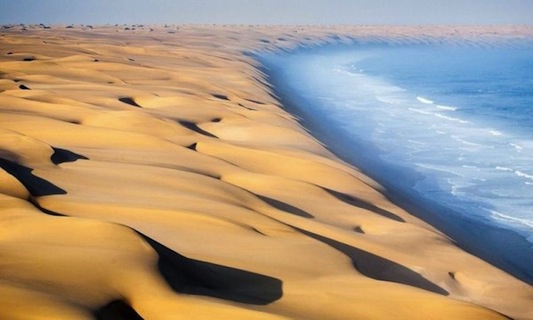
Namibia is located in southwestern Africa. It borders South Africa towards Cape Town to the south, Angola to the north, Botswana and a tiny bit of Zambia (Victoria Falls) to the east. To the west—where the Atlantic Ocean meets the huge dunes of the Namib Desert—with dramatic and breathtaking views.
(Giant dunes of the Namib meet the Atlantic Ocean).
The country was previously settled by the Dutch, the Germans, and the South Africans, and gained its independence only about 26 years ago! It served as fertile ground for Western nations mainly for finding diamonds, which were abundant. German influence can still be seen today; many residents speak German in addition to Afrikaans (a language combining Dutch, local languages, and English), and several towns that look Bavarian were built across the country's vast expanses.
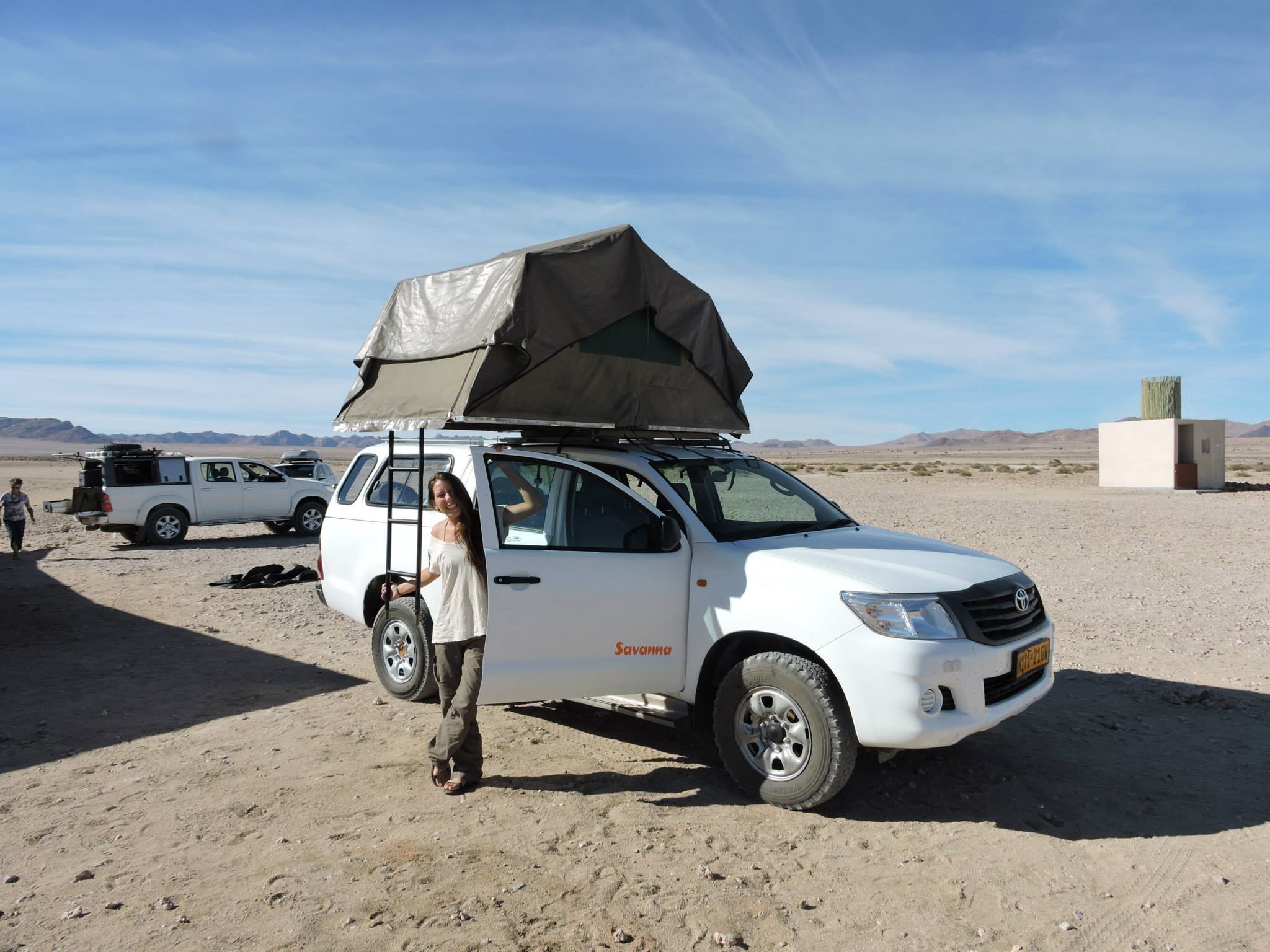
Did I mention vast expanses? The first thing you'll see upon leaving Windhoek is one big endless expanse of nature and scenery, and that's the main reason the customary way to move around from place to place is by renting a vehicle. Not just any car—most often you can rent a 4X4 off-road vehicle with a pop-up roof tent.
But it's not just sand and desolate landscapes that you can find in Namibia. In Windhoek, we started our big Road trip.
Windhoek-
The capital city of Namibia is a large and bustling metropolis, but unlike the big cities we know from East Africa (Nairobi, Kampala, Dar es Salaam), there is no feeling of overcrowding. It is more similar to Tel Aviv/Jerusalem and other completely modern cities. With cafes, restaurants, bars, and large, fancy shopping malls. A place I highly recommend staying at is Chameleon. A hostel with great vibes, people from all over the world, a huge kitchen for self-cooking, a campsite area, rooms and dorms, a pool, and a bonfire and barbecue every evening. It's a place with a great atmosphere, especially for meeting other people heading out to travel, if you're looking for partners to rent a car with. (It is recommended to verify in advance that there is availability and that the hostel is not fully booked).
In Windhoek, we took care of some admin work, including renting the car and buying supplies, and beyond that—we hung out at Joe's Beer House—a man's life project who has been working for decades on his massive bar, filled with antique and collectible items hanging from ceilings and walls, a great atmosphere, and... dishes! Ah, what dishes. Especially if you arrived after a long backpacking trip in the rest of Africa, you'll find sweet comfort there in the form of pancakes, ice creams, and amazing dishes. But above all—the meat. Joe's Beer House specializes in prime steak cuts from a slightly unconventional source—African animals (I am not encouraging hunting wild animals in any way! Heaven forbid. We are talking about animals raised on farms for food, like cows). Among gemsbok, kudu, ostrich, and zebra steaks, you will encounter the meat that was in my opinion the absolute best—springbok (Namibian gazelle). Come with an open mind and give it a try. (The beers are wonderful too). Besides Joe's Beer House, we also stopped by the African Craft Market, where you can find, just before heading back home, African souvenirs, handmade art, and plenty of beautiful things. With that, we concluded our one-day stay in Windhoek—the capital.
(Vehicle with a rooftop tent - the standard way to travel in Namibia. Photo: Gal Zanir).
Shall we head out to see wild Namibia?
We rented the vehicle through a rental company named Savanah car hire. This was after sending emails to several companies and getting back the most cost-effective quote from them. A newer Toyota Hilux, with a double rooftop tent (inside which were a large mattress, pillows, sleeping bags, and blankets), a large refrigerator in the back of the vehicle (which served us throughout the trip for self-cooking in the middle of nowhere), folding chairs, a large table, 2 huge gas stoves, a barbecue kit, and many more items—all of which together they call Fully equipped. I recommend this package—it includes everything and came out to 260 ₪ per day (divided by the number of passengers you are). The price depends on the season—we traveled in May. Straight from the rental company, we headed to the nearest supermarket to stock up for the road trip. On the way there, we experienced firsthand the fact that driving is indeed on the left/opposite side in Namibia, and it's definitely confusing! Drive carefully; you need to get used to these changes in traffic (before entering the oncoming lane on the Windhoek HIGHWAY).
After stocking up, we continued towards our first destination—Lüderitz.
Head south!
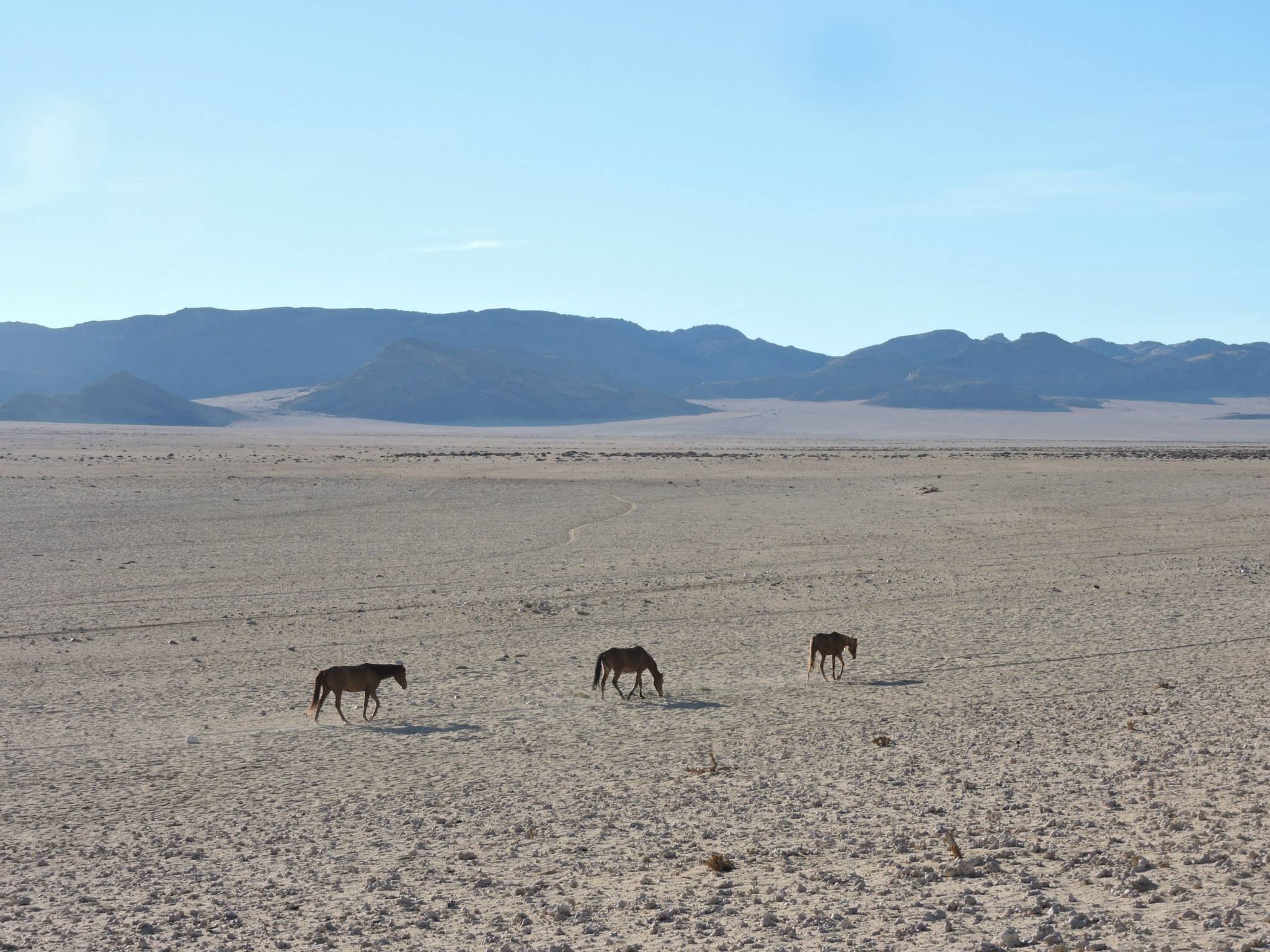
About a 13-hour drive separated us from Lüderitz, a town entirely Bavarian in feel, with a few beer houses and houses that look straight out of the suburbs of Munich. All along the way, we saw the vast expanses of the Namib Desert. That is—until it got dark. We decided to spend the night about 100 km before Lüderitz, at a place called Garub pan wild horses, which is actually a solitary waterhole in the middle of a dramatic landscape, visited throughout the day and night by ostriches, gemsbok, and—wild horses! Yes, as it turns out, the German army left behind some of its horses about a hundred years ago, leading to the creation of a wild horse population that scientists have been studying recently due to their rapid adaptation to desert conditions: more concentrated urine, longer eyelashes, etc. We opened our rooftop tents and went to sleep (without knowing what we would see in the morning, as it was already dark).
First morning in our roof tent—opening it up and facing a sweeping view with beautiful mountains towering over the waterhole—caravans of horses, gemsbok, and ostriches arriving, each taking its turn to drink from the hole. We opened a yogurt with granola and chopped fruit, and ate breakfast in the peaceful landscape. From the Garub plain, we continued towards Lüderitz, and about fifteen minutes before arriving, we came across a name we had already heard of—Kolmanskop, the ghost town. Of course we went in to check out what it was about, not knowing yet that this was going to be one of the most incredible experiences we would have in the country.
(Morning with the gemsbok and wild horses of Garub. Photo: Gal Zanir)
Kolmanskop-
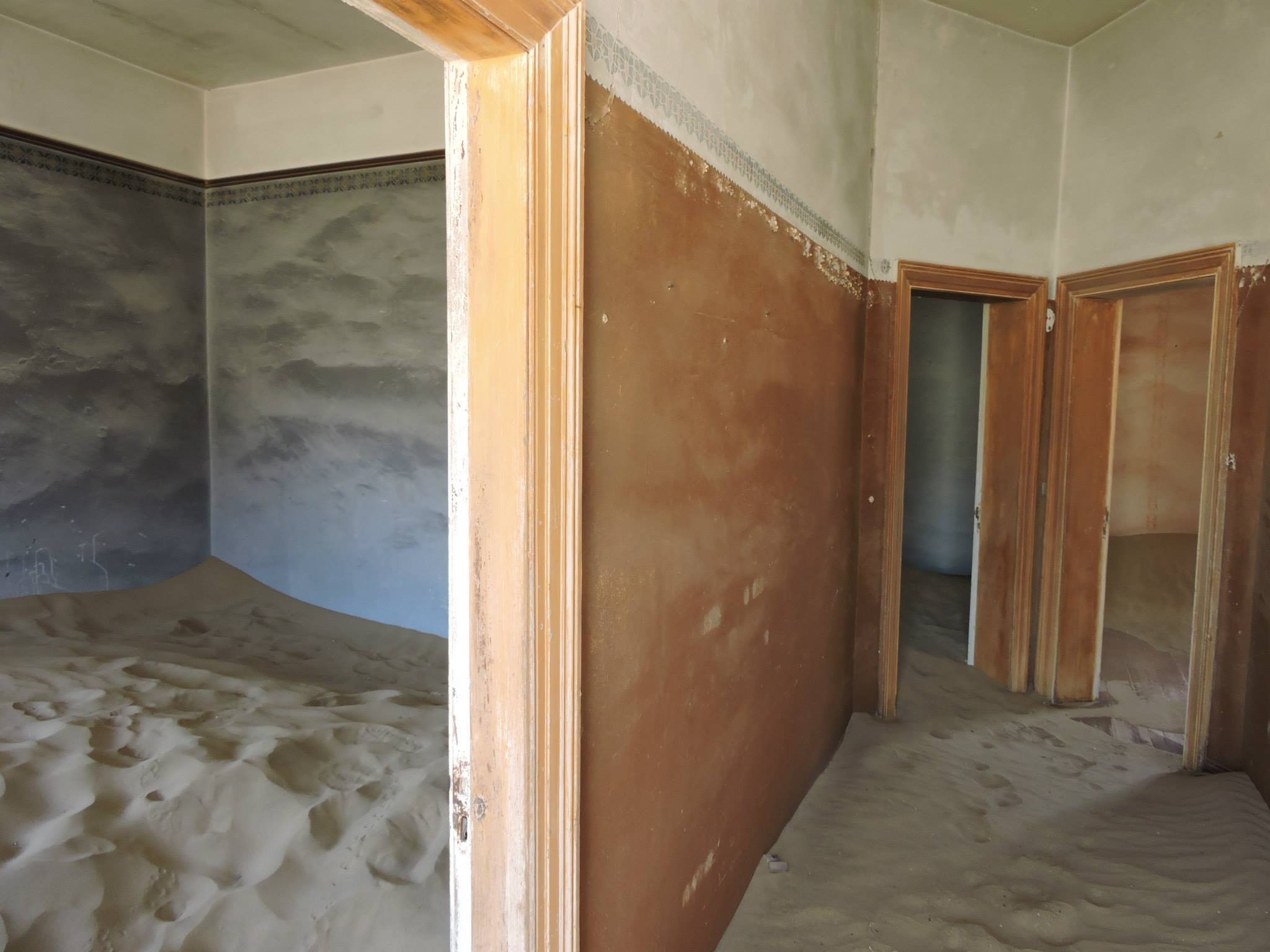
It was a German diamond mining town established about a hundred years ago and abandoned several decades ago. The bustling life of the town's wealthy residents (after all, owners of diamond mines) remained preserved as if all those years hadn't passed—bowling alley, ballroom, German school, ice factory, and more. But the magic of the town today lies in the fact that it is not crowded or overly touristy, preserved by nature rather than by Namibia's tourism authorities. We quickly left the boring guide who was speaking and went off to explore on our own. Walking through house after house, every room entered brings a moment of quiet astonishment. What a surreal creation nature has crafted! I remember that in every room we walked into, we felt like we were inside a Dalí painting. The massive dunes surrounding Kolmanskop intruded into every single house in the town, preserving them in a wild way. If you arrive in the morning—there won't be any human footprints on the dunes inside the houses yet, only those of reptiles, hyenas, antelopes, and other animals that passed through during the night. Entry to the town costs just a few shekels. Note: It was indeed a spectacular experience, but mainly for photography enthusiasts.
(Kolmanskop. Ghost town. Photo: Gal Zanir)
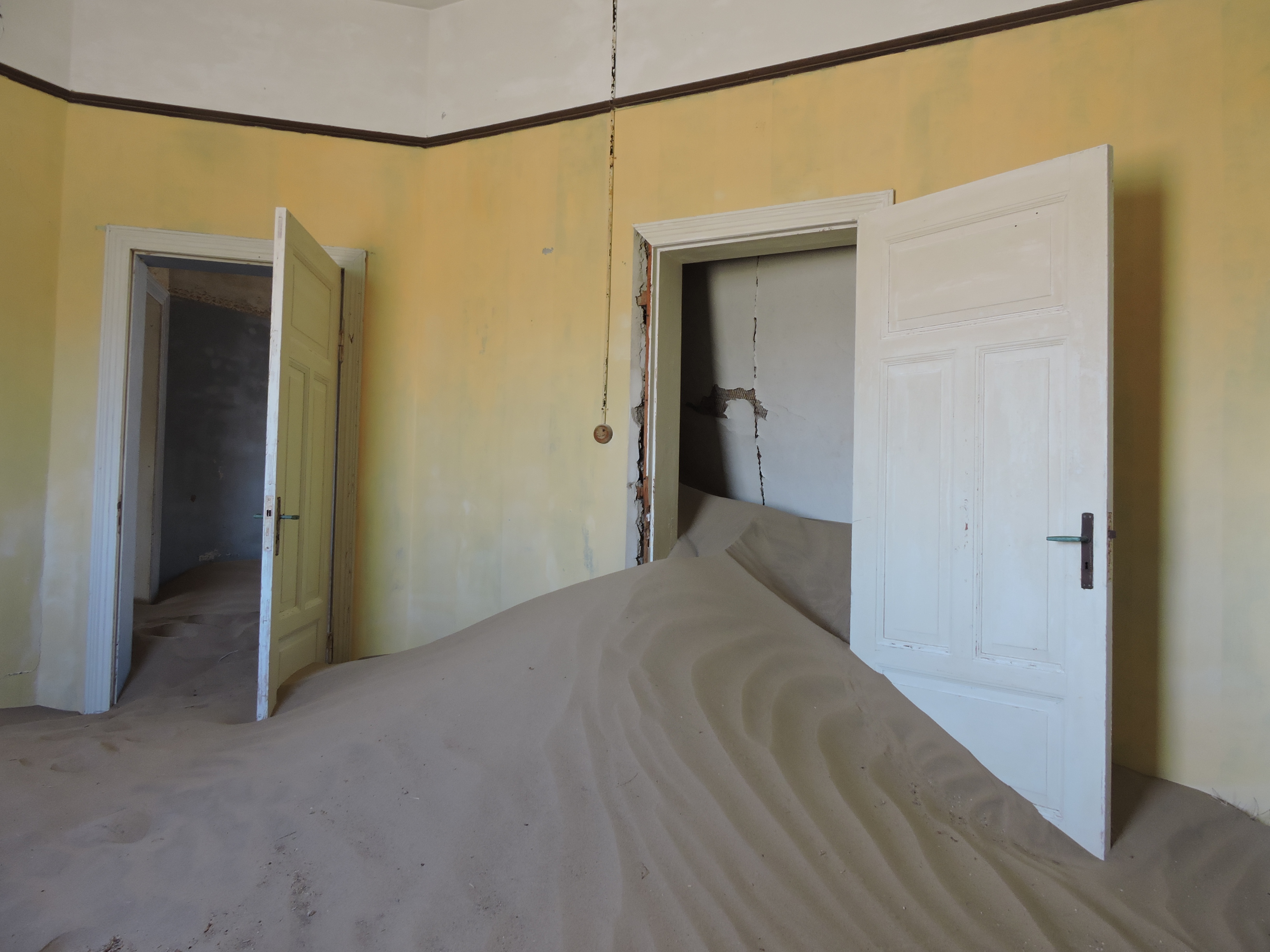
(We could have stayed there a whole day, taking photos and photos. Photo: Gal Zanir)
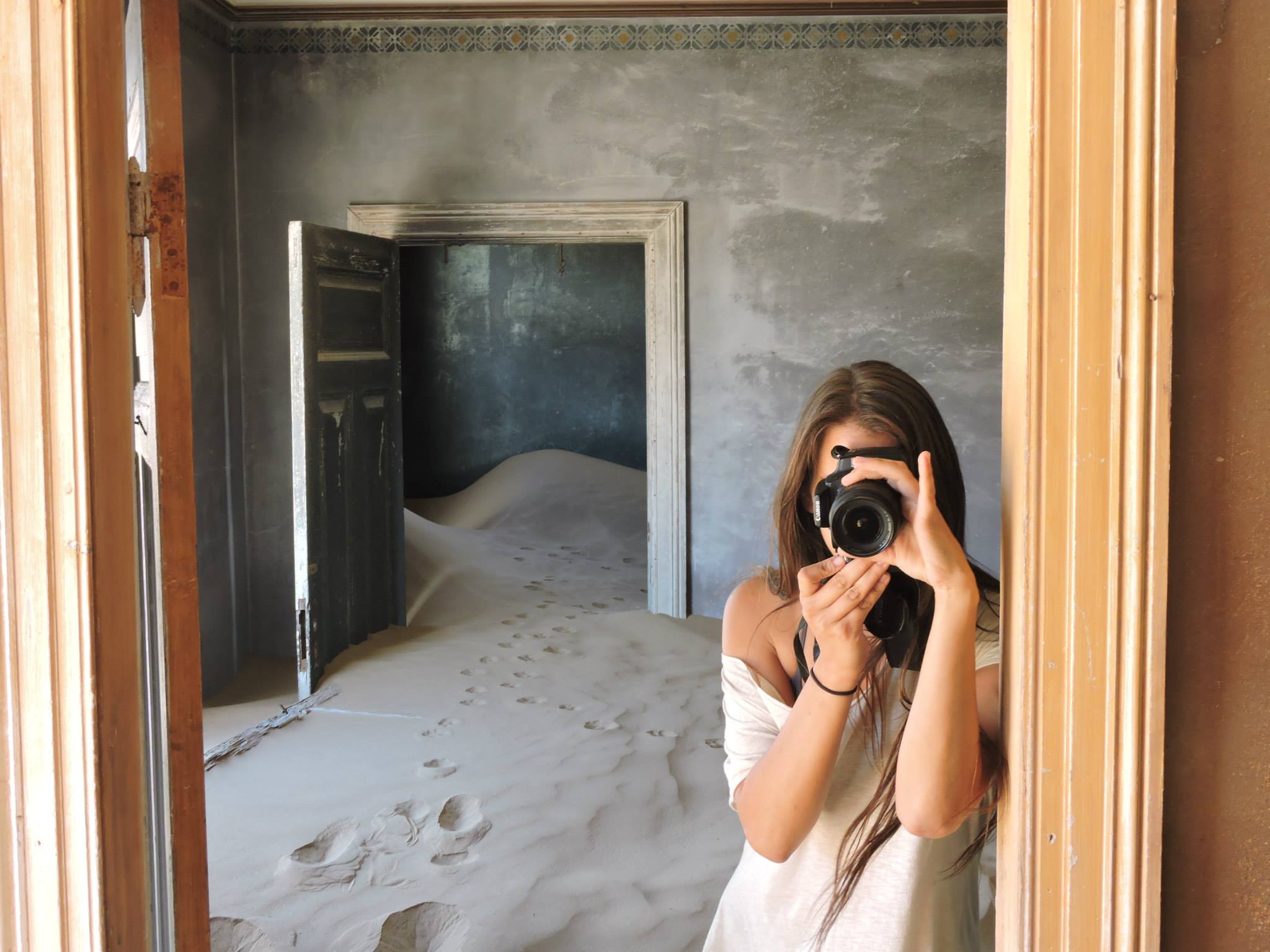
(Photos - Kolmanskop. Photo: Gal Zanir)
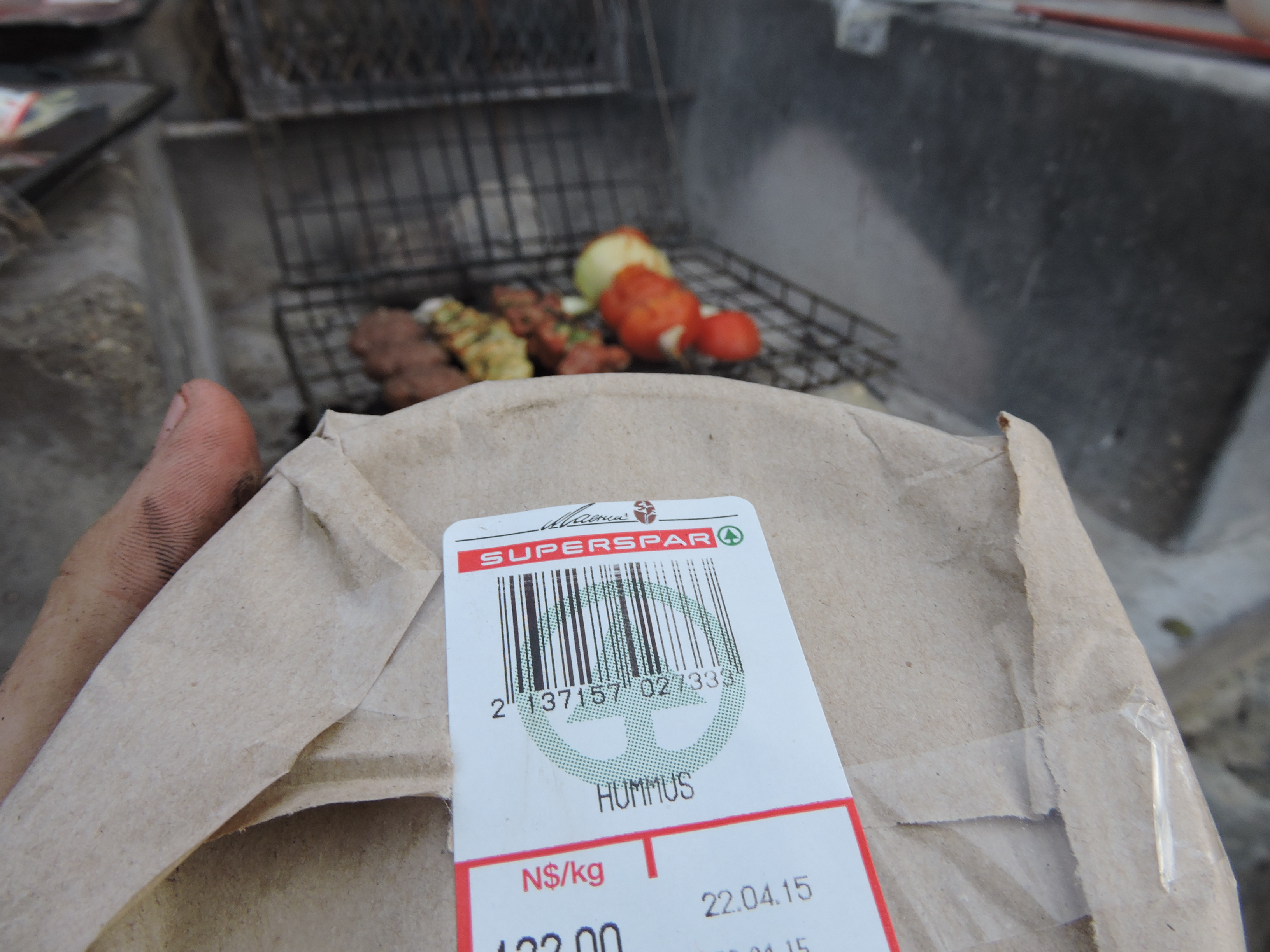
Afterward, we continued to Lüderitz. We found out there wasn't much to see and that most bars were closed—maybe because Israeli Independence Day happened to be on that date. Either way, we parked at a campsite on the shore of the Atlantic Ocean near the city's lighthouse and, naturally, had a barbecue—celebrating Independence Day over there, and we even found hummus and skewers at the supermarket! In the morning, we woke up and went on an early boat tour that took us to see sea lion colonies, dolphins swimming alongside the boat, and the highlight—huge penguin colonies, which had also taken over ancient German buildings. (The boat trip needs to be booked a day in advance at one of the tourist offices in Lüderitz). We said goodbye to Lüderitz and started driving toward Sossusvlei.
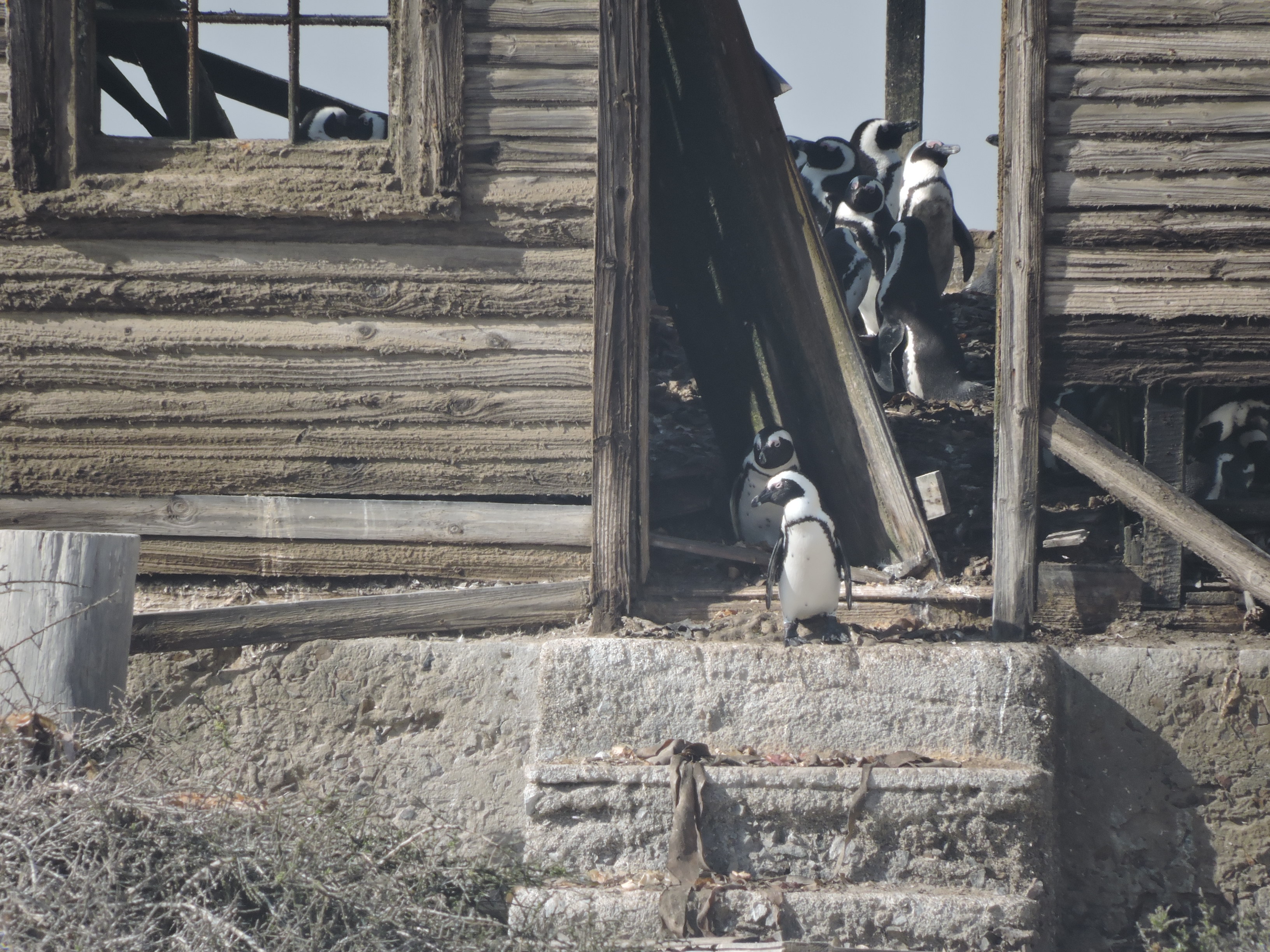
(Penguins and hummus in Africa. Photo: Gal Zanir)
SOSSUSVLEI - The name that is hard to pronounce, but definitely worth it-
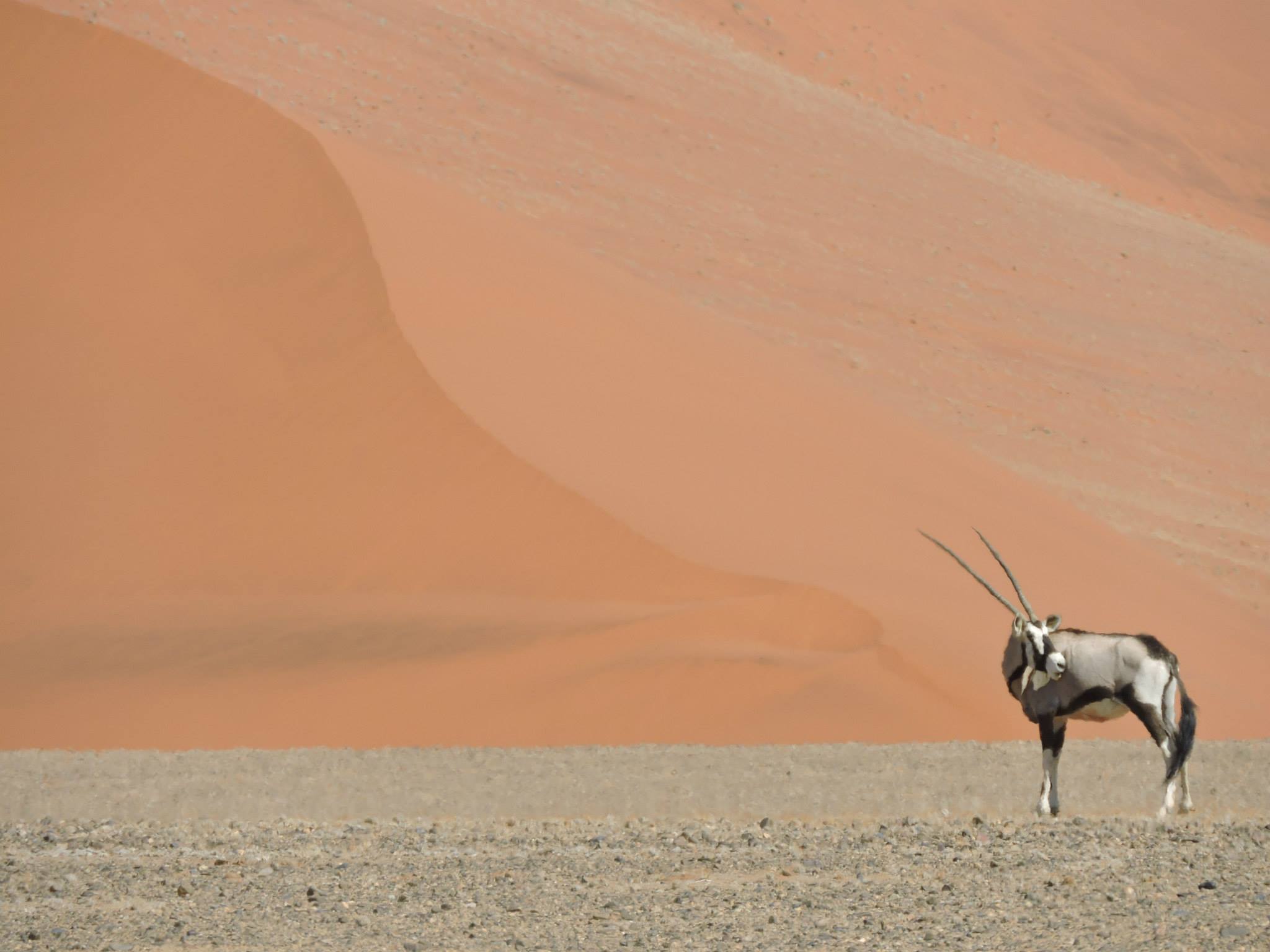
A drive of a day and a bit from Lüderitz, along gravel roads through the stunning Namib Desert with wild gemsbok running and grazing beside you, lies Sossusvlei. So-ssus-vlei. Namibia's national natural park where you will get to see some of the highest sand dunes in the world, and if you are energetic—even climb them. You might recognize the look of these giant dunes from famous Windows desktop wallpaper photos. But reality exceeds imagination. We entered the park at dawn to catch the sunrise light illuminating Dune 45 (a famous and beautiful dune) and Deadvlei. Deadvlei—true to its name, is the dead marsh/valley. There you will find a white salt pan in the middle of a massive dune range, containing trees that died about 700 years ago and are still standing upright. The sight, as I say about many sights in Namibia, is truly dramatic and surreal. Just make sure you arrive in the early morning hours, otherwise—you'll roast!
(Frozen in time. Trees in Deadvlei - Valley of Death. Photo: Gal Zanir)
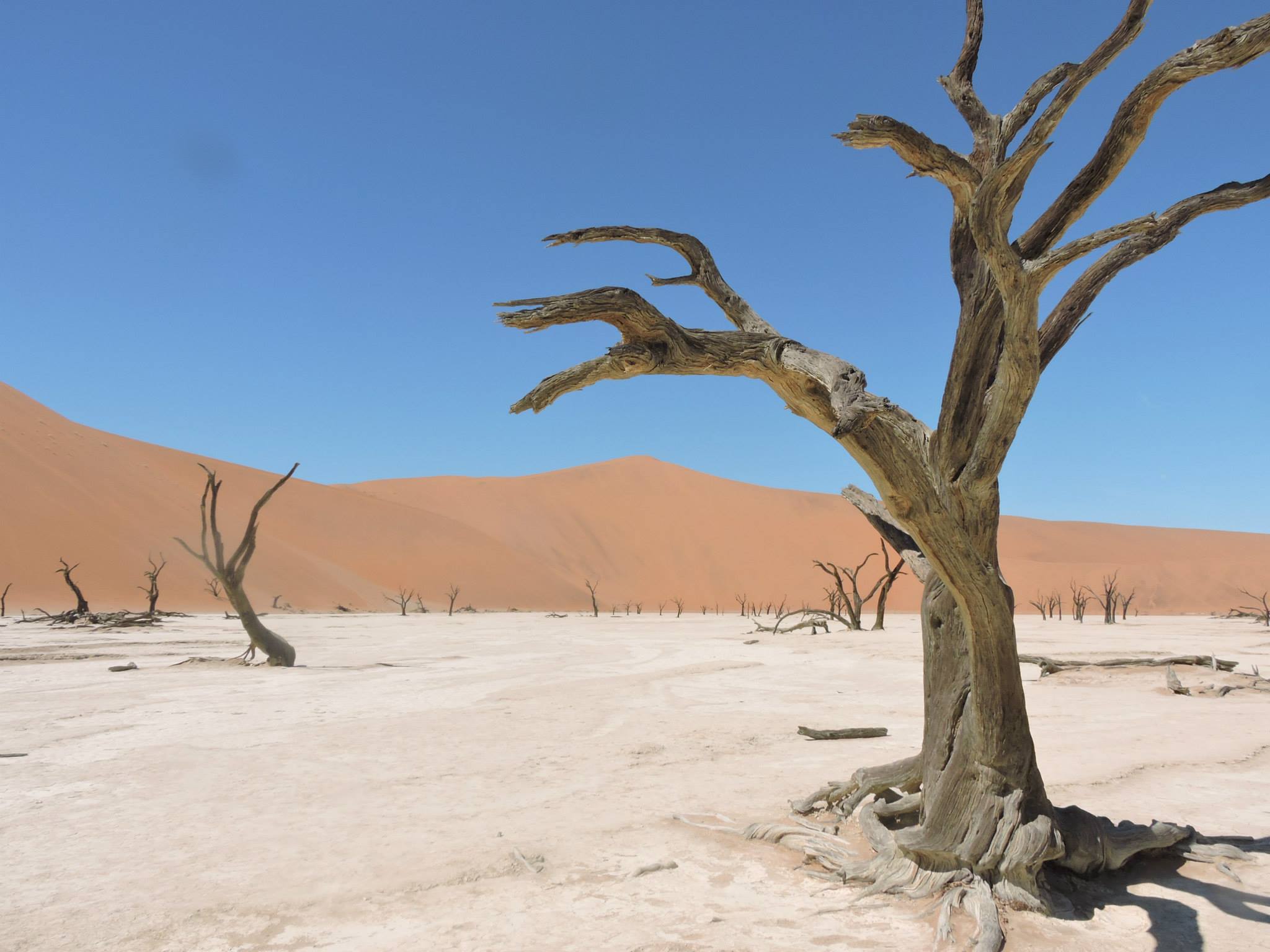
Above Deadvlei stands Big Daddy, the dune claiming to be the highest in Namibia, and perhaps even on the continent. After a few meters uphill, we realized we weren't going to climb it, certainly not in the current weather.
From Sossusvlei, we began our journey north—towards the coastline and the coastal towns of Walvis Bay and Swakopmund (did I mention Namibian names are complicated?). On our way to WALVIS BAY, which was the first stop on the coast after Lüderitz, we stopped for a night in the wilderness. We found a large tree by the roadside, parked the car, opened the rooftop tent, and cooked a good meal—a night alone in the Namib Desert. Back then, I didn't know that this very night would go viral on the web a year later. We woke up in the morning, shortly after sunrise, and when we opened the tent, I saw a group of beautiful zebras, foals and adults, standing beside the carcass of one of their herd members while a jackal bit into it. We jumped out of our sleeping bags, packed up the tent super fast (2 minutes and it's closed), and approached them. Which ultimately led to this photo—
(The photo with the optical illusion reached the Africa Geographic Photographer of the Year competition and was published in newspapers worldwide, about a year after it was taken! For me, it was just another amazing Namibian morning. Photo: Gal Zanir )
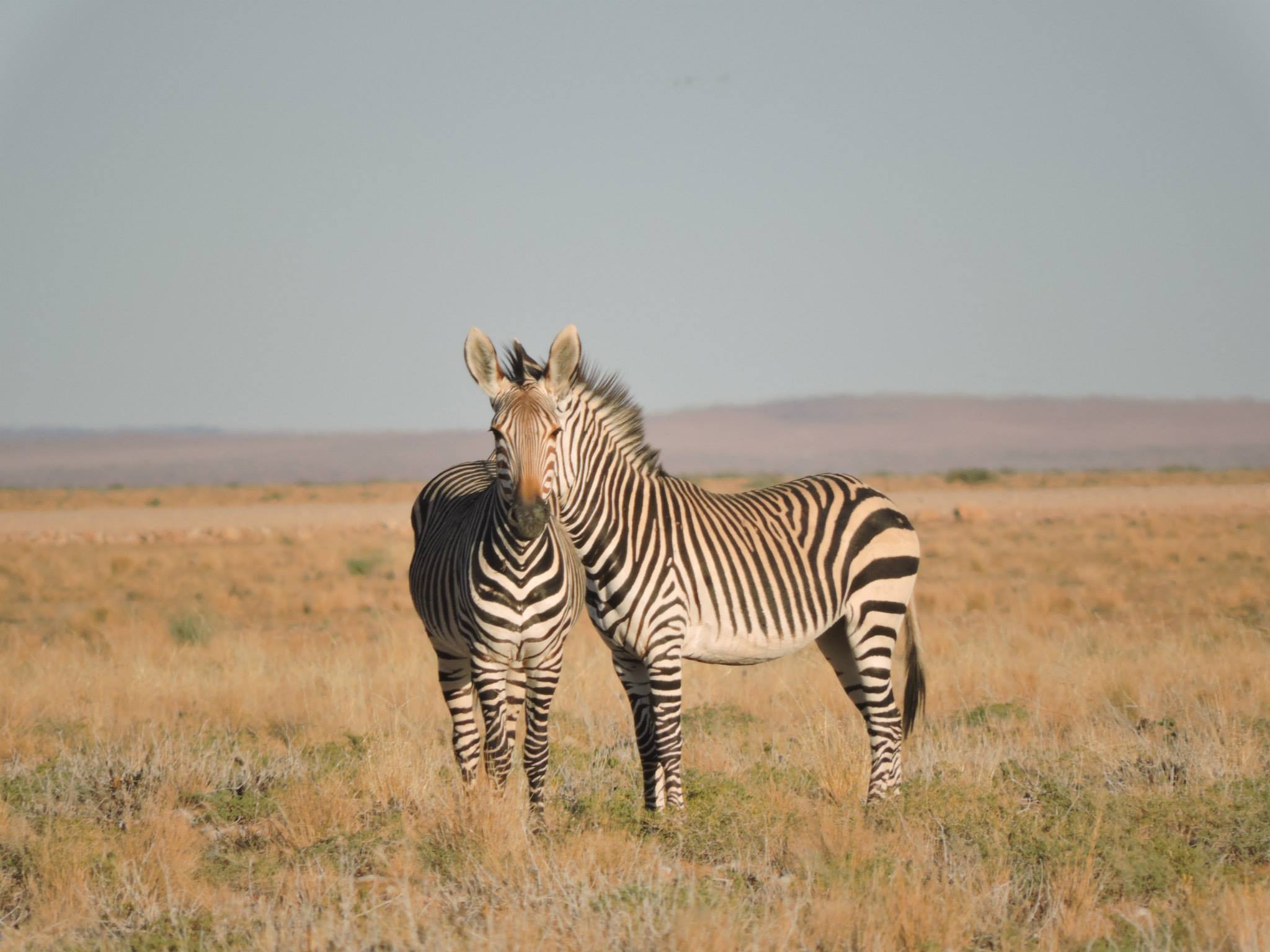
Walvis Bay-
We arrived in Walvis Bay, parked at a rooftop tent campsite with power hookups, showers, and everything needed. We went for a walk around town and quickly realized it was an upscale, modern town resembling a upscale neighborhood built entirely around a bay/lagoon. In the lagoon stand tens of thousands of magnificent flamingos searching for crabs in the shallow ocean waters. South of the town lies a free national park; drive through it and you'll receive a map. It's an area of salt processing plants. As part of the process, many beautiful lagoons were created, inhabited by tens upon tens of thousands of pink flamingos, flanked on one side by giant yellow dunes and on the other by the ocean. There is also a sea lion colony nearby, but in our attempt to reach them, we got stuck deep in the sandy beach (not that we didn't know how to get unstuck, but luckily everyone in Namibia is an expert in rescuing vehicles from deep sand and came to our aid).
(Tens of thousands of pink flamingos against the backdrop of the dunes. Photo: Gal Zanir)
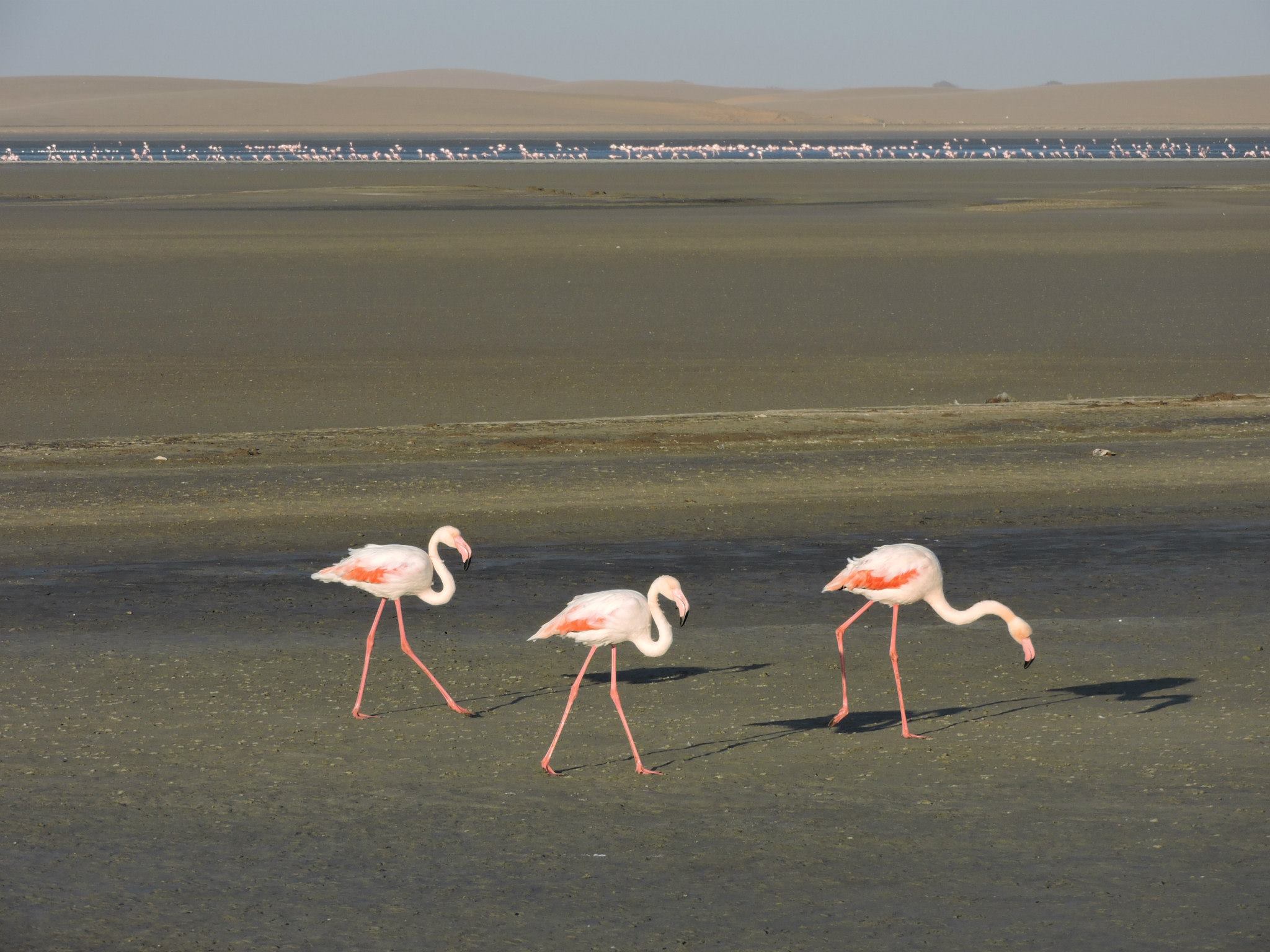
After half a day in Walvis Bay, we continued about half an hour north to Namibia's coastal city—Swakopmund!
Swakop-what?
SWAKOPMUND is described as the major Namibian coastal city offering extreme sports services. Sports options include—quad biking in the giant dunes surrounding it, sandboarding—sliding down dunes on a snowboard, skydiving over the dramatic landscape of desert meeting ocean, surfing, and more. We chose to do dune boarding that day, followed immediately by skydiving. It goes without saying that the operators of these activities are very organized, Western, modern, and certified—because all of Namibia operates this way. It was an amazing day, and we set off north along Namibia's long coastal strip—one step away from the highlight: the Skeleton Coast.
(Skiing in Africa. Photo: Gal Zanir)
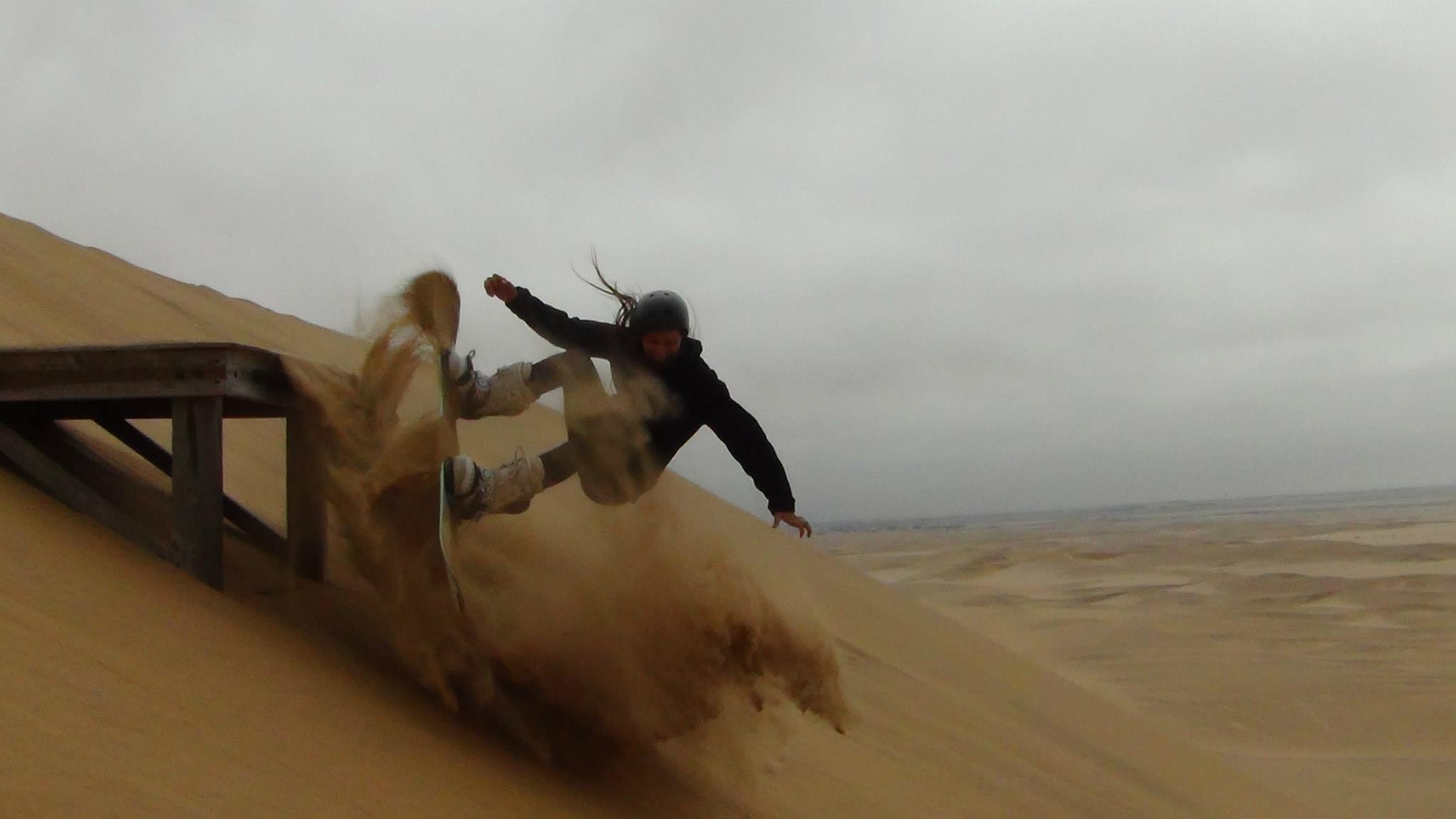
Cape fur seal colony-
On our way north along the beautiful beach, we stopped for a lunch picnic at the Cape fur seal colony. A colony with about 200,000 sea lions. This colony is hardly visited by tourists, and you can walk right among the sea lions on wooden walkways. A beautiful experience and... fragrant-arousing. The waste of about 200,000 seals is no small deal. Add to that the burp-like noises the sea lions make, and you are truly in paradise. We walked around there with our shirts over our noses—and were still awestruck by the sight. Entry fee is just a few shekels toward site conservation.
Skeleton Coast.
As I write about this place, I keep coming back to the word: Wow.
Skeleton Coast has been called that by mariners for centuries. The origin of the name came from the strong ocean currents along Namibia's long coastline, which sealed many fates. When a ship suffered any defect, it was inevitable that it would be washed ashore by the currents. There on the beach, sailors—even the most experienced ones—would face hundreds of kilometers of hot, treacherous sand dunes before reaching help.
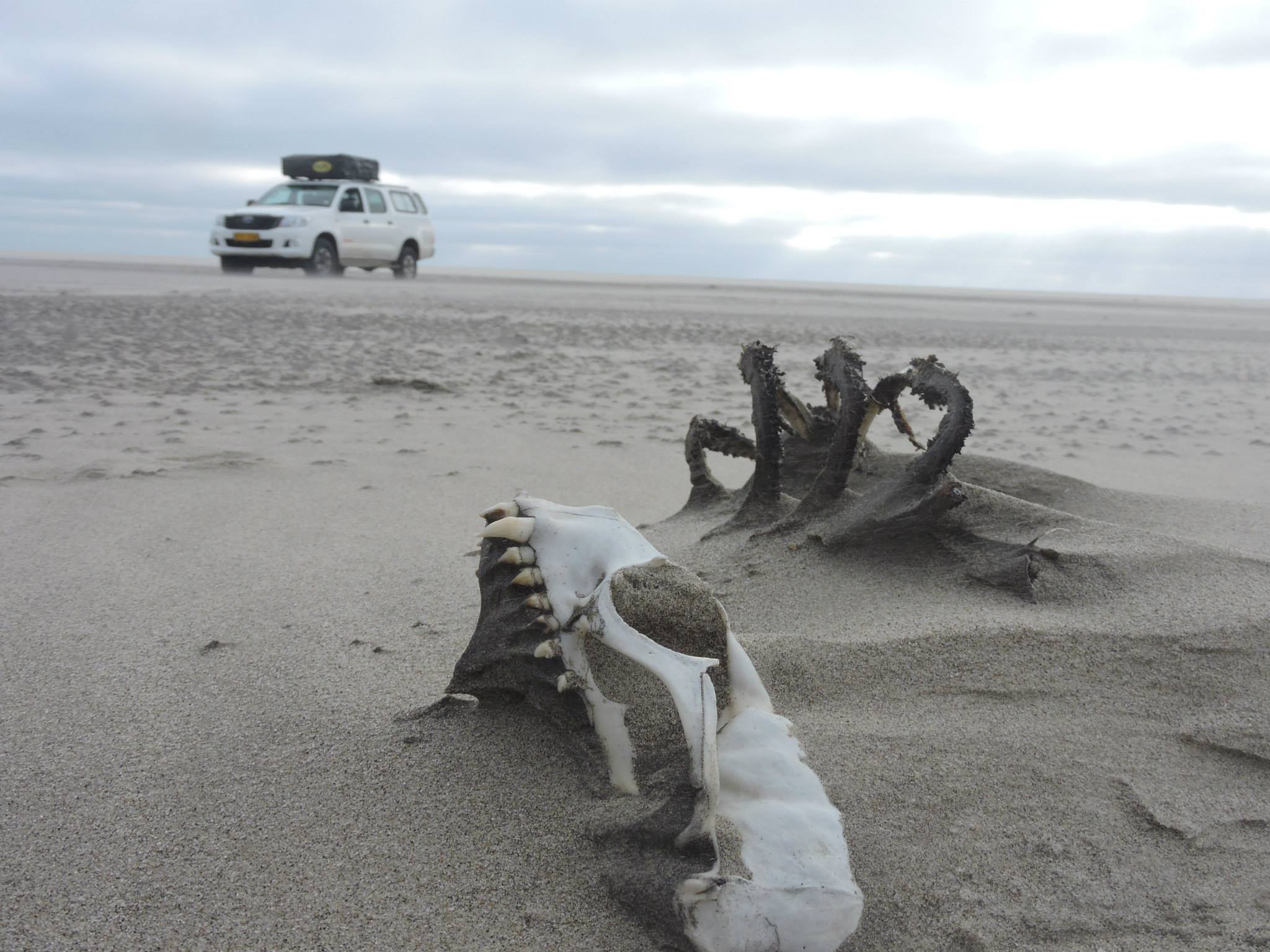
I must note that the coast hasn't changed over the years. Along 400 kilometers of driving (on sand; no paved road enters Skeleton Coast), we saw only a handful of cars passing through, and most of the time we were completely alone. Just us, ancient shipwrecks washed ashore, and tens of thousands of skeletons. Just like the ships washing ashore—so too the marine creatures that died created a situation where the beach is dotted over hundreds of kilometers with piles of bones and skeletons. Sometimes you'll come across a seal that just washed ashore, and sometimes the ribs of a giant whale that ended its life there. The beach, with its isolated, magical, spellbinding atmosphere, turned out to be an incredible experience we'll carry with us for life. (While driving, try listening to music by "The Witches" [HaMekhashefot]; it is definitely the perfect backdrop for it).
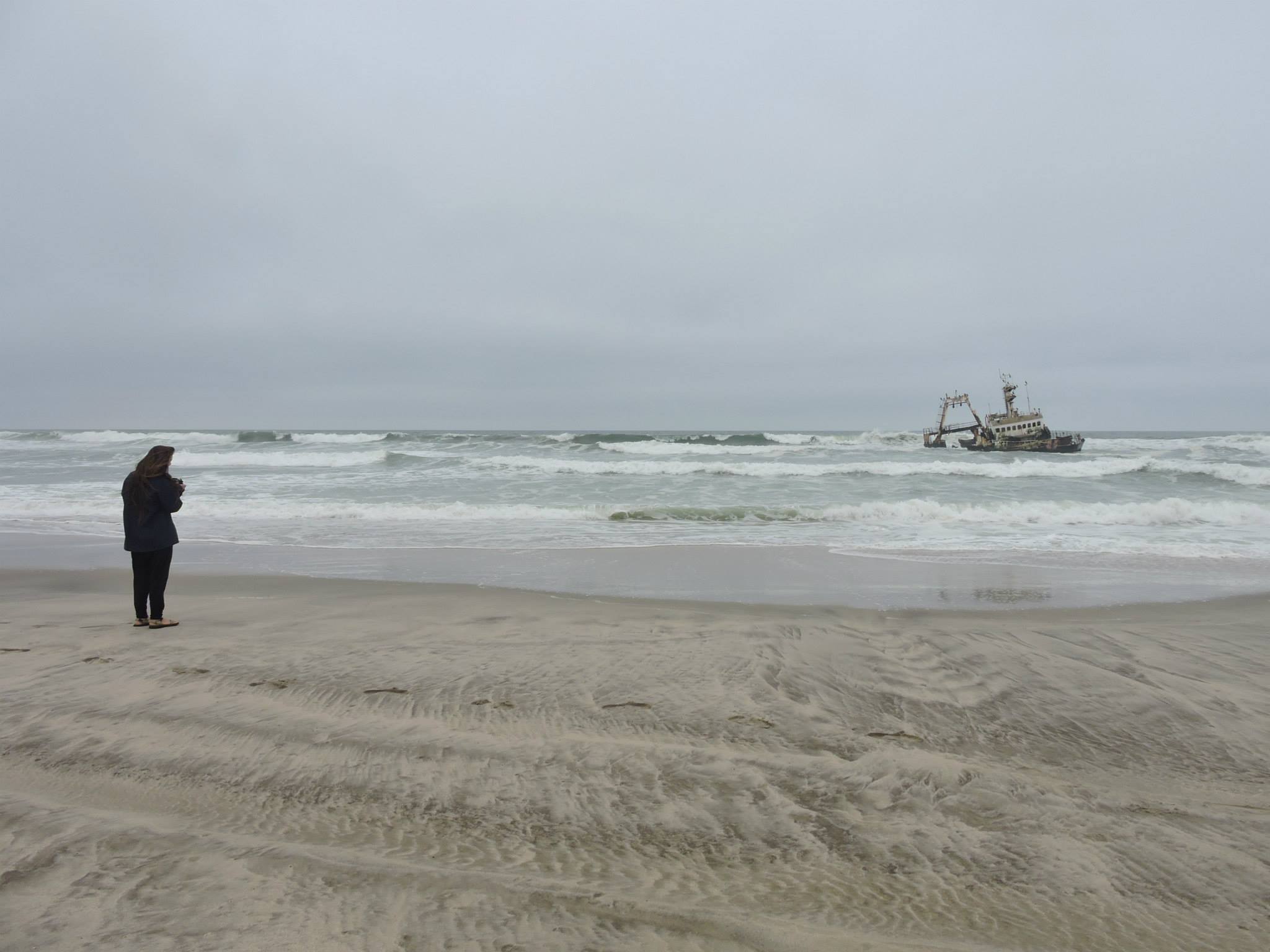
(We could have stayed there a whole day, taking photos and photos. Photo: Gal Zanir)
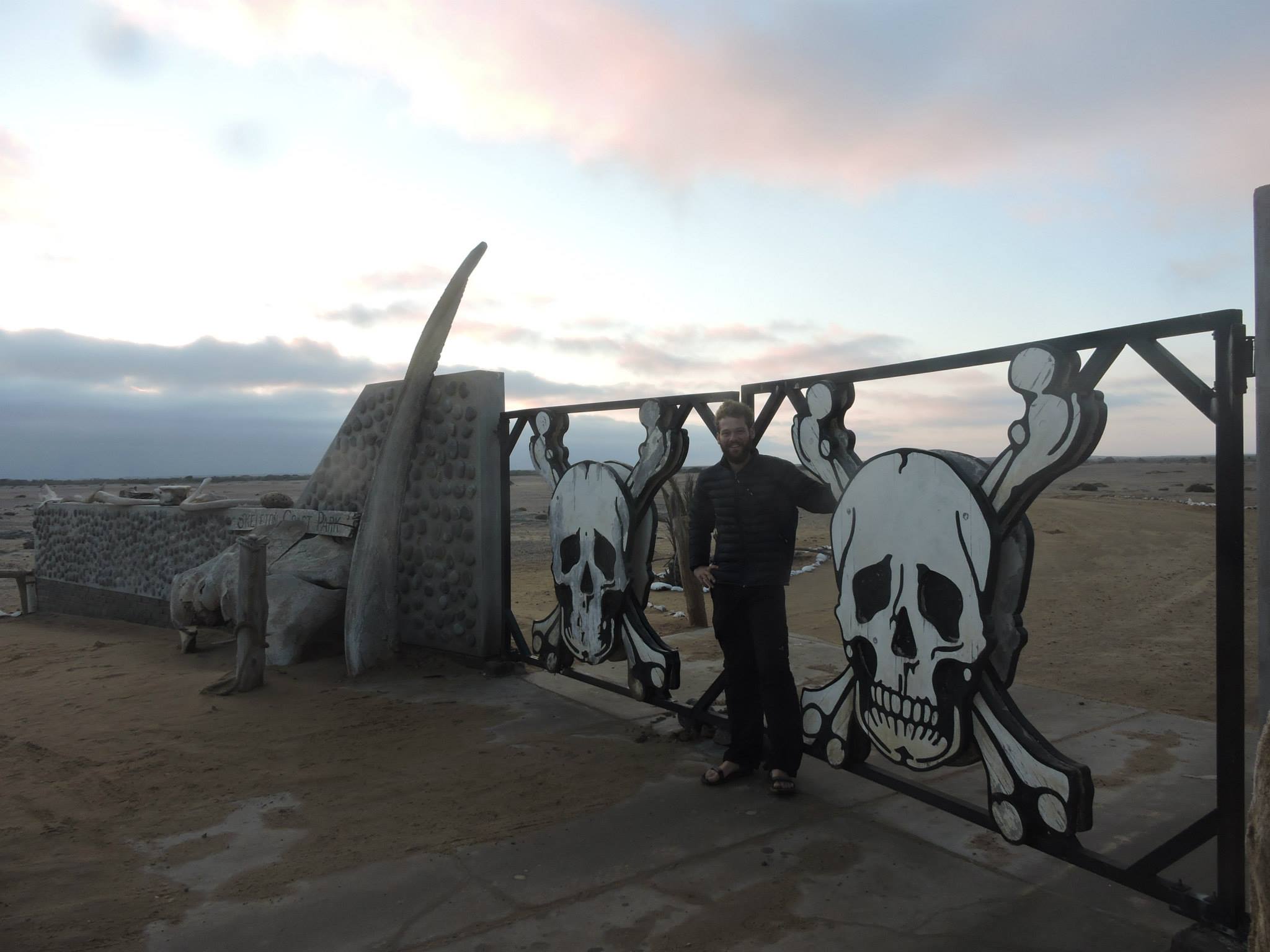
In order to reach and explore the Skeleton Coast, special permits are required, which can be issued at the Namibian Wildlife and Parks authority offices. It is recommended to do this in advance. We actually didn't obtain such a permit; we parked our rooftop tent vehicle outside the reserve (type in Waze: Middle of nowhere) and in the morning knocked on the coast's gates. We convinced the official at the entrance that we were passing through the park north towards the Etosha area, and he gave us an entry permit. We spent an entire day exploring there, and as we exited the gate on the northern side of the coast, we were reprimanded because the permit we received was only for transit, not sightseeing. We lucked out.
(The dramatic entrance gate to the coast. Photo: Gal Zanir)
We headed north out of the Skeleton Coast, and just when we thought there couldn't be any more highlights in Namibia, we found ourselves in
Opuwo.
Still on the way to Opuwo, again on the dusty roads of Namibia, this time in the Damaraland district, we came across strange lumps standing right in front of our wheels. Large cube-like molded mounds. A few seconds of thinking "where do I recognize this sight from" passed, and even before I could say "dung of...", an excited shout broke out: Elephants!
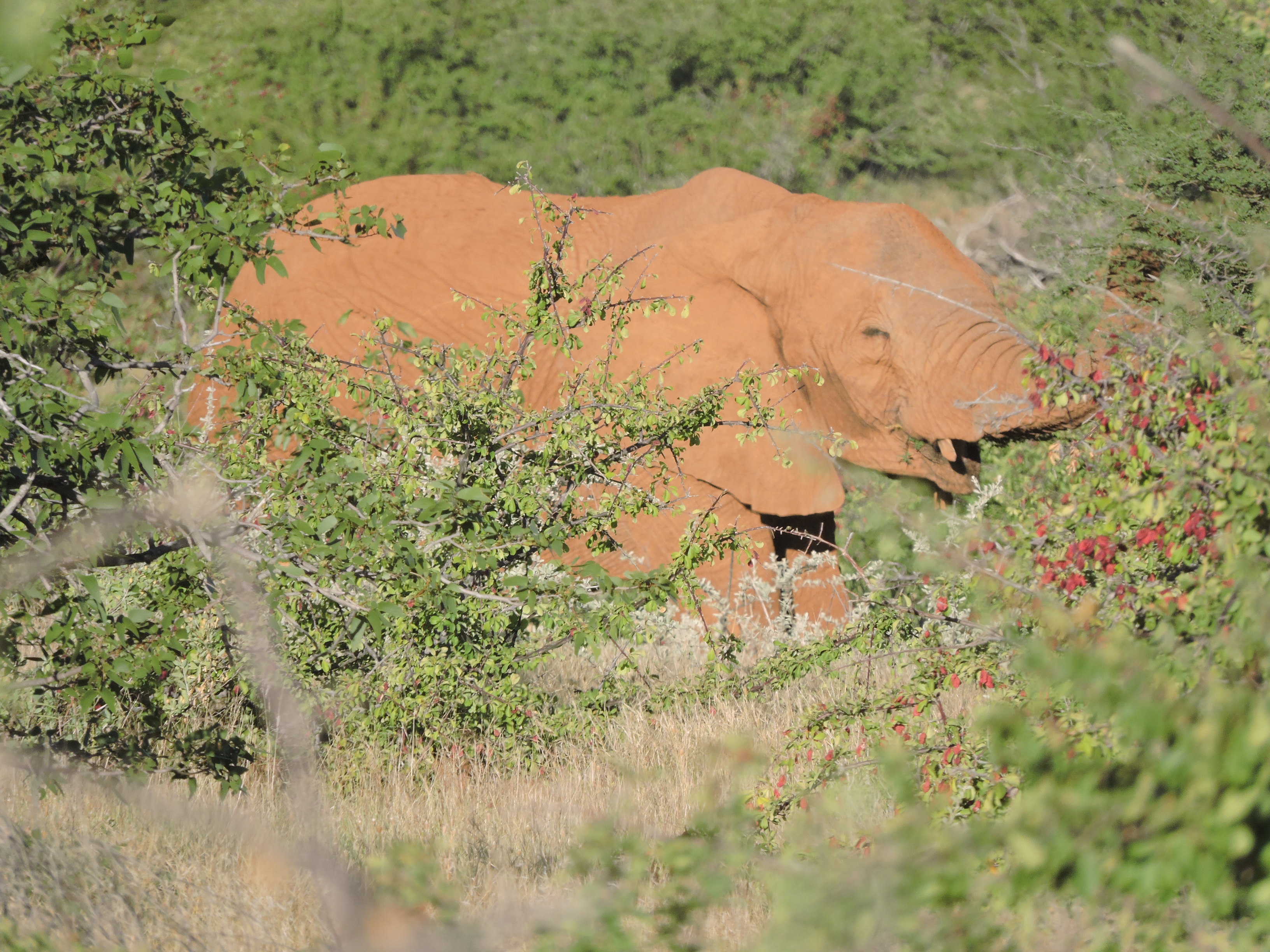
Just like that, while driving in the country, we found ourselves alongside about 15 giant, wild elephants. But if that weren't enough, these were not ordinary African elephants found across the continent, but an endemic subspecies to the area—Namibia's desert elephants. These elephants developed adaptations for life in the great desert. One of these adaptations is slathering themselves in terra rossa, red mud, which protects their skin from the scorching sun; thus, in the middle of the day and without expecting it, we met red elephants.
(Red elephants. Photo: Gal Zanir)
Our arrival in Opuwo had one single goal—meeting members of the Himba tribe. We parked the car at a campsite and asked at reception if they knew where we could find a translator for the Himba language who could join us for a day trip to the tribes. Very quickly, as is custom in Opuwo, they connected us with a female translator. Her name was Maria, and she was a former tribe member who moved to live in the "big city". We went to sleep, and when we woke up in the morning, we went to the supermarket. As Maria explained, before visiting the tribes, it is customary to go to the supermarket and purchase goodwill offerings to present to the tribe we meet. I found this idea to be a wonderful alternative to what happens in tribal encounters in more touristy countries—Kenya, Tanzania, and even Ethiopia—where you are required to pay for every encounter, for every photo, and everything is essentially based on a "tourist show". With the Himba, everything was so different, but I'll get to that in a moment.
We entered the village supermarket. It looks completely like an Israeli Shufersal, with just a few unusual sights bringing us quickly back to where we are. Topless Himba women with hair smeared in clay and animal hides wrapped around their hips stand in line among Western shoppers. Next to them stands a woman dressed in wide, colorful fabrics wearing a traditional horn- or devil-shaped hat—a Herero woman. We bought a bit of flour and sugar as offerings, and when we stepped out into the parking lot, women from the Owambo tribe passed by us with a fashion statement of their own—wearing a colorful Western bra and a beaded skirt.
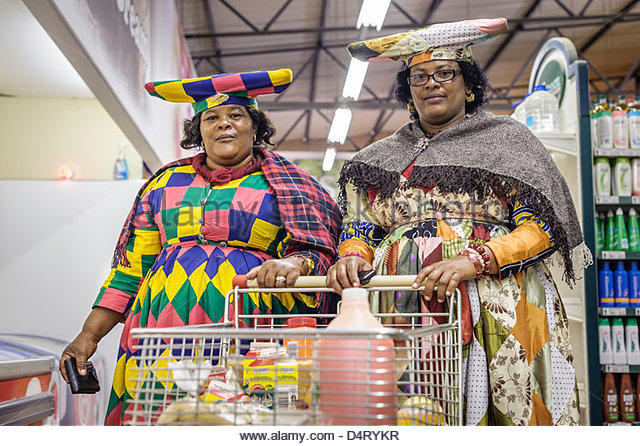
(Just like in a supermarket. Women from the Himba tribe and women from the Herero tribe)
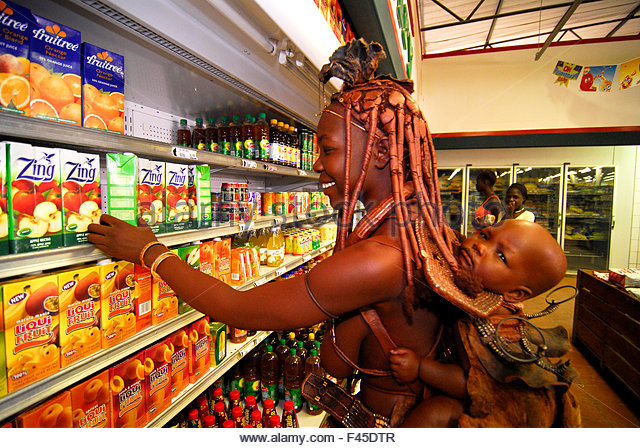
We drove with Maria to a small Himba village she knew near Opuwo, and when we arrived, the village women welcomed us. The men had gone out to pasture, except for the tribe elder, of course. I went around to walk between the huts and take photos, while Hila, who was traveling with me, bonded with the women of the village who braided her hair and demonstrated how they apply clay to their hair and skin.
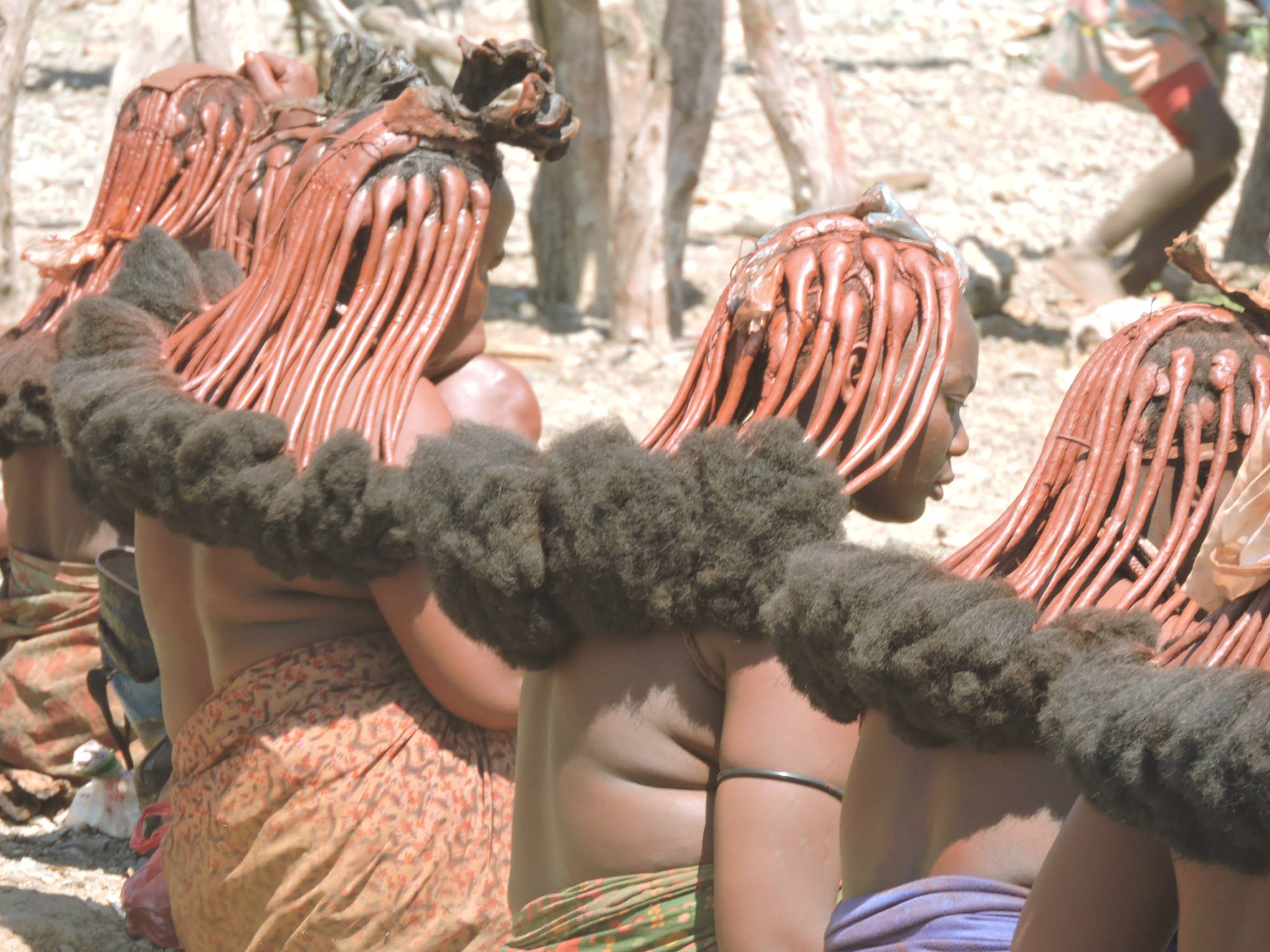
The Himba tribe lives just as they did thousands of years ago (aside from trips to the supermarket). Women rub clay into their hair and add wool extensions for beauty. All members of the tribe also rub their skin with clay mixed with animal fat to protect themselves from the sun and biting insects. The tribe is warm and hospitable in a fun atmosphere. We stayed with them for about three hours, saw their daily cooking and chores, and sat with the tribal women inside their huts. An authentic experience of the kind that is hard to find, even in Africa.
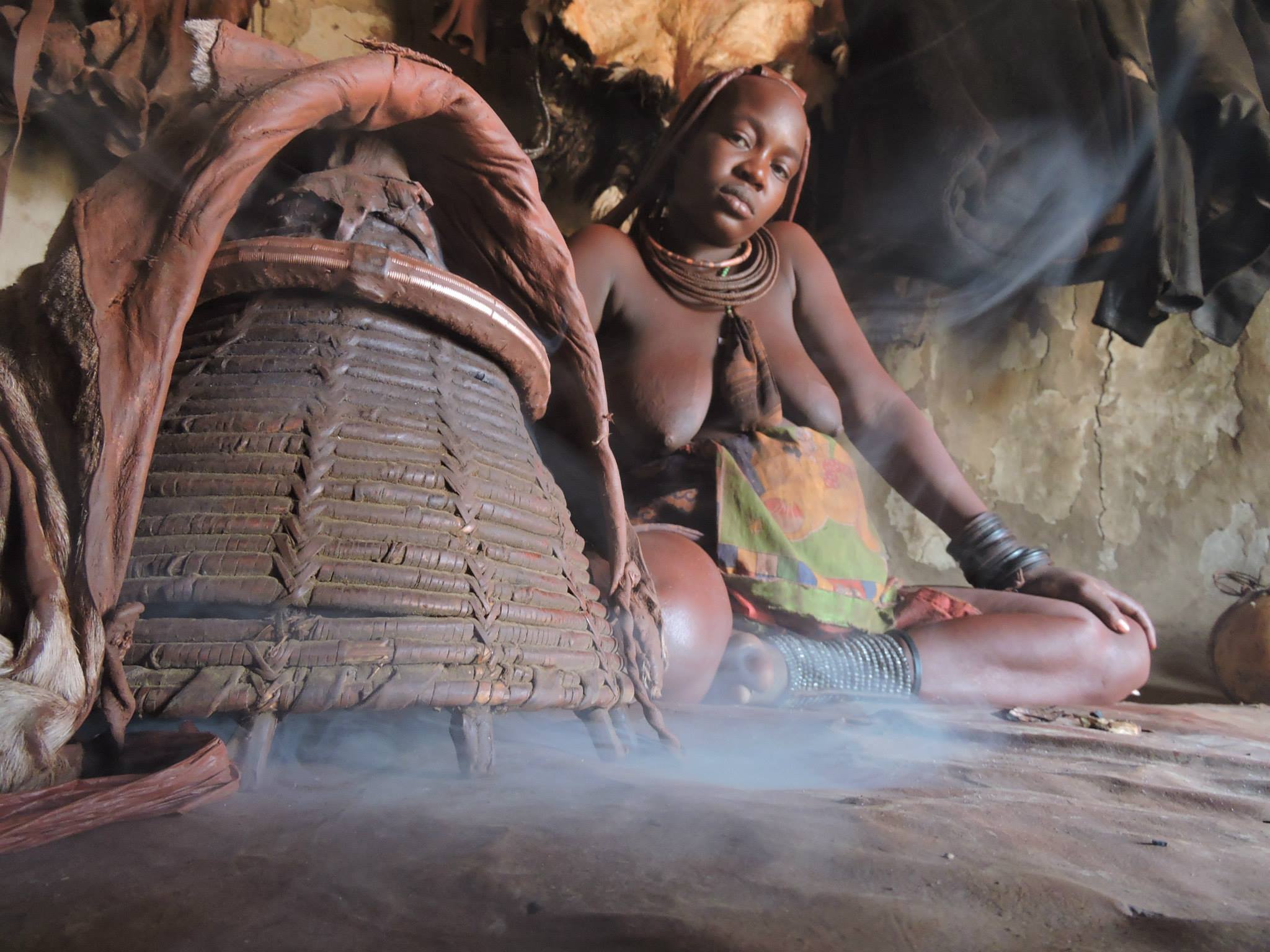
(An authentic encounter. Their hair is coated in clay with wool extensions attached underneath. Photo: Gal Zanir)
Etosha-
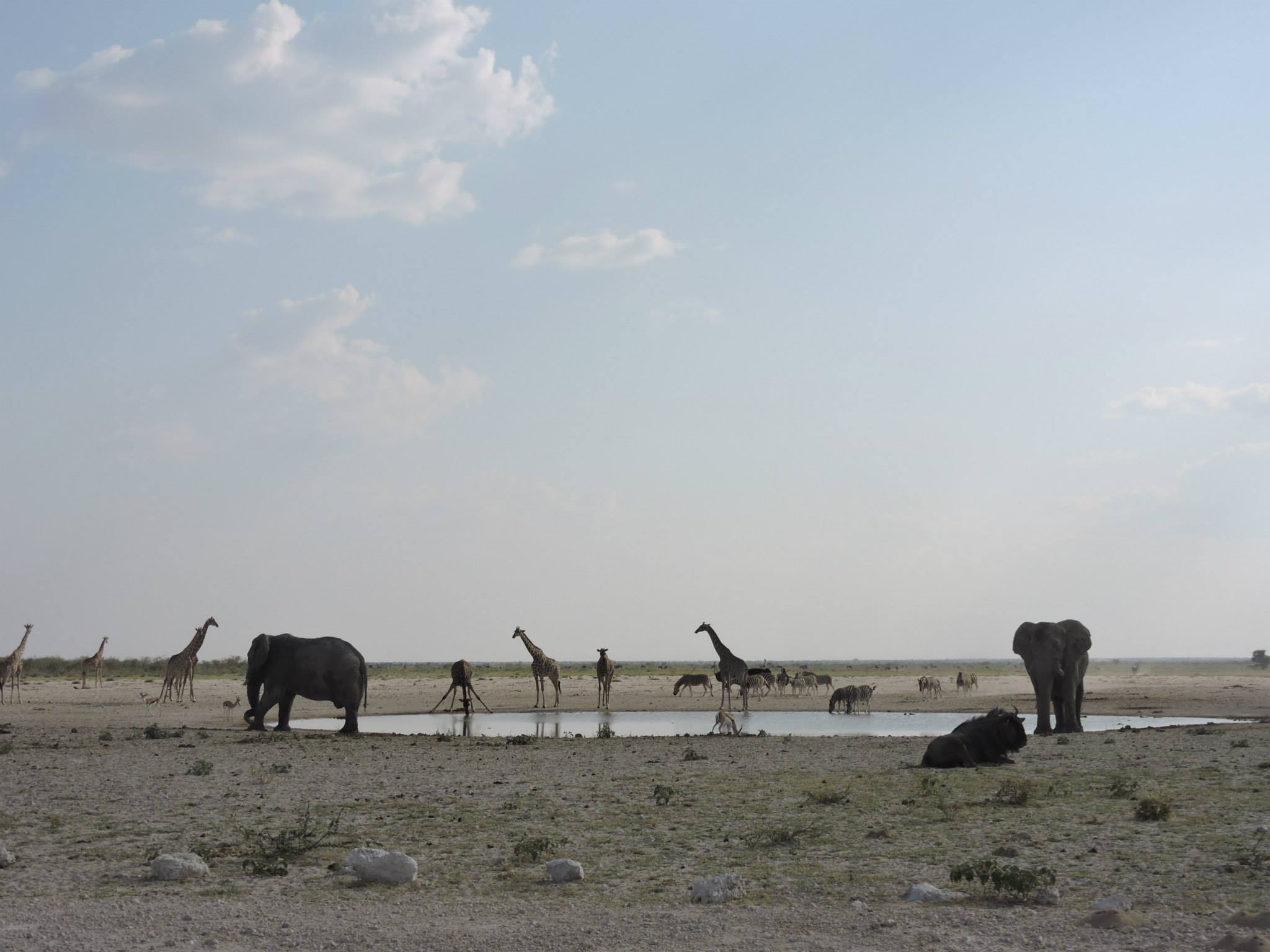
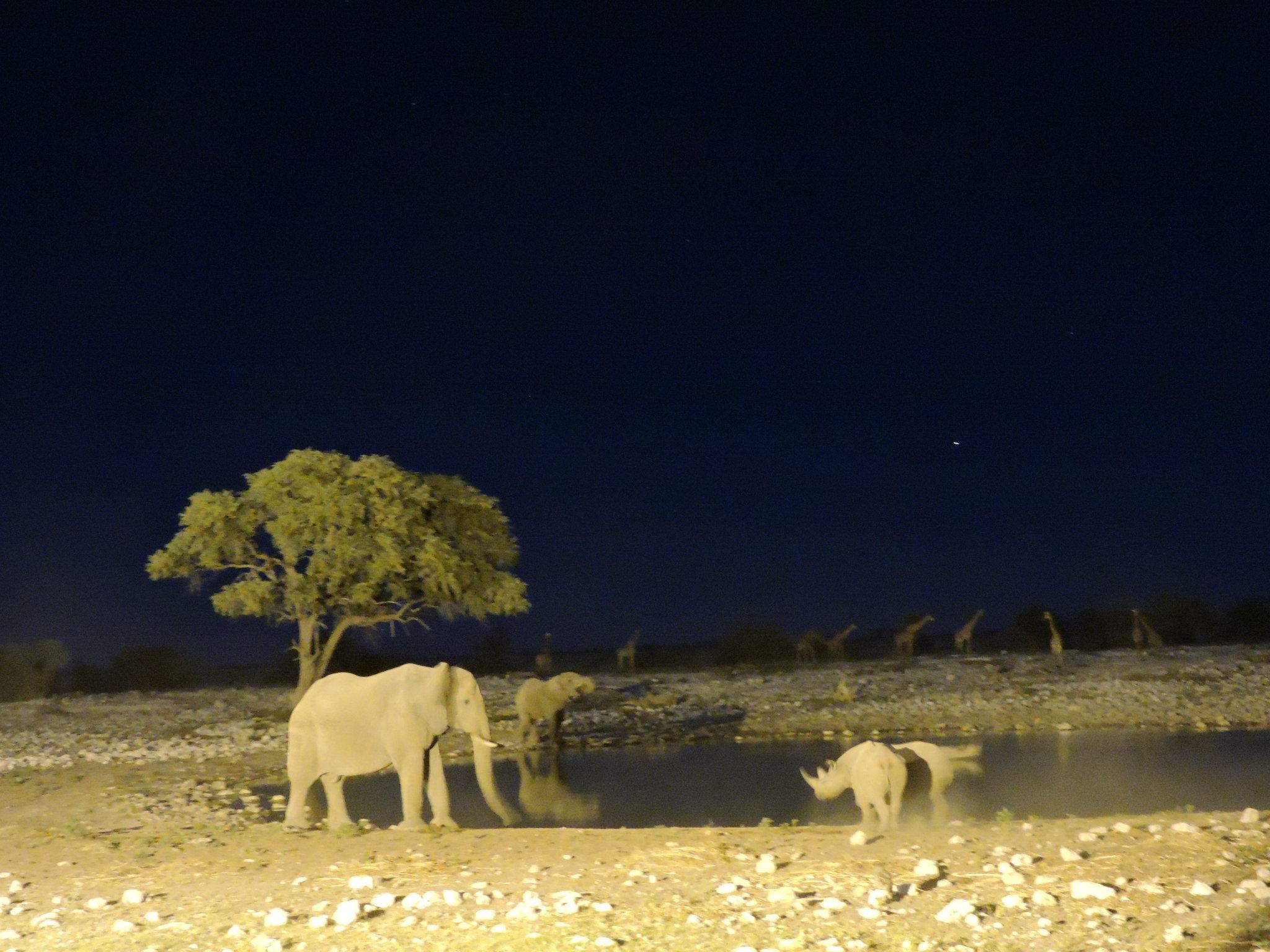
About an hour and a half drive from Opuwo lies the western entrance to Etosha National Park. The park is considered one of the best safari destinations on the African continent, but unlike most others—here it is possible to self-drive! Imagine spending an entire day independently roaming between waterholes that attract dozens of elephants, giraffes, lions, and rhinos (!). At night, accommodation is in campsites/chalets in organized rest camps. In these camps, there are benches overlooking the waterholes, even at night. On one of the nights, we sat on a bench and watched male rhinos fighting right in front of us from a distance of 4-5 meters (there is a protective fence). That same night, we observed seven different rhinos at the waterhole, along with elephants and giraffes. All of these disappeared all at once when a pride of lions arrived to drink from the hole.
(By day. Photo: Gal Zanir)
(And at night. Photo: Gal Zanir)
Notes:
Namibia is a modern country almost throughout its entirety. It is orderly and organized, the possibilities are diverse, and it is suitable for travel at any age, for families or solo travelers.
A visa to the country must be obtained in advance before arrival. I recommend completing the process back in Israel rather than in neighboring countries.
The entire route can be done independently just as we traveled it, simply and without relying on organized tours.