


Morocco
My recommendations for Morocco and what my route was there.
- Independent / backpacking
Before the trip, I was a tour guide, also in the army. And now I study international trade in Jerusalem.
About my trip - I was in Jordan, Morocco, France, and Ethiopia. In Ethiopia twice; I stayed for 4 months in September, and in June I traveled back to Ethiopia for a month.
Here for any questions,
Oneg.
My recommendations for Morocco and what my route was there.
First thing that's important for me to say - I traveled in Morocco alone, a young woman, from Israel, in a Muslim country...
There were concerns at first. But 97% of the encounters with people were amazing. In Morocco I met welcoming, open, inviting people who love to host and do good. I had 2 encounters with people that were unpleasant due to the fact that I am from Israel, and those also ended well after we talked about the situation. I saw that they were open to listening.
The money in Morocco - Dirham. One Shekel is worth about 2.5 Dirham. To be precise - 2.5288 currently.
Local SIM: Very simple to get at the airport
Visa and preparation:
Israelis need to get a visa for Morocco and the visa is only for two weeks. There are companies that issue visas for Morocco; you can also get the visa when you are not in the country. Ofir Tours issues visas, along with various other companies. I did it through "Royal Tour Morocco". They charged $65 for it. A year ago it came out to 252 NIS. You send them a copy of your passport and when you'd like to arrive, and they arrange it for you. They recommended entering through specific airlines; I don't remember all of them, I flew via france airlines and it worked.
So I really just gave up and stayed in Morocco for only two weeks. With a strong desire to return again.
I heard about someone who actually stayed around 10 days after the visa expired and nothing was done to him. It's worth trying in Fes, although in reality all the police stations send it for approval in Rabat, but there are also tons of offices that send you from here to there, many offices that deal with it but not really… it's not clear what the real address is there.
And yet, what did I manage to do in two weeks?
I landed in Casablanca and on the very same day took a train to Rabat, the capital city. (The trains there are good and efficient.) The next day I traveled north to Tangier.
In almost every city there is the 'Medina' - which is the old city.
Tangier is located on the Atlantic Ocean and its 'Medina' also overlooks the ocean. In almost every medina there is an interesting nightlife, stalls and things that set up every evening anew towards the night, and in the late morning to afternoon hours there are vibrant markets, restaurants, arts and crafts. In Tangier I met a charming man named Max (Mgatte Tall) - he is originally from Senegal, married to a Moroccan woman. He drove a scooter attached to a passenger cabin. He's an honest guy; the next day we did a tour of the city together. I recommend meeting up with him.
Max- 00212-605895538 TALLMAX75@gmail.com
From Tangier I traveled to Chefchaouen; there are buses leaving every few hours. It's better to leave early because it's a ride that takes several hours. Max helped me check the bus schedules.
Chefchaouen is highly recommended! - inside the old city - 'the Medina' - there is the 'Mellah', which is the area where the Jews lived. At first they were separated and not accepted, later there were good relations between Muslims and Jews. (I got to talk to many older locals who remember the Jews fondly. There are still a few Jews in Morocco. Even the king's advisor is Jewish, named Azoulay.) What happened in Chefchaouen with the Jews is that the Jews painted their houses light blue and blue in their area - in the Mellah. The Muslims "saw that it was good" and slowly all the houses in the entire medina were painted blue as well. Today this is Chefchaouen's signature look! And it's truly beautiful. Even outside the medina - in Ville Nouvelle (the new city) many houses are painted blue. Chefchaouen's medina is relatively small (compared to Casablanca, Fes, and Marrakech). But gorgeous. I believe they will offer you a tour of the medina there. I recommend getting a map, it's very easy to obtain. And just wander around and enjoy getting lost. You discover amazing corners and beautiful areas. And it's always easy to return to the main square and the Kasbah next to it. (Kasbah - a fortress that served as a residence for the local ruler and was a defensive stronghold). There are 'medinas' that contain several kasbahs, probably based on clans. Chefchaouen's Kasbah is beautiful and well-maintained - today it serves as a kind of museum. It features examples of handicrafts - workshop alcoves and short films showing some of the work. It costs a few Dirhams to enter.
In Chefchaouen, too, various stalls pop up in the evening, with performances and interesting things.
Regarding food - when I was there I went on a quest for couscous… I wanted to see where to find the most delicious couscous… What I discovered was that in almost all the restaurants where I ordered couscous, regardless of the restaurant's quality level - the couscous was fairly average. The most delicious couscous I tasted was in family homes. By a really noticeable difference!
Another thing is Tagine - an elongated ceramic vessel in which they put meat with potatoes and sometimes other vegetables, cooking it for several hours over charcoal using the steam inside the dish.
There are restaurants that don't really do the full process. But there are places worth trying. I'm a vegetarian, so I know what meat tastes like; from the tagine I only ate the potatoes. I ate it at a family's home who hosted me, and it was very delicious.
What I did find very delicious to eat in the 'medinas' - is in workers' eateries - the cheapest and most delicious! It's amazing. In Chefchaouen there is one highly recommended workers' restaurant - I don't know if it has a name, the owner of the guesthouse where I stayed recommended it to me.
Just get there.
I don't have the guesthouse's name; it's among the first ones listed in Lonely Planet.
Chefchaouen is situated at the foot of the Rif Mountains. From Chefchaouen I went on a several-day trek in the mountains. There's a shop in the 'medina' that sells a black-and-white photocopy of the mountain map. I couldn't find anything more than that. But I didn't need to either. A bit above Chefchaouen there is a campsite where I stayed the first night; there's a shower, nominal cost, I slept there without food, just in a sleeping bag. From there the next morning I hiked up. I followed a recommendation in Lonely Planet; even though it's recommended there, on the first day I saw very few hikers. After that it's just you, the landscape, and the villages along the way. The area is close to the Spanish border, so many local villagers speak Spanish. In the mountains there is massive marijuana cultivation. Tons of fields of the plant.
The villagers along the way helped me with directions - especially for the second day. I headed towards Akchour (above Akchour there is a beautiful village called Ouslaf). On the first day the path is very clear. There are several options, different routes and for different durations; if you want, I can send you details from Lonely Planet. I did a circular route that returns to Chefchaouen and takes 3 days.
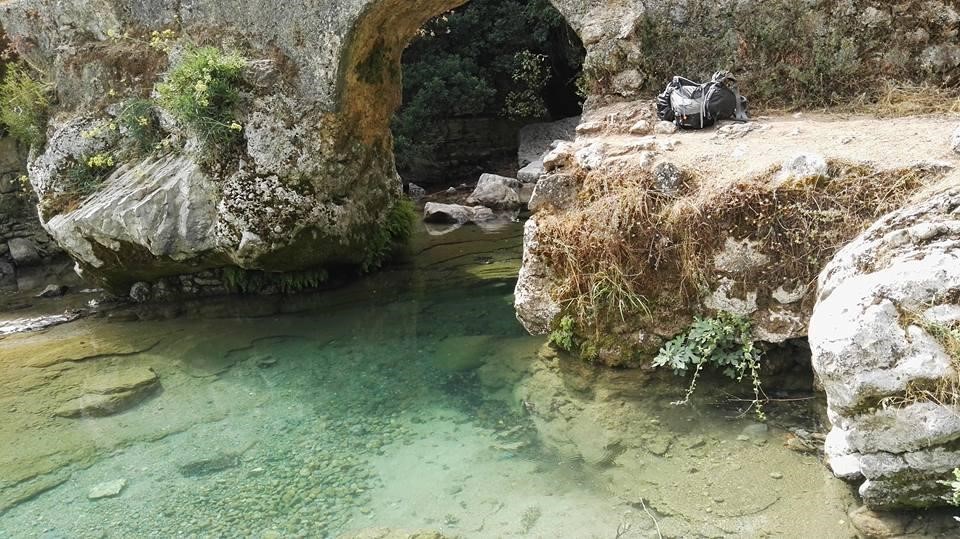
The Rif Mountains, northern Morocco - on the way between Chefchaouen and Akchour
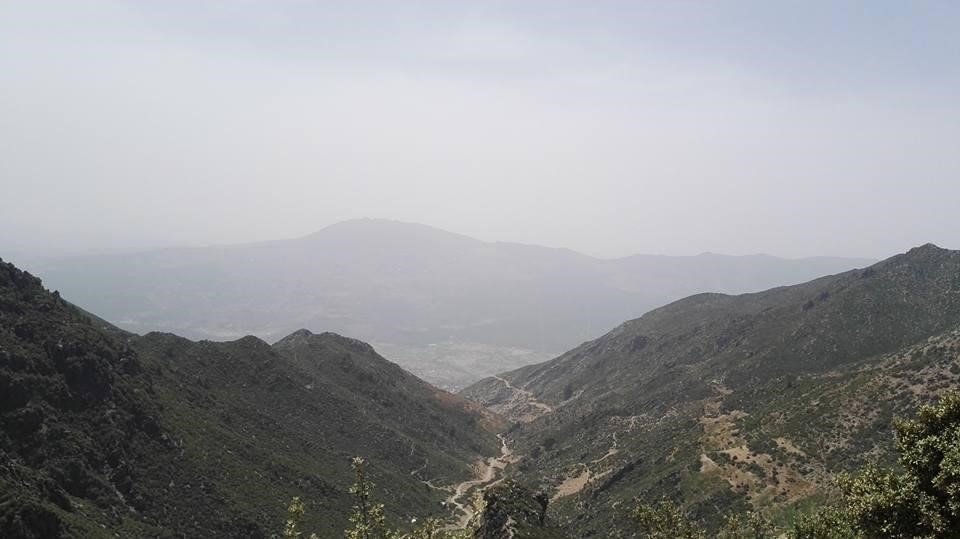
The Rif Mountains, northern Morocco
Important - when you want to travel from Chefchaouen to another destination - book a bus ticket several days in advance. Because buses there fill up quickly. There are several bus companies. Nejma chamel - a Moroccan company - buses are pretty creaky and old without AC. CTM - a French company, buses with AC, new - of course their ticket is more expensive. Besides that, there are other companies whose names I don't recall. At the central station you can check if one bus is full, you can check with another company.
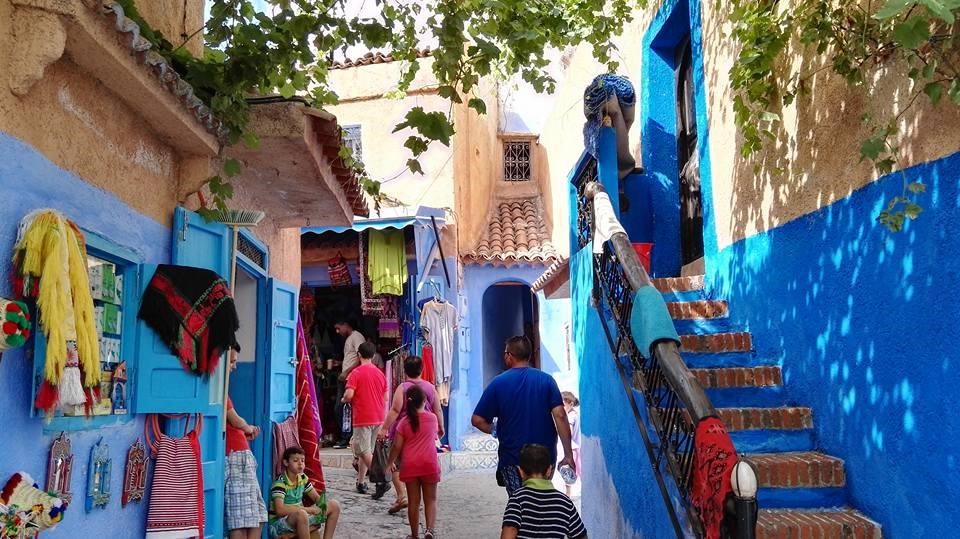
The Medina in Chefchaouen
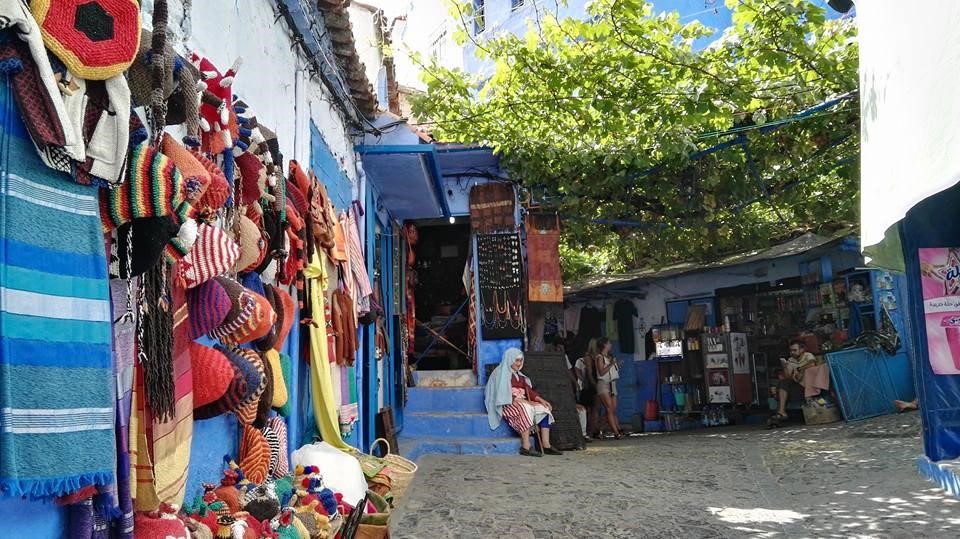
The Medina in Chefchaouen
From Chefchaouen I traveled to Fes. (Buses to Fes were full, but by chance there was a seat to the town of Sidi Kacem on the way to Fes, and from that town I took a train to Fes - it was simple, and there are many trains from there to Fes)
The Medina of Fes is stunning and awakens all senses.
In the Medina of Fes I did hire a local guide (Abdul) and I'm glad I did. He took me to the zones of silversmiths, ceramics, fabrics, spices, shoemakers, copper crafts, rug areas, fabric weaving, djellaba tailoring, oils, and of course food, bakeries, lots of sweets, and much more. In the Medina of Fes there is also a beautiful madrasa (school). He also took me to a small workers' eatery where in the morning they serve fava bean soup called bissara - I highly recommend eating it, very delicious!
In Fes, a restaurant I ate at that is one of the most highly recommended in Lonely Planet in Morocco - Zohra Restaurant.
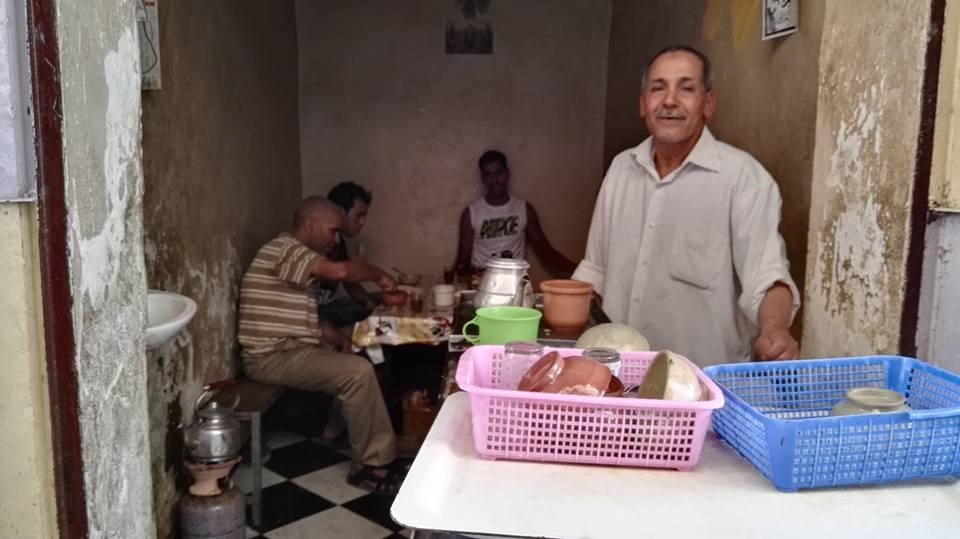
Workers' eatery in the Medina of Fes
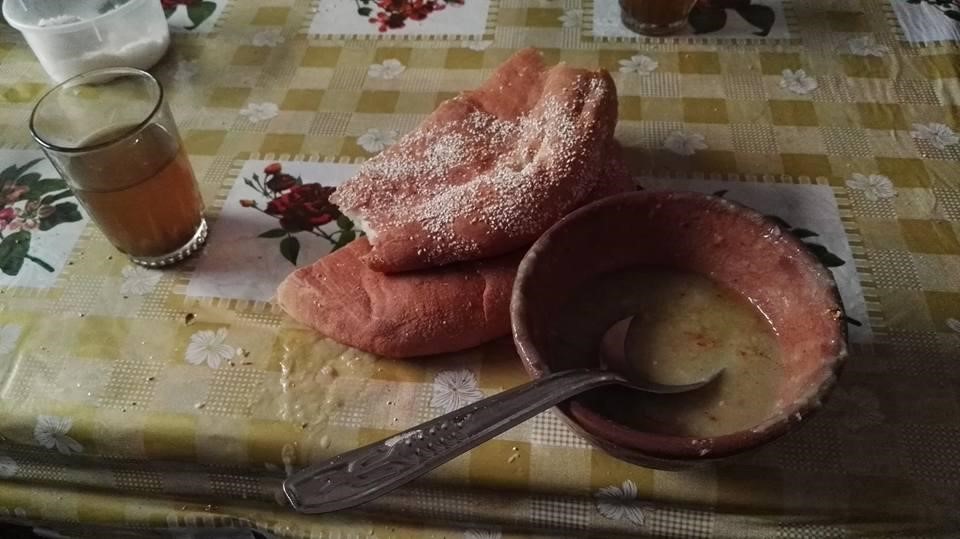
Wonderful fava bean soup served at the workers' eatery. A soup called bissara
If you'd like, in Fes I met a lovely family who hosted me and made the most delicious couscous I had in Morocco. I accidentally met one of the family's daughters on the train, and we connected.
This happened to me a lot in Morocco and I believe it happens to many solo travelers. Encounters with locals who invite you into their homes. The most amazing experiences I had in Morocco were with them and thanks to them! They don't invite you as a marketing gimmick or to get money from you. They host truly from the heart, and they are wonderful hosts.
Just important to know local hospitality customs - don't eat with your left hand. Usually everyone eats together from a large central dish. It's recommended to bring a small gift for the family - nothing grandiose - I brought dates, a small potted plant. Minimal host gifts... just like attending a Friday night dinner at a family's house back home.. :-)
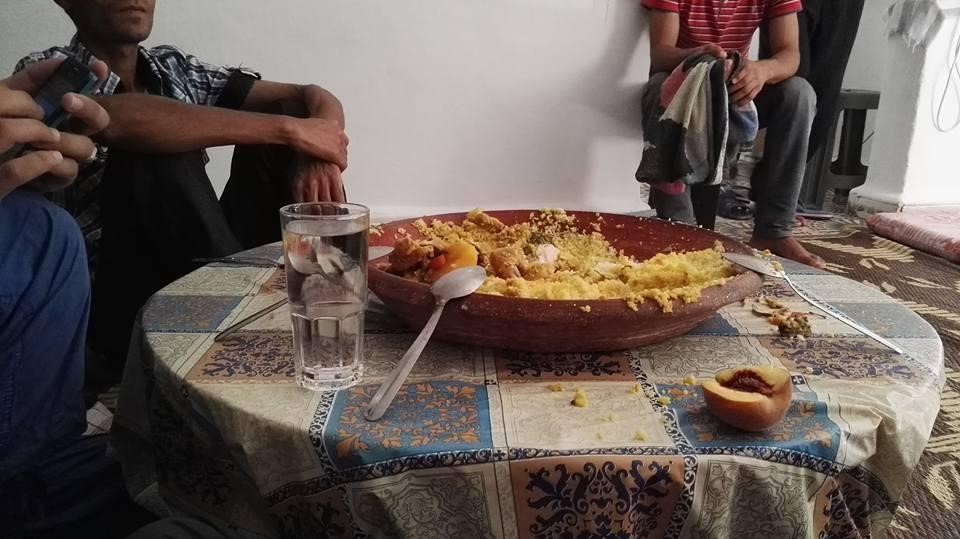
Family that hosted me in Fes
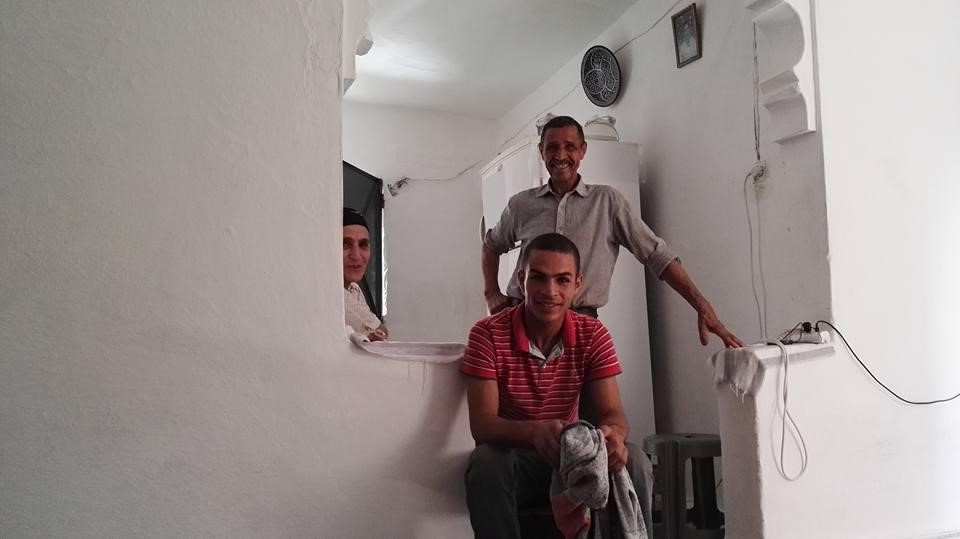
At the end of the meal with the family from Fes
During the meal, they will serve you the best parts on the plate. It is customary for everyone to eat only from the section of the platter closest to them - but for a guest, they will give the best pieces.
Many locals are not very familiar with the concept of vegetarianism, so explain carefully (and use Google Translate if they don't understand English very well) (in restaurants, most know what vegetarian means, vegan not yet…)
Hospitality is a true ritual and they love doing it. You sit, talk… and only then eat.
I stayed in Fes for 3 days and it felt like enough time to dedicate to the place.
From Fes - to Ifrane, a lovely French-style town. The high society of Morocco - villas, fountains, lawns, lakes, monkeys. Located in the Middle Atlas; if you want a place with a cozy, pampering room that isn't expensive, this is it. Other points of interest in Ifrane - Source Vittel, Cascade de la Vierge, La Cascade du Repos. Pleasant and even a bit chilly there even in August.
From Ifrane to Beni Mellal (a 6-hour drive) - there are waterfalls and a spring there. It was less spectacular. What kept me there - the family I met on the bus who invited me over. I stayed with them for 3 days and it was a special, wonderful experience.
From Beni Mellal - Casablanca - nice medina, large magnificent mosque, I stayed there mostly due to wanting to extend my visa. I returned to Rabat - totally redundant - also due to wanting to extend the visa. From there I went to Marrakech.
In Marrakech there is literally a celebration every night! It's amazing to see how they do it. Every night they set up many stalls and there are performances and events in the main square, Jemaa el-Fnaa.
Very interesting. The medina is also nice. There is a nice riad there called ARIJ RIAD that I recommend staying at.
I didn't stay long in Marrakech - I also went to the police there, and with a heavy heart decided to just make the best of my time and complete what I wanted another time.
So that same day I traveled to Imlil, where treks in the High Atlas Mountains start. Mount Toubkal is located there, which is the second highest mountain in Africa after Kilimanjaro. And mind-blowing views!!! Also the way the villages blend into the landscape.
I planned to do a trek of seven or eight days, I think, up to the peak of Toubkal. In the end I only had two days, so I tried to climb as much as possible. There is a charming guide named Rachid Talaoul who hosted me at his home for couscous - his wife made very delicious couscous.
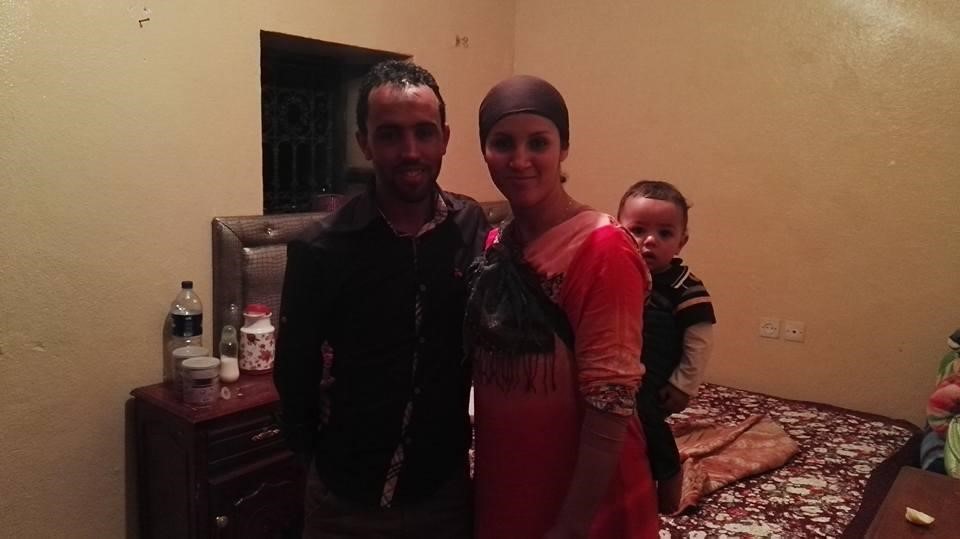
The guide Rachid, his wife and their son
His business card
The High Atlas Mountains:
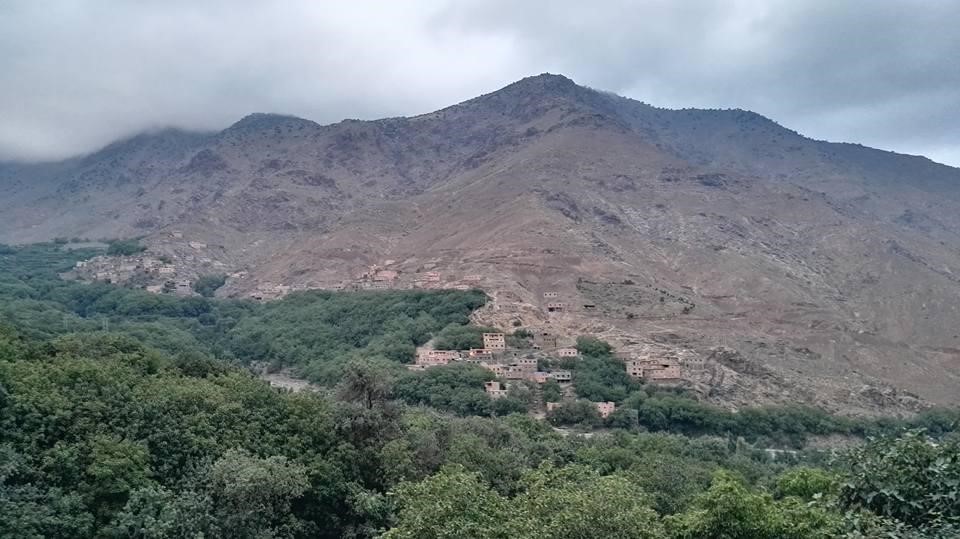
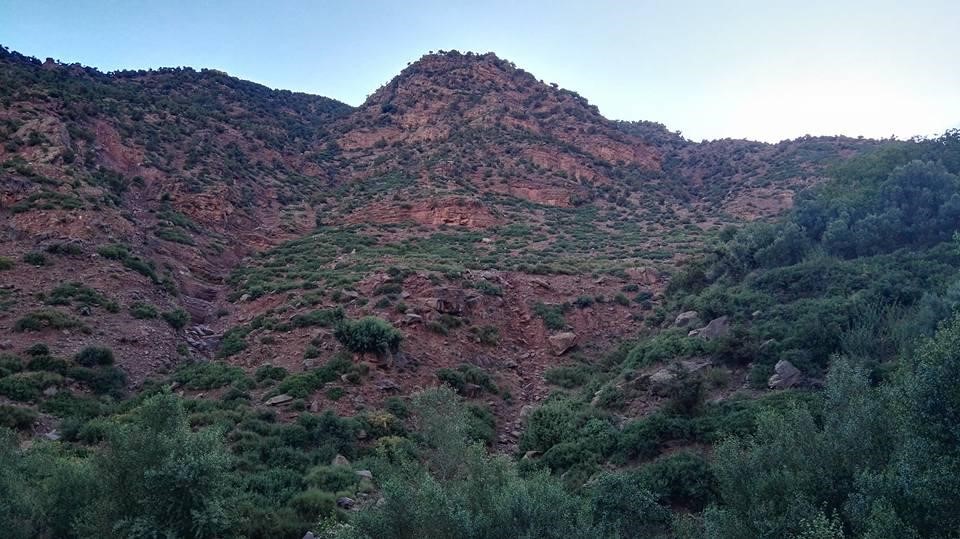
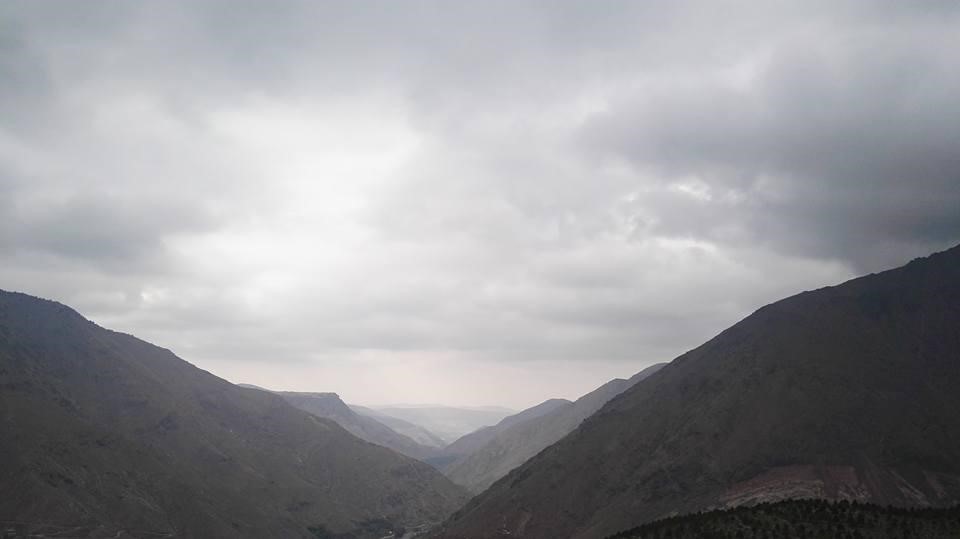
From there, unfortunately, the next day I traveled back to Marrakech, took a train to Casablanca, and from there flew to France, crossed France and reached the island of Corsica - where, instead of trekking in the Atlas Mountains, I swapped it for a trek called the GR 20, one of the hardest and most challenging treks in Europe, exceptionally unique in its beauty.
What would I do if I had more time? Or what will I do next time in Morocco?
First of all, Morocco definitely made me want to return. I would do the full trek to Toubkal. I would go to Ouarzazate - an interesting kasbah and probably the origin of couscous :-)
And from there to Asilah - a seaside city I heard and read good things about - and from there further south to the Sahara!
Another interesting trek I read about - in the M'Goun mountain range. The second highest in Morocco.
If you arrive starting from the south - from the Sahara - a possible route: Sahara, Asilah, Ouarzazate, Marrakech, Imlil and the High Atlas Mountains, Fes, (or Casablanca before Fes), Chefchaouen, Tangier.