


Beautiful Kenya
My trip in Africa lasted half a year, of which I spent a total of two and a half weeks in Kenya. In this part of the trip, my father and brother were with me, and we were already two weeks after Tanzania.
- Independent / backpacking
Three weeks after my military discharge and here I am on a plane to Cape Town, South Africa. It seems five years in the army take their toll, so I didn't need much time to hesitate. My sister, about 5 years before me, traveled for 3 months on the continent and returned with stories and pictures I just had to see and experience for myself. During six months of traveling, I managed to see a bit of each country and leave with a taste for more from South Africa, Namibia, Zambia, Malawi, Tanzania, and Kenya. The trip took place from April to October 2014. To the question "Where was it most fun?" the answer is clear - Malawi! There wasn't a single place I didn't enjoy, every experience led to another, and there is no doubt I left wanting more. Looking back, I can testify that I was a rough-it backpacker, carrying a tent and a sleeping bag in my backpack and looking to see new things. Experience shows that quality is sometimes better than quantity, and it's good to change plans along the way. Hope you enjoy the experience I gathered, and I'm always here for more questions. Amit.
My trip to Africa lasted half a year, of which I spent a cumulative two and a half weeks in Kenya. In this part of the trip, my father and brother were with me, and we were already two weeks after Tanzania.
Kenya in the summer of 2014 was a bit different. At that time, the Ebola epidemic was raging in West Africa, and there were travel warnings for Kenya as well due to fears the virus would spill over from Uganda. It was also a period of Boko Haram activity and many religious killings in the northern region of the country, and tourism fell drastically.
Kenya was a destination we didn't want to skip right after Tanzania, so we took the risk.
The crossing from Tanzania was in the Lake Victoria area. We traveled from Mosuma in Tanzania, from there to Tarime, and finally to the border town of Sirari. After checking permits and temperature checks to rule out Ebola or other illnesses, we paid $50 and crossed into Kenya. From Sirari on the Kenyan side, we traveled to Migori for 100 shillings per person in a shared taxi, and from there we continued to Kisumu, situated at the foot of Lake Victoria on the Kenyan side, for 450 shillings in a matatu.
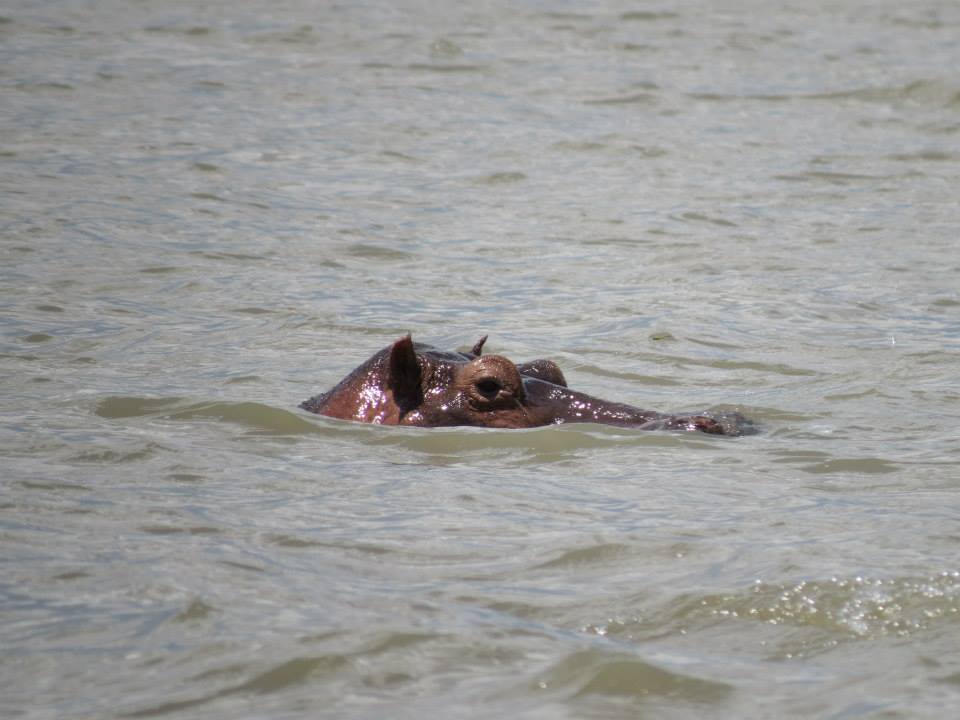
In Kisumu there are various accommodation options, and after bargaining we reached a price of 1800 for a double room with breakfast. The next day we took a walk around Kisumu and reached Impala centaury, which claims to be a rehabilitation zoo for wild animals. I do not recommend going there due to the exaggerated price ($20 for tourists), and the animals we saw in cages looked miserable and drugged. From there we walked to Hippo’s point, and indeed we saw many hippos swimming in the lake area.
In general, Kisumu was a stop along the way, and since it is adjacent to Lake Victoria, you can find boat tours on the lake or just wander aimlessly around town. For those looking for nightlife, there are various pubs in the area, and we felt safe enough walking around at night by ourselves in the main areas.
Photo: Amit Makmel
From Kisumu we continued to Naivasha by bus. From the main station in Naivasha we traveled to Fisherman’s camp by matatu (100 shillings per person), located on the edge of the lake. Fisherman’s had been without power for several days and the price was unnecessarily high, so we moved to an adjacent hotel where we found dorm rooms for 1000 shillings per night per person without breakfast. We were the first guests to sleep there in a long time, but the beds were comfortable, showers and linens were clean, and the price was reasonable. The next day we rented bikes for 600 shillings per person and rode from the area all the way to Crater’s lake. We cycled around the lake, and at Crater's Lake it was possible to do a bike safari for a nominal fee. For anyone taking a bike trip, I recommend taking enough water, a hat, and food for the road.
The ride was longer than we expected, we hadn't prepared enough water and food, and we got tired pretty quickly. After the bike safari, we took a pickup truck back to the hotel for a nominal price. The bike safari has great potential, and in the crater lake there are usually flocks of flamingos. We arrived 3 weeks after they left and saw only a few...
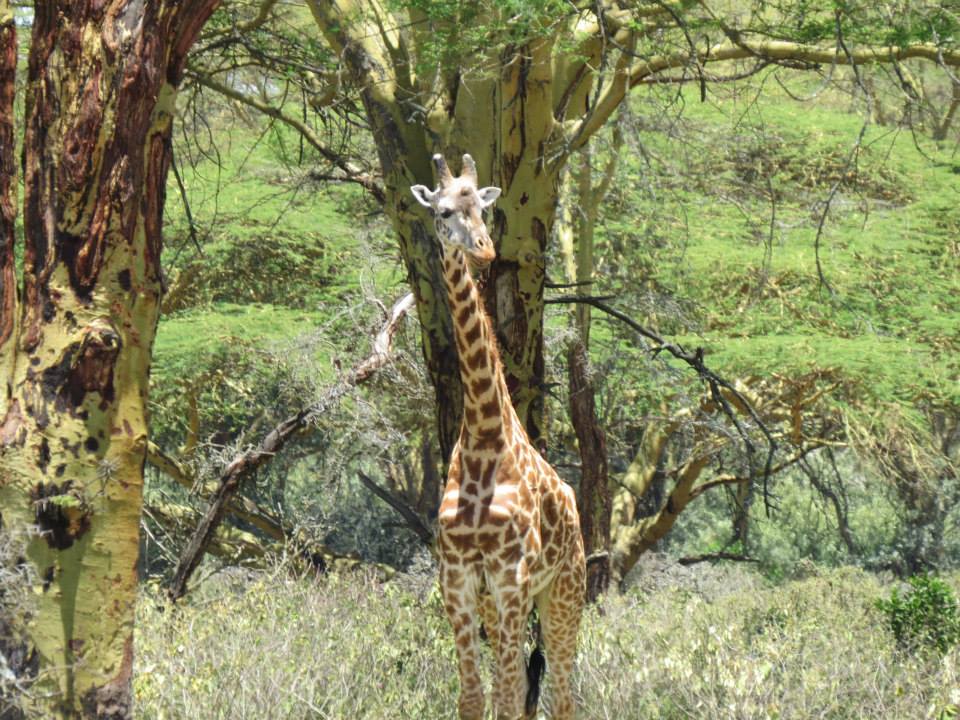
Image caption
The next day we traveled to Nairobi! We stayed at arkland palace hotel, which cost 2000 shillings for a room for 3 without breakfast. The hotel is located on the third floor of a building that looks ordinary from the outside, making it somewhat difficult to find. You need to look for the sign near the shop signs. It is located in a central area, 5 minutes from the bus station, surrounded by shops and restaurants. On the third floor, where reception is located, there is a restaurant that turns into a pub in the evening, with loud music that sometimes reached our room (we stayed on the 8th floor). The room was huge and spacious, overlooking the city. Although the staff at the reception desk were not particularly friendly, the price and location were definitely worth it.
Near the hotel is a restaurant called Smoothies where you can get local food at a reasonable price. There are many places selling fried chicken and chips in the area, and prices are very similar, so there's no point searching for cheaper options or comparing them.
Because tourism in Kenya was low due to Ebola fears (and various terror attacks in the area), tourism businesses were willing to drop prices to levels I never expected to reach. We booked a 3-day safari with the company Kairi for $290 per person total in the Masai Mara. The guide was professional and a cautious driver, knowing how to take us to see all kinds of animals on safari. He was attentive to our requests (staying to observe a specific area or searching for other animals) and was knowledgeable about the region. We stayed in an air-conditioned tent with private showers and 3 meals a day. On the safari, we reached the Mara River which separates the Serengeti from the Masai Mara. We weren't there during the Great Migration but slightly before it, and we could see herds of wildebeests and zebras starting to gather around the river, which was full of hippos, alligators, and animal carcasses. The safari was a big success for us.
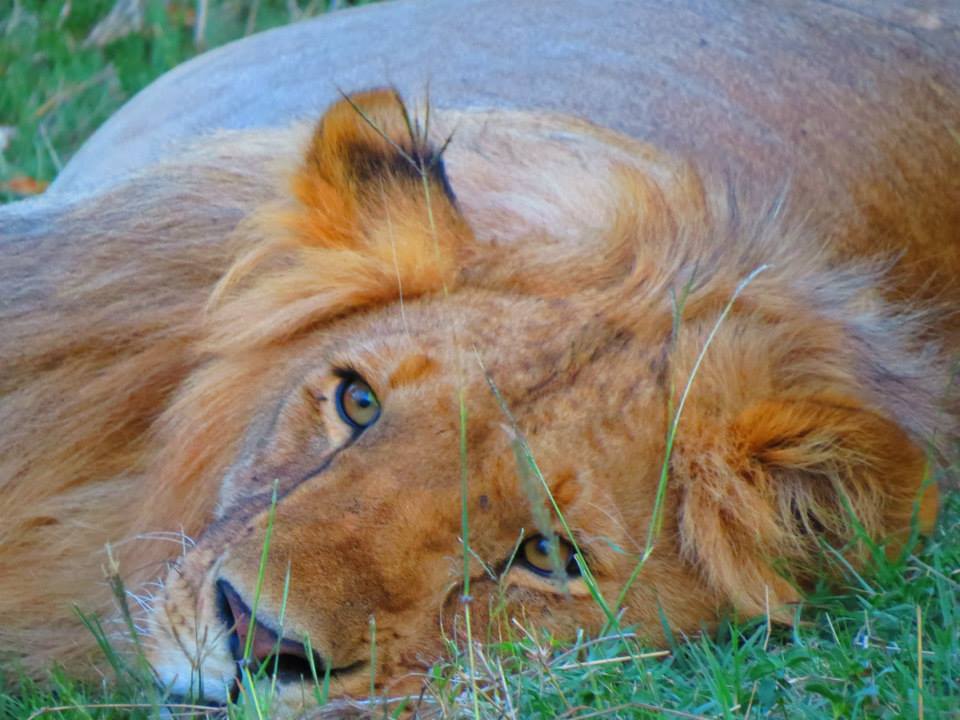
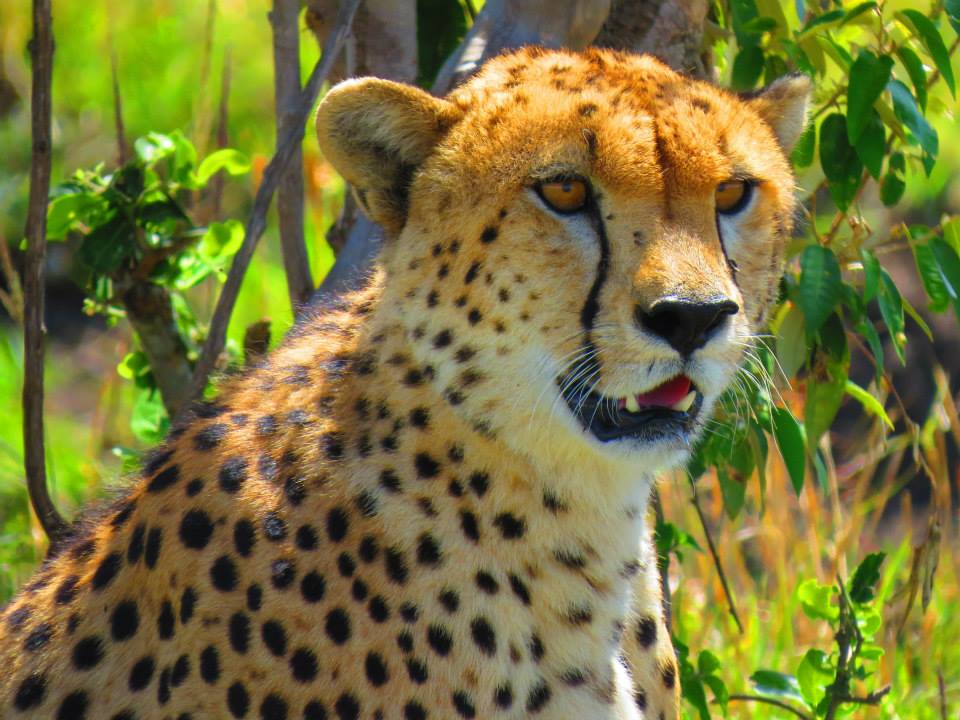
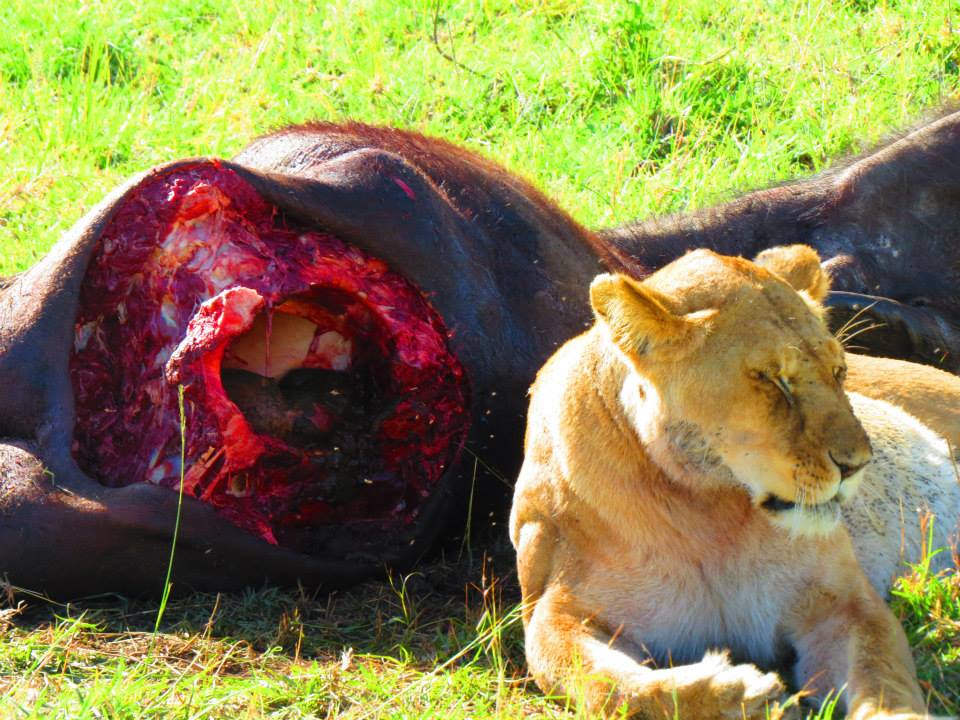
Image caption
When we returned from the safari to Nairobi, we traveled to Mombasa with the bus company RANDA, which cost 800 shillings per person. The ride started in the evening around 18:00, and we arrived in Mombasa around 5:30 in the morning. The road to Mombasa was very rough, the bus seats were extremely uncomfortable, and I do not recommend this bus company because it was unbearable. You can find a more comfortable bus for a slightly higher price. We reached the main station and took a tuk-tuk from there. The driver claimed he knew where our destination was, but in the end we found ourselves wandering for half an hour asking other drivers along the way. I recommend giving a specific address or area to avoid this situation.
We stayed at Nirvana backpackers, which is managed by a woman from Ireland who moved to the area and set up the hostel. It is very clean, has a great breakfast, and costs 400 shillings per night per person in dorms. The backpackers hostel is slightly far from town, but a matatu for 50 shillings takes you right to central Mombasa. Around the city there were street stalls selling square peanut cookies, and to this day I want to return there just for those cookies. The market has tropical fruits, and we survived on one huge pineapple for 4 days. The city is quite Westernized and tourist-friendly, with many local and Western restaurants and entertainment spots.
From Mombasa we traveled to Mlindi for 300 shillings per person. Malindi is a coastal town, and we stayed at a guesthouse adjacent to the restaurant I love pizza. Although the guesthouse had mosquito nets, we woke up bitten and sweaty because there was no fan. The place included breakfast for 2500 for the three of us. A cheap solution for one night. In Malindi there is a very large market rich in local crafts (sculptures, paintings, and many items), and as I mentioned before – the scarcity of tourists played in our favor because we bought lots of souvenirs very cheaply. There is a commercial area in Malindi with many high-end chef restaurants and expensive spots, but we settled for pizza in that area.
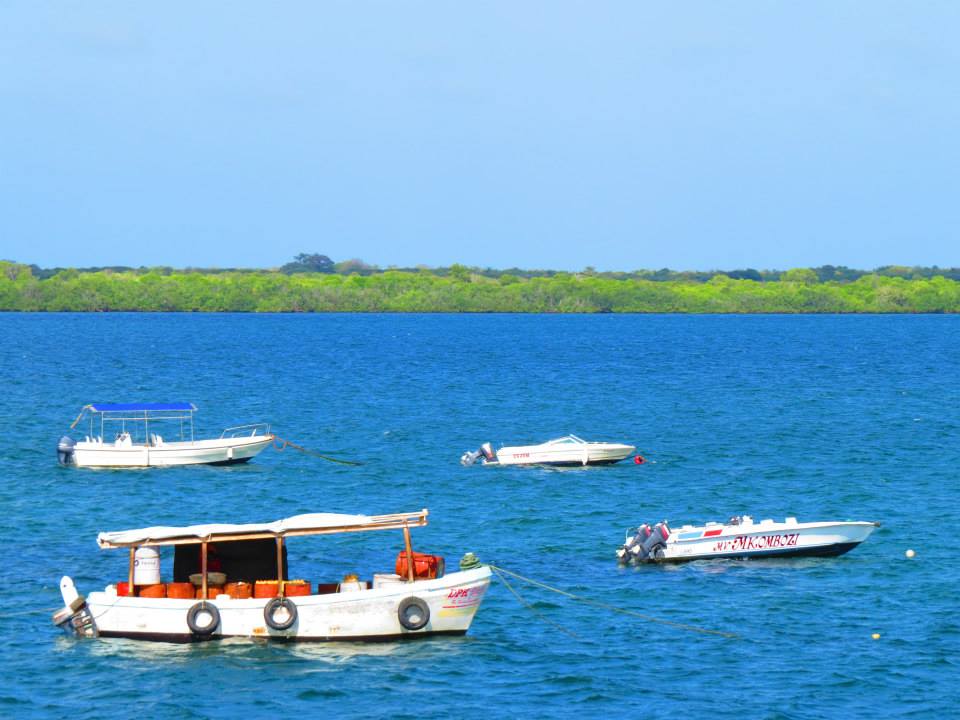
Image caption
From Malindi we took a bus towards the island of LAMU for 150 shillings per person. To reach the island you need to take a speedboat or a ferry (differing in price and travel time). Shortly before reaching the port, you can see the restaurant "הפה הפה" whose owner is the daughter of a convert to Judaism. Normally there is a sign outside in Hebrew saying "Discount for soldiers in uniform", but due to the security situation during my stay, she had taken the sign down. The owner was very excited to see we were Israelis, treated us to her big room, and put great effort into our breakfasts. We paid 1000 shillings per night each. In Lamu there are no cars, and transport is by donkeys. During the time I was there, there was an evening curfew on the island prohibiting moving around between certain hours. It's important to ask around so you don't get into trouble.
We asked the restaurant owner about a boat trip and fishing in the area, and she introduced us to Captain Simba! It was 4500 shillings for half a day of sailing, fishing, and cooking the fish we caught. The local guys who came with us easily caught many fish with improvised rods, while we didn't manage to catch anything. They cooked us rice with coconut milk, let us steer the sailboat, and took us to the beach of an island opposite Lamu where the water was so clear and clean that we stayed there for nearly an hour enjoying the water. Lamu was a fantastic 3-day experience, a break from public transport and noise, with plenty of scenery and peace.
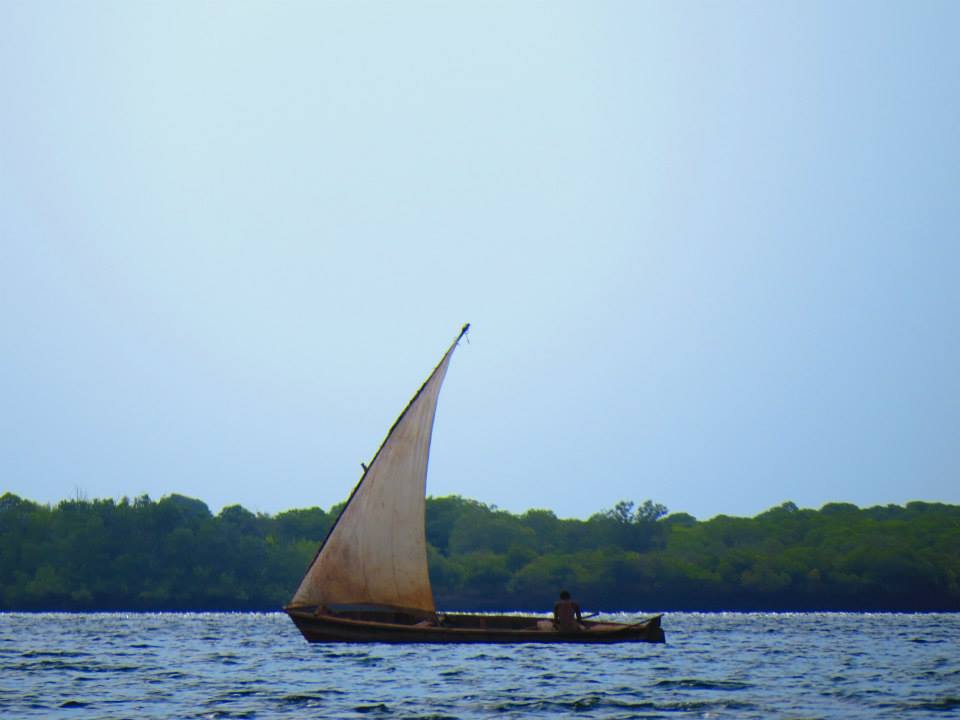
Image caption
Back to Malindi and from there directly to Watamu. In Watamu there is a diving and beach area, and they take pride in being an Italian-style town. We stayed in a guest house-style setup where each room had a kitchen and a ceiling fan called beach view guesthouse for 2500 שקל for the three of us. The room was clean, spacious, and without breakfast. There are many cheap restaurants, supermarkets, and very beautiful beaches in the area.
We returned to Malindi for some final souvenir shopping at the market, and from there went directly back to Mombasa to the same backpackers hostel mentioned earlier.
In Mombasa there is a center with a casino, cinema, and bowling alley, and since it was the end of the trip, we played a few games of bowling and finished the evening at the casino. Unsurprisingly, we met quite a few Israelis there.
From Mombasa my brother and father said goodbye to me and went to the airport, while 3 days later I started my flight back to Israel, concluding my six months on the continent.
Kenya for me was awesome. The people are friendly, the landscapes are amazing, and traveling from one end – Lake Victoria – to the other end – the ocean in Mombasa – was ideal for me. We managed to see towns, cities, safaris, and beaches, and I highly recommend crossing the country from coast to coast during a visit and trip there.